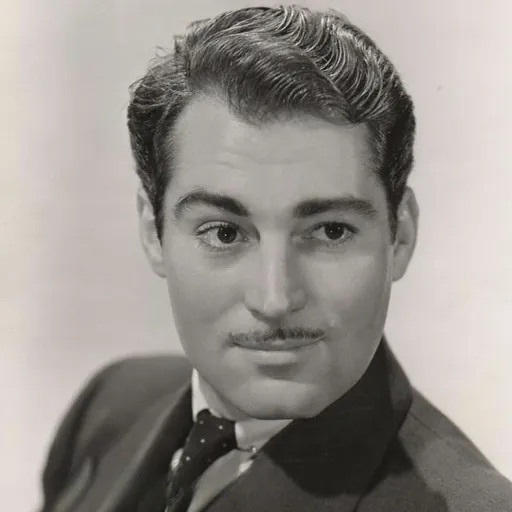
About Alan Marshal
Lived 1909 – 1961 (aged 52). Alan Marshal was an American and Australian actor, film actor and stage actor.
Alan Marshal (born Alan M Willey; 29 January 1909 – 9 July 1961) was an Australian-born actor who performed on stage in the United States and in Hollywood films. He was sometimes billed as Alan Marshall or Alan Willey.
Biography Early life Born Alan M Willey in Sydney, Australia, he was the son of popular Queensland stage actress Irby (Agnes) Marshal and English actor-producer Leonard Willey. The family left Australia in mid-1914, when he was five years old.
Willey and Marshal appeared in several Australian films made in 1912 – including The Strangler's Grip (1912) and The Mystery of the Black Pearl (1912), both directed by Franklyn Barrett.
Irby and Leonard continued their successful careers on the stage in the United States, first in San Francisco then in New York.
Early acting career Alan reportedly first appeared on Broadway in The Swan (1923), at age 15 as "Alan Willey".
He went on to appear on Broadway as Stephano in The Merchant of Venice (1928), a production that also featured his father Leonard Willey as Antonio. Other Broadway stage productions he performed in include The Game of Love and Death (1929–30), Michael and Mary (1930), and Death Takes a Holiday (1931).
As "Alan Marshal", he had roles on Broadway in Foolscap (1933), Going Gay (1934), While Parents Sleep (1934), Lady Jane (1934), The Bishop Misbehaves (1935) and On Stage (1935).
Film career
According to his son, Kit, Marshal was spotted by a studio scout while performing in a play in New York and was asked to do a screen test for Selznick International Studios.
Selznick cast him in a supporting role in The Garden of Allah (1936) with Charles Boyer and Marlene Dietrich.
Marshal was loaned to MGM where he was in After the Thin Man (1936). That studio liked him and gave him a good part in Night Must Fall (1937).
Marshal was used by MGM for key roles in prestige pictures: Parnell (1937), playing William O'Shea who was cuckolded by Clark Gable and Myrna Loy; and Conquest (1937) with Greta Garbo and Boyer, playing Philippe Antoine d'Ornano.
Walter Wanger borrowed him for I Met My Love Again (1938), billed fourth.
Marshal's first lead role was in a B picture at Republic Films, Invisible Enemy (1938). He went back to support parts for The Road to Reno (1938) at Universal, then was the romantic male lead in Dramatic School (1938) with Luise Rainer at MGM, a big flop.
He played a similar sort of part in Four Girls in White (1939) then was Anna Sten's co star in Exile Express (1939) made at Grand National Pictures.
Marshal had a strong role in 20th Century Fox's The Adventures of Sherlock Holmes (1939) supporting Basil Rathbone and Ida Lupino.
At RKO Marshal had a support part in The Hunchback of Notre Dame (1939) and the lead in a B picture, Married and in Love (1940), directed by John Farrow. He supported Anna Neagle in Irene (1940) at RKO and Loretta Young in He Stayed for Breakfast (1940) at Columbia.
Marshal stayed at Columbia for The Howards of Virginia (1940) with Cary Grant then went back to RKO to play one of Ginger Rogers's suitors in Tom, Dick and Harry (1940), a big hit. He was second billed to Merle Oberon in Lydia (1941). In 1942 Selznick sold many of his contracts to 20th Century Fox including Marshal's.
Marshal was second billed to Irene Dunne in The White Cliffs of Dover (1944) at MGM, a huge hit. He was top billed in Bride by Mistake (1944) with Laraine Day, another box office success. "It's the third time I've been discovered", said Marshall, who was set to star in Claudia (1945).
Marshal had a nervous breakdown and did not act for a number of years.
Television Marshall was announced for Three Came Home (1950) but did not appear in the final film. It was reported he withdrew due to illness.
Marshal concentrated on television in the 1950s, appearing in episodes of Lights Out (1950) ("The Dark Corner"), The Clock (1951) ("Last Adventure"), Robert Montgomery Presents (1952) ("Claire Ambler"), and Climax! (1956) ("The Hanging Judge", directed by John Frankenheimer).
Marshal returned to movies with a small role in The Opposite Sex (1956). He was more commonly found on TV, such as in Playhouse 90 (1957, "The Greer Case"), Perry Mason (1958, "The Case of the Terrified Typist"), Buckskin (1958, "The Ghost of Balaclava"), General Electric Theatre (1958, "Battle for a Soul", directed by Ray Milland), Wagon Train (1958, "The Doctor Willoughby Story", with Jane Wyman), The Ann Sothern Show (1958, "The Countess of Bartley"), Alfred Hitchcock Presents (1958, "Murder Me Twice"), Rawhide (1959, "Incident on the Edge of Madness", with Lon Chaney Jr), 77 Sunset Strip (1959)("In Memoriam"), M Squad (1959) ("Ghost Town"), Sugarfoot (1959, "The Vultures"), Bourbon Street Beat (1959, "Invitation to a Murder") and Surfside 6 (1960, "Spinout at Sebrin").
Marshal had a supporting role in House on Haunted Hill (1959) starring Vincent Price and directed by William Castle, and the western Day of the Outlaw (1959).
Filmography Year Title Role Notes 1936 The Garden of Allah Captain De Trevignac After the Thin Man Robert Landis 1937 Night Must Fall Justin Parnell Willie Conquest Captain d'Ornano 1938 I Met My Love Again Michael Shaw Invisible Enemy Jeffrey Clavering The Road to Reno Walter Crawford Dramatic School Marquis Andre D'Abbencourt 1939 Four Girls in White Dr. Stephen Melford Exile Express Steve Reynolds The Adventures of Sherlock Holmes Jerrold Hunter The Hunchback of Notre Dame Captain Phoebus 1940 Married and in Love Dr. Leslie Yates Irene Bob Vincent He Stayed for Breakfast Andre Dorlay The Howards of Virginia Roger Peyton 1941 Tom, Dick and Harry Dick Lydia Richard Mason 1944 The White Cliffs of Dover Sir John Ashwood Bride by Mistake Captain Anthony Travis 1956 The Opposite Sex Ted 1958 Alfred Hitchcock Presents William Pryor Season 4 Episode 9: "Murder Me Twice" 1959 House on Haunted Hill Dr. David Trent Day of the Outlaw Hal Crane (final film)
Family
Marshal eloped with socialite Mary Grace Borel in November 1938. The couple had one son, Christopher ("Kit"), who also became an actor. Borel sued for divorce in August 1947. Marshal did not remarry.
His interment was at Forest Lawn Memorial Park Cemetery in Glendale, California.
Don’t just read it —
keep it.
Full-length biographies made to live with: read them, listen on the way to work, watch them tonight.
- E-book
- Audio
- Video
Instant download · yours to keep · every purchase keeps this site free
Important facts
Family & relationships
People in Alan Marshal's life
Named in this biography and alive at the same time


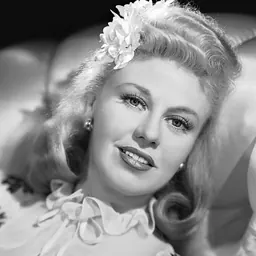
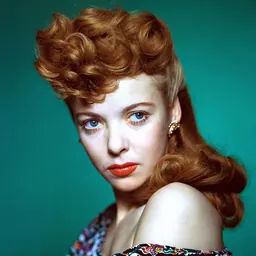

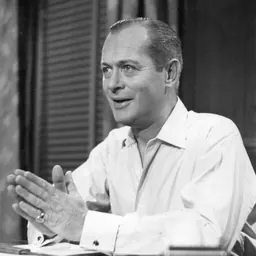
Related people
Same field, nearest in time


Contemporaries
People whose lives overlapped Alan Marshal's



Frequently asked questions
Who was Alan Marshal?
Australian actor (1909-1961)
When was Alan Marshal born?
Alan Marshal was born on 29 January 1909 in Sydney.
When did Alan Marshal die?
Alan Marshal died on 13 July 1961 in Chicago.
What was Alan Marshal's occupation?
Alan Marshal was an actor, film actor and stage actor.
What nationality was Alan Marshal?
Alan Marshal was American and Australian.
Sources & further reading
· DBpedia: Alan Marshal (actor)
Cite this page
APA: Biography.guide. (2026). Alan Marshal. https://biography.guide/alan-marshal-actor/
MLA: "Alan Marshal." Biography.guide, https://biography.guide/alan-marshal-actor/.
Chicago: "Alan Marshal." Biography.guide. https://biography.guide/alan-marshal-actor/.
Data last updated: 2026-09-22 · Spot an error? Report a correction.
Portrait: Wikimedia Commons · author & licence
Page generated 2026-09-27 05:02 UTC