
About Alan Heyman
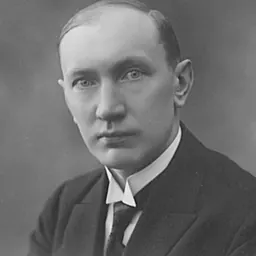
Lived 1931 – 2014 (aged 82). Alan Heyman was a South Korean composer, musicologist and songwriter, known for Korean traditional music.
Alan Charles Heyman (16 March 1931 – 1 March 2014), Korean name Hae Eui-man , was a South Korean musicologist and composer. Born in the United States, he first came to South Korea in 1953 with the United States Army during the Korean War, and after completing a graduate degree in music education at Columbia University, moved to South Korea permanently in 1960 to devote himself to research and composition. He led traditional Korean music troupes on tours of North America and Europe, and made significant contributions to the preservation of Korean traditional music, for which he was recognised with awards from national and international organisations. He gave up his U.S. citizenship to become a South Korean citizen in 1995, and remained in the country until his death in 2014.
In the Korean War Heyman was born in New York City on 16 March 1931 to Charles and Lillian Heyman., who were both Jewish. He went on to attend the University of Colorado, where he majored in music while also studying a pre-medical course, graduating in 1952. After his graduation, Heyman was drafted into the United States Army. He initially knew nothing about Korea; when informed by his senior officer that he would be stationed in Uijeongbu near the South Korean capital Seoul, he asked, "Excuse me sir, in what part of Japan is Uijeongbu?" He would go on to serve as an army medic and lab technician.
Heyman was first exposed to East Asian music during his Korean War service. Most of Heyman's comrades found the noise irritating. At that point, Heyman did not know the name of the instrument that had so fascinated him, the taepyeongso. He would not find out until after his tour of duty had ended and he had entered Columbia University to start studying towards his master's degree in music education: a fellow graduate student from South Korea informed Heyman, based on the description he provided, that the sound he heard was that of the taepyeongso, which he analogised to a "conical oboe".
Return to South Korea In 1960, the year after U.S. civilians could officially live in South Korea again, Heyman moved to Insa-dong in Seoul. He states that he was the only passenger on the Northwest Airlines flight which brought him back to the country. Aside from the taepyeongso, he also learned to play a number of other traditional Korean musical instruments, including the gayageum, the piri, and the janggu, as well as Korean dances such as the talchum and dances related to nongak.
In his old age, Heyman suffered from declining health, in particular spinal problems, but maintained good humour about his physical limitations. His wake was held at Severance Hospital in Sinchon-dong two days later. He was survived by his second wife Ok-ja Choi, son Seong-gwang Hae, also a scholar of Korean music, another son Seon-ju Hae, an entrepreneur, and daughter Laam Hae, a professor at York University in Canada.
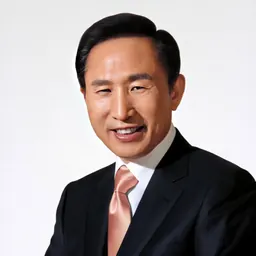
Among the odd jobs that Heyman took to support himself and his wife during his music studies in the 1960s, he composed film scores for various films set in South Korea; by 1968, he had nearly a dozen such credits to his name, mostly documentaries. His English translation of Im Sok-jae's Mu-ga: The Ritual Songs of Korean Mudangs, sponsored by the Korea Literature Translation Association, was published by Asian Humanities Press in 2003. In the last years of his life, Heyman worked on what he described as his "magnum opus", translating historical materials relating to the past half-century of the Korean National Folk Arts Festival. President Lee Myung-bak awarded Heyman the Silver Crown Order of Cultural Merit in April 2011 in recognition of his contributions to the National Gugak Center. In June 2011, he was inducted into the Royal Asiatic Society Korea Branch as an honorary lifetime member.
Don’t just read it —
keep it.
Full-length biographies made to live with: read them, listen on the way to work, watch them tonight.
- E-book
- Audio
- Video
Instant download · yours to keep · every purchase keeps this site free
Important facts
People in Alan Heyman's life
Named in this biography and alive at the same time

Related people
Same field, nearest in time



Contemporaries
People whose lives overlapped Alan Heyman's

Frequently asked questions
Who was Alan Heyman?
South Korean musicologist and composer
When was Alan Heyman born?
Alan Heyman was born on 16 March 1931 in New York City.
When did Alan Heyman die?
Alan Heyman died on 1 March 2014 in Seoul.
What was Alan Heyman's occupation?
Alan Heyman was a composer, musicologist and songwriter.
What was Alan Heyman known for?
Alan Heyman was known for Korean traditional music.
What nationality was Alan Heyman?
Alan Heyman was South Korean.
Sources & further reading
Cite this page
APA: Biography.guide. (2026). Alan Heyman. https://biography.guide/alan-heyman/
MLA: "Alan Heyman." Biography.guide, https://biography.guide/alan-heyman/.
Chicago: "Alan Heyman." Biography.guide. https://biography.guide/alan-heyman/.
Data last updated: 2026-09-20 · Spot an error? Report a correction.
Page generated 2026-09-27 04:58 UTC