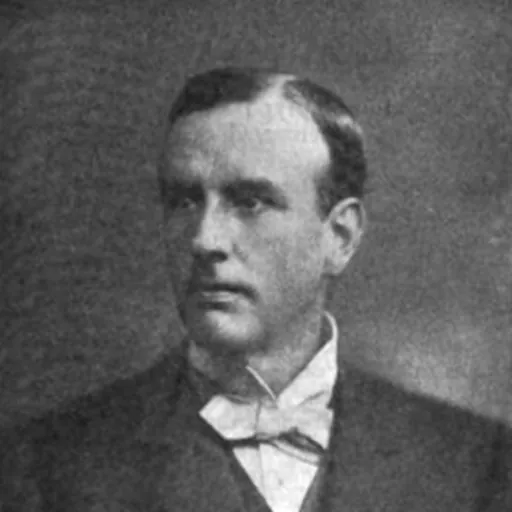
About Alan Gray
Lived 1855 – 1935 (aged 79). Alan Gray was a British composer, organist and musician.
Alan Gray (23 December 1855 – 27 September 1935) was an English organist and composer.
Life and career Gray was born in into a well-known York family (the Grays of Grays Court). His father William Gray was a solicitor and (in 1844) Lord Mayor of York. His brother Edwin Gray (c 1847-1929) became Lord Mayor of York in 1897, and again in 1902.
Alan Gray attended St Peter's School and initially trained as a solicitor, qualifying in 1881. But after musical studies with Edwin G Monk at York Minster he turned to music, studying as an undergraduate at Trinity College, Cambridge, where Charles Villiers Stanford came across him. From 1883 until 1893 he was Director of Music at Wellington College. Other staff members in the music department at the same time were A H Fox Strangways and Hugh Allen. He did important work as an editor for the Purcell Society. The Shropshire Songbook, a book of arrangements made by Gray and Nicholas Gatty from folksongs collected by W H Leslie, was published in 1922.
Gray was described in his Times obituary as "a magnificent organist [and] skilful improviser". Known as "long Alan" by his contemporaries, he was 6 foot six inches tall and had a wide range of intellectual interests beyond music. During the First World War he was badly affected, losing two of his three sons (Maurice and Edward) towards the end of the conflict. His wife continued to live there until her own death in 1953.
Music Among his compositions are liturgical music for Morning and Evening Prayer and the Office of Holy Communion for use in the Church of England according to the Book of Common Prayer: the Magnificat and Nunc dimittis in F minor for double choir (1912); a setting of Holy Communion in G; and several anthems. There is also a collection of descants to various hymn tunes published in 1920, several of which are still in use today (Common Praise includes four). His other works include five cantatas for chorus and orchestra (set to religious and secular texts), chamber and instrumental music, and organ music including four sonatas
During the war Gray composed a cycle of three partsongs setting Rupert Brooke entitled 1914, as well as an Elegy (1915) for organ and strings (or solo organ) in memory of the composer W C Denis Browne, who had been the organ scholar at Clare College, Cambridge and who died in action in 1915. The 1914 partsongs - 'Peace', 'The Dead', and 'The Soldier' - have been recorded by Truro Cathedral Choir. Barry Rose and the Guildford Cathedral Choir also recorded 'The Dead' and 'The Soldier'. John Kitchen has recorded the Organ Sonata No 2.
Compositions The Widow of Zarephath, cantata (York, 1888) Organ Sonata No 2 (1890) Arethusa, cantata (Leeds, 1892) Easter Ode, choral (1892) The Rover, SATB (1892), Musical Times supplement) The Legend of the Rock Buoy Bell, cantata (Hovingham, 1893) Fantasia in D minor for organ (1894) Festival Te Deum (1895) The Vision of Belshazzar, cantata (Hovingham, 1896) A Song of Redemption, cantata (Leeds, 1898) Andante and Allegro for piano trio (1903) Odysseus in Phaeacia, cantata (1906) Dixit Dominous, a cappella chorus (1910) Crossing the Bar, SATB a cappella (1912) Evening Service in F minor (Magnificat and Nunc dimittis) for double choir (1912) 1914, partsongs (1914) Elegy for organ and strings (1915) What are these that glow from afar?, anthem (1915) Recessional for organ (1916) Christ Will Gather In His Own, SATB a cappella anthem (1918) Requiem (1918) Come Though, Holy Spirit, SATB anthem (1919) Lux Aeterna for orchestra (1919) Andante grazioso for organ (1922) Piano Quartet String Quartet Violin Sonata Adagio and Toccata for organ Fantasy in G minor for organ Four Organ Sonatas Four idylls for organ Ground for organ The Little Organ Book in memory of Parry Variations for organ sets of short preludes and postludes
Don’t just read it —
keep it.
Full-length biographies made to live with: read them, listen on the way to work, watch them tonight.
- E-book
- Audio
- Video
Instant download · yours to keep · every purchase keeps this site free
Important facts
People in Alan Gray's life
Named in this biography and alive at the same time
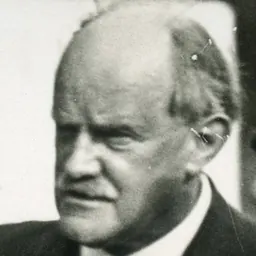

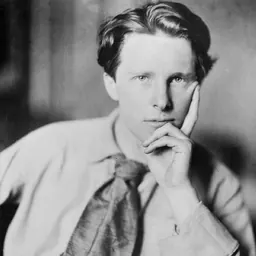
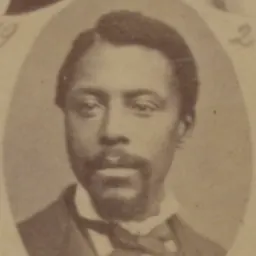


Related people
Same field, nearest in time

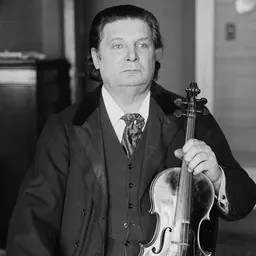
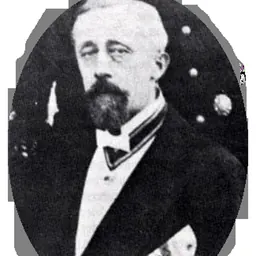


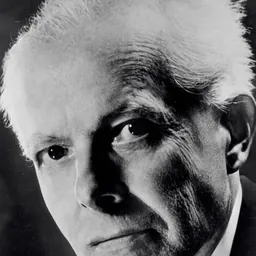
Contemporaries
People whose lives overlapped Alan Gray's
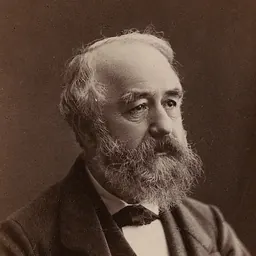



Frequently asked questions
Who was Alan Gray?
British musician (1855–1935)
When was Alan Gray born?
Alan Gray was born on 23 December 1855 in York.
When did Alan Gray die?
Alan Gray died on 27 September 1935 in Cambridge.
What was Alan Gray's occupation?
Alan Gray was a composer, organist and musician.
What nationality was Alan Gray?
Alan Gray was British.
Sources & further reading
Cite this page
APA: Biography.guide. (2026). Alan Gray. https://biography.guide/alan-gray-composer/
MLA: "Alan Gray." Biography.guide, https://biography.guide/alan-gray-composer/.
Chicago: "Alan Gray." Biography.guide. https://biography.guide/alan-gray-composer/.
Data last updated: 2026-09-22 · Spot an error? Report a correction.
Portrait: Wikimedia Commons · author & licence
Page generated 2026-09-27 05:03 UTC