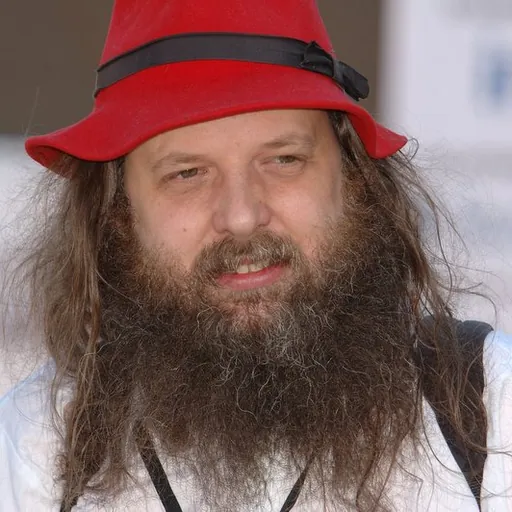
About Alan Cox
Born 1968. Alan Cox is a British programmer, blogger and computer scientist.
Involvement in the Linux kernel
While employed on the campus of Swansea University, Cox installed a very early version of Linux on one of the machines belonging to the university computer society. This was one of the first Linux installations on a busy network and revealed many bugs in the networking code. Cox fixed many of these bugs and went on to rewrite much of the networking subsystem. He then became one of the main developers and maintainers of the whole kernel.
He maintained the 2.2 branch, and his own versions of the 2.4 branch (signified by an "ac" in the version, for example 2.4.13-ac1). This branch was very stable and contained bugfixes that went directly into the vendor kernels.
On 28 July 2009, Cox quit his role as the TTY layer maintainer, after disagreement with Torvalds about the scope of work required to fix an error in that subsystem.
Alan was employed by the Linux distributor Red Hat during 1999–2009. Starting from 2011 he was employed by Intel Corporation, but he left both Intel and Linux kernel development in January 2013 to care full-time for his wife during a critical period of medical treatment, and returned to both later that year, until taking early retirement at the end of 2019.
He has also been involved in the GNOME and X.Org projects, and was the main developer of AberMUD, which he wrote whilst a student at the University of Wales, Aberystwyth.
On 31 Oct 2014, Alan Cox announced Fuzix OS, a tiny system V kernel, initially for Z80, on Google+.
Model trains Alan Cox used to run Etched Pixels, a model train company that used to produce N gauge kits until its closure in February 2023, the website citing "a huge rise in costs renewing things like insurance" as the cause.
Activism Cox is an ardent supporter of programming freedom, and an outspoken opponent of software patents, the DMCA and the CBDTPA. He resigned from a subgroup of Usenix in protest, and said he would not visit the United States for fear of being imprisoned after the arrest of Dmitry Sklyarov for DMCA violations.
In January 2007, he applied for a series of patents on "RMS", or "rights management systems". Red Hat Inc., Cox's former employer, has stated (in a document drafted by Mark Webbink and Cox himself) that it will not use patents against free software projects.
Cox is also an adviser to the Foundation for Information Policy Research and the Open Rights Group.
Career and awards Cox was the recipient of the Free Software Foundation's 2003 Award for the Advancement of Free Software at the FOSDEM conference in Brussels.
On 5 October 2005, Cox received a lifetime achievement award at the LinuxWorld awards in London.
The University of Wales Trinity Saint David Awarded Cox an Honorary Fellowship on 18 July 2013.
He received an honorary doctorate from the Swansea University, his alma mater, on 20 July 2016.
Don’t just read it —
keep it.
Full-length biographies made to live with: read them, listen on the way to work, watch them tonight.
- E-book
- Audio
- Video
Instant download · yours to keep · every purchase keeps this site free
Important facts
People in Alan Cox's life
Named in this biography and alive at the same time

Related people
Same field, nearest in time


Contemporaries
People whose lives overlapped Alan Cox's




Frequently asked questions
Who is Alan Cox?
British computer programmer
When was Alan Cox born?
Alan Cox was born on 22 July 1968 in Solihull.
What is Alan Cox's occupation?
Alan Cox is a programmer, blogger and computer scientist.
What nationality is Alan Cox?
Alan Cox is British.
Sources & further reading
· DBpedia: Alan Cox (computer programmer)
Cite this page
APA: Biography.guide. (2026). Alan Cox. https://biography.guide/alan-cox/
MLA: "Alan Cox." Biography.guide, https://biography.guide/alan-cox/.
Chicago: "Alan Cox." Biography.guide. https://biography.guide/alan-cox/.
Data last updated: 2026-09-23 · Spot an error? Report a correction.
Portrait: Wikimedia Commons · author & licence
Page generated 2026-09-27 05:07 UTC