
About Alain Orsoni
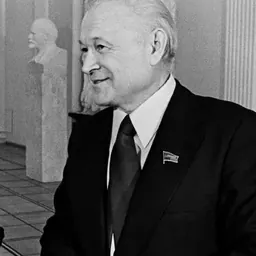
Lived 1954 – 2026 (aged 71). Alain Orsoni was a French politician and association football executive.
Alain Orsoni (; 27 September 1954 – 12 January 2026) was a Corsican politician, separatist militant and football club president. Founder of the (Corsican: Canale Abituale, FLNC-CA) and its political wing, the Movement for Self-Determination (, MPA), Orsoni led the organization until its dissolution in 1997.
Orsoni was known as the Man of Seven Lives and one of the Corsican "parrains" (a word that can be translated to "godfathers", "capi" or "mob guys") due to his criminal convictions and proclivity for creating new identities overseas to flee persecution.
Orsoni was assassinated in January 2026.
Early life Orsoni was born in the town of Vero, on 27 September 1954, to a Corsican family. His father André (Andriu) Orsoni was a battle-hardened World War II veteran who had returned from the war in Indochina months before he was born. Shortly after, when Orsoni was very young, his father enlisted in the Algerian war, where he later joined the far-right pro-French terrorist group Organisation armée secrète (OAS). Orsoni grew up very close to his father, which is likely a reason his politics reflected that of his father's for most of his early years. His brother, Guy (Guidu) Orsoni was born 4 years after Alain. In 1972, Orsoni moved to Paris to pursue higher education at the Assas-Panthéon University. There, he joined the Union Defense Group, a far-right student union. However, his right-wing views began to change as he met with the left-wing Corsican nationalists at his school, particularly Léo Battesti, who would later become his close friend and fight with him in the Corsican conflict on the side of the FLNC. In the summer of 1975, Orsoni and Battesti returned to Corsica and joined a nationalist militant group, Azione Regiunalista Corsa (ARC). In August 1975, the ARC led the Aléria standoff, a military standoff on the eastern coast of Corsica. The ensuing chaos caused Orsoni to flee to a military camp before returning to Paris. In 1976, the National Liberation Front of Corsica formed, and Orsoni joined, quickly rising through the ranks to become the head of the FLNC's Paris division. After a year, Orsoni and Cacciari were released on 2 March 1982 due to the "Defferre accords", an agreement between the FLNC and Mitterrand. Afterwards, he returned to Corsica, where he took charge of actions in Ajaccio.
Ajaccio Brigade leader; murder of Guy Orsoni Once returning to Corsica, Orsoni and his brother Guy Orsoni had become something akin to folk heroes in nationalist circles. His command in Paris and his role in the prison revolt of 1981 had gained him significant fame, and it didn't take much time before both of the Orsoni brothers had become brigade leaders in the FLNC. Orsoni had taken up the post of Ajaccio, and had begun coordinating most of the actions in Corse-du-Sud.
On 17 June 1983, Alain and Guy Orsoni had met in the town of Sartène for an FLNC meeting. After parting ways, Guy Orsoni was kidnapped and murdered by members of the Valinco gang, a large mafia group at the time that was present throughout southern Corsica. Orsoni, as well as many Corsican nationalists, believe this was done in coordination with French government officials. This drove the FLNC, already at war with the French, to also begin a war with the Corsican mafia. On June 7, 1984, a year into the FLNC-mafia conflict, a commando in Ajaccio was assembled to break into a prison where Valinco gang members involved in the assassination of Guy Orsoni were being held and shoot them dead. Orsoni, overseeing the project from the sidelines, claimed it was "the greatest regret of his life" that he didn't attend personally. Radical members of A Cuncolta Naziunalista removed Orsoni from power due to his lack of support for armed struggle, replacing him with Charles Pieri, a brigade leader from Bastia who was arrested in 1982 for the murder of a Foreign Legion member, and François Santoni, a brigade leader from the Gravona region known for being one of the most radical FLNC leaders. As the conflict escalated, Orsoni would take further control of the parts of the FLNC that didn't break off and engage in dissident struggle, and on 17 October 1990 the remains became the FLNC-Canal Habituel (FLNC-Canale Abituale, FLNC-CA), led by Orsoni alone.
Orsoni's policies were quite different under the FLNC-CA compared to his brigade leadership in the original FLNC. Rather than focusing on war with France, Orsoni pitted the Habituels against the Historiques, focusing much more on the civil war within the FLNC. This was confirmed during a January 1991 meeting of Canal Habituel members where a freeze on military actions against the French government is declared and also during a March 1991 meeting where this is affirmed and the structure of the Habituels is discussed.
In March 1992 the MPA ran for seats in the Corsican assembly. they won 4 seats, but Orsoni lost his own seat, a seat he had been holding since 1986. Orsoni nevertheless continued his leadership position from outside of the assembly.
Throughout the FLNC splinter conflict, a wave of assassinations on both sides occurred, some allegedly involving Orsoni himself as a shooter. Orsoni and his organizations would repeatedly denounce violence and militancy present in the Historiques, yet would also lead a militant movement within the Habituels. Two months later, Orsoni announced the "imminent self-dissolution" of the FLNC-CA. some more radical members claiming to want to resume warfare against the Historiques and the French left the organization and founded the FLNC-Five May (FLNC-Cinque Maghju, FLNC-5M).
Exile in the United States, Nicaragua, and Spain Orsoni fled to Miami, Florida in 1996, where he opened a pizzeria. Then, after only months, he moved to Nicaragua, where he stayed for a number of years. There, he opened a casino with the help of a friend named Francis Perez, and began a system of alleged racketeering. He was expelled from Nicaragua in 2000, and settled in Barcelona, where he lived until 2008, when he returned to Corsica. He resigned in 2015 (though he was briefly president again during the 2022–23 season).
In August 2008, Orsoni narrowly escaped an assassination attempt carried out by the Brise de Mer, a Corsican mafia organization responsible for a large number of crimes in Corsica and beyond. In the year that followed, a number of people were indicted for the attempt, including former Grosseto-Prugna mayor Marie-Jeanne Bozzi and Pierre-Toussaint Michelosi.
Assassination On 12 January 2026, Orsoni was shot and killed while attending his mother's funeral in Corsica. He was 71. Orsoni was killed by a single gunshot to the heart fired from a long gun. Investigations were taken over by (PNACO) and Juridiction interrégionale spécialisée (JIRS). Prosecutor Nicolas Septe stated that the murder was being investigated as part of organised crime.
Don’t just read it —
keep it.
Full-length biographies made to live with: read them, listen on the way to work, watch them tonight.
- E-book
- Audio
- Video
Instant download · yours to keep · every purchase keeps this site free
Important facts
People in Alain Orsoni's life
Named in this biography and alive at the same time



Related people
Same field, nearest in time


Contemporaries
People whose lives overlapped Alain Orsoni's



Frequently asked questions
Who was Alain Orsoni?
French politician
When was Alain Orsoni born?
Alain Orsoni was born on 27 September 1954 in Ajaccio.
When did Alain Orsoni die?
Alain Orsoni died on 12 January 2026 in Vero.
What was Alain Orsoni's occupation?
Alain Orsoni was a politician and association football executive.
What nationality was Alain Orsoni?
Alain Orsoni was French.
Sources & further reading
Cite this page
APA: Biography.guide. (2026). Alain Orsoni. https://biography.guide/alain-orsoni/
MLA: "Alain Orsoni." Biography.guide, https://biography.guide/alain-orsoni/.
Chicago: "Alain Orsoni." Biography.guide. https://biography.guide/alain-orsoni/.
Data last updated: 2026-09-20 · Spot an error? Report a correction.
Page generated 2026-09-27 04:57 UTC