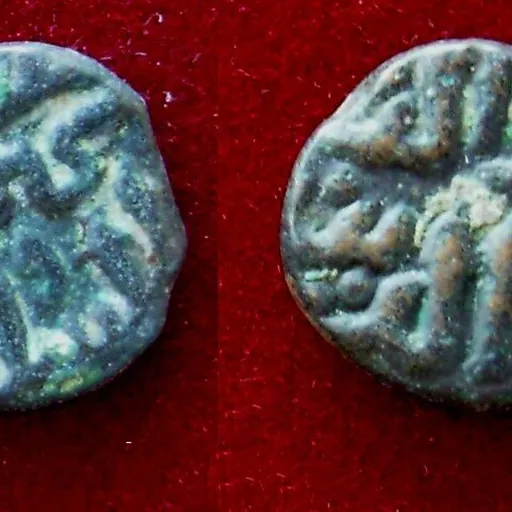
About Ala-ud-Din Bahman Shah
Lived 1291 – 1358 (aged 66–67). Ala-ud-Din Bahman Shah was a monarch.
Ala-ud-Din Hasan Bahman Shah (born Zafar Khan; ; 1290–1292 – 10 February 1358) was the founder and Sultan of the Bahmani Sultanate from 3 August 1347 until his death in 1358.
Ancestry and early life
The precise origin and early life of Hasan Gangu, later known as Ala-ud-Din Bahman Shah, are disputed. Contemporary and later sources provide conflicting accounts of his birthplace, ancestry, and social background.
The contemporary historian Abd-al-Malik Isami states that Hasan was born in Ghazni, in present-day Afghanistan. Other accounts have consequently described him as being of Afghan or Turkic origin. Firishta, however, while stating that Hasan was “by birth an Afghan”, rejected the genealogical traditions connecting him to the ancient Persian king Bahman and stated that his origins were too obscure to be reliably traced.
Another tradition, recorded by Firishta and discussed by R. C. Majumdar, states that Hasan was a native of Delhi and a servant of a Brahmin named Gangu. According to this account, Hasan was cultivating a field when he discovered a copper pot containing gold coins, which he handed over to his master. Impressed by his honesty, Gangu brought him to the attention of the Sultan, who appointed him to the command of one hundred horsemen. Gangu, who was an astrologer, is also said to have predicted Hasan’s future greatness. Majumdar discusses this tradition while describing Hasan’s origins as obscure and emphasizing his humble beginnings.
Some later sources explicitly describe Hasan as a convert to Islam. Anna Suvorova, in Masnavi: A Study of Urdu Romance, describes Hasan Gangu as a “newly converted” Muslim in her discussion of the Bahmani tradition. Jayanta Gaḍakarī’s Hindu-Muslim Communalism: A Panchnama goes further and explicitly describes Hasan Gangu as a Brahmin who converted to Islam.
In 1339, Zafar Khan participated in an uprising against the Tughlaqs. This turned out unsuccessful; he and his allies were exiled to Afghanistan the same year. He managed to return to the Deccan, and in 1346 he participated in a siege of Gulbarga, at the time under Tughlaq control. The siege proved successful.
He was made a governor. Zafar Khan rose to power during the Rebellion of Ismail Mukh and in 1347 he was made commander of an army in Daulatabad. On 3 August 1347, the Afghan noble Nasir-ud-Din Ismail Shah, also known as Ismail Mukh, whom the rebel amirs of the Deccan placed on the throne of Daulatabad in 1345, abdicated in favor of Zafar Khan, resulting in the establishment of the Bahmani Sultanate with its headquarters at Hasanabad (Gulbarga). He was in charge of a three city jagir, with his main rule at Miraj.
Military campaigns Ala-ud-din Bahman Shah aspired to expand his dominion as far as Rameswaram, Ma'abar, or the Coromandel Coast, and subsequently aimed to conquer territories such as Malwa, Gujarat, Gwalior, and Delhi itself. However, his advisor, Malik Saifuddin Ghori, cautioned against this endeavor, citing the dense jungles and challenging terrain in the southern regions as unsuitable for a successful campaign. Instead, Malik advised the king to first pacify the Deccan plateau before advancing towards Malwa and Gujarat. Following this counsel, the king directed his military commanders to subdue various areas in the Deccan still held by those opposing his rule. Husain Gurshasp was tasked with Kotgir and Qandhar (Nanded), Raziud-din Qutb ul-Mulk with the southwest, Malik Maqbul (now Qir Khan) with Kalyani, Sikandar Khan with Telangana, and Ainu’d-din Kwaja-i Jahan led the army from Miraj to Gulbarga.
He was succeeded by his son Mohammed Shah I after his death in 1358.
Don’t just read it —
keep it.
Full-length biographies made to live with: read them, listen on the way to work, watch them tonight.
- E-book
- Audio
- Video
Instant download · yours to keep · every purchase keeps this site free
Important facts
Related people
Same field, nearest in time





Contemporaries
People whose lives overlapped Ala-ud-Din Bahman Shah's



Frequently asked questions
Who was Ala-ud-Din Bahman Shah?
1st Bahmani Sultan
When was Ala-ud-Din Bahman Shah born?
Ala-ud-Din Bahman Shah was born in 1291.
When did Ala-ud-Din Bahman Shah die?
Ala-ud-Din Bahman Shah died on 11 February 1358 in Kalaburagi.
What was Ala-ud-Din Bahman Shah's occupation?
Ala-ud-Din Bahman Shah was a monarch.
Sources & further reading
· Wikipedia: Ala-ud-Din Bahman Shah
· DBpedia: Ala-ud-Din Bahman Shah
Cite this page
APA: Biography.guide. (2026). Ala-ud-Din Bahman Shah. https://biography.guide/ala-ud-din-bahman-shah/
MLA: "Ala-ud-Din Bahman Shah." Biography.guide, https://biography.guide/ala-ud-din-bahman-shah/.
Chicago: "Ala-ud-Din Bahman Shah." Biography.guide. https://biography.guide/ala-ud-din-bahman-shah/.
Data last updated: 2026-09-22 · Spot an error? Report a correction.
Portrait: Wikimedia Commons · author & licence
Page generated 2026-09-27 05:03 UTC