
About Al Seckel
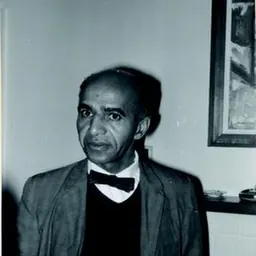
Lived 1958 – 2015 (aged 56–57). Al Seckel was an American collector, writer, cognitive scientist and scientific skepticism.
Alfred Paul Seckel (September 3, 1958 – 2015) was an American collector and popularizer of visual and other types of sensory illusions, who wrote books about them. Active in the Freethought movement as a skeptic in the 1980s, he was the co-founder and executive director of the Southern California Skeptics. In 2010, Seckel provided reputation management services for Epstein. Chris Gilman, a Hollywood prop maker, began to manufacture plastic car ornaments with the Darwin fish in 1990, and licensed the design to Evolution Design of Austin, Texas. When the emblem evolved into a million-dollar business, Evolution Design threatened to sue distributors of look-alike and derivative products. Seckel in turn sued Evolution Design for copyright infringement. Although Seckel produced examples of the design that predated Gilman's 1990 copyright date, the suit was settled when it was determined that Seckel and Edwards had allowed the design to fall into public domain. SCS co-sponsored and produced a monthly series of lectures, primarily held at the California Institute of Technology, with other meetings occasionally held on the campus of Cal State Fullerton, that explained alleged paranormal phenomena such as extra-sensory perception and firewalking. Seckel was the founder and executive director of SCS. An article published in New Scientist in 1985 states that the Southern California Skeptics were "the fastest growing chapter of the Committee for the Scientific Investigation of Claims of the Paranormal (CSICOP)". Author George P. Hansen, in an article published in 1992, stated that incidents involving Seckel had embarrassed CSICOP because "he did not hold the academic credentials he claimed."
The Southern California Skeptics dissolved after the late 1980s. In 1991, Michael Shermer and Pat Linse co-founded a new Los Angeles-area skeptical group called The Skeptics Society after the Southern California Skeptics had disbanded.
Optical illusions Seckel was "a leading collector and popularizer" of optical illusions. He also developed visual illusion installations for museums.
Seckel's books about optical illusions include several picture books for children such as Ambiguous Illusions (2005), Action Optical Illusions (2005) and Stereo Optical Illusions (2006).
His book, Masters of Deception: Escher, Dali, and the Artists of Optical Illusion (2004), collects the work of many visual illusion artists, including among others Giuseppe Arcimboldo (1527–1593), Salvador Dalí (1904–1989), M. C. Escher (1898–1972), and Rex Whistler (1905–1944). His book The Art of Optical Illusions placed first on the American Library Association's "Top 10 Quick Picks for Reluctant Young Adult Readers" list for 2001.
He gave many lectures about such illusions, including an early TED talk (2004) and a talk at the World Economic Forum, Davos in 2011. At the time they were collected, the market value of the archive was unknown as many institutions did not have an interest in keeping the archives of scientists' papers. After the Wellcome Trust bought Crick's papers in 2001 for $2.4 million, Norman pursued individual sale of the items in his collection through Christie's. Although former colleagues and associates of James Watson and Crick attempted to raise the asking price of $3.2 million in an effort to have the collection donated to the Cold Spring Harbor Laboratory, the collection was eventually acquired by the J. Craig Venter Institute, before finally being purchased by the Science History Institute in Philadelphia which began to offer visitor access to the items in September 2025.
In a San Diego Reader article from 1994, Tom McIver (author of Anti-Evolution: An Annotated Bibliography) accused Seckel of failing to disclose financial information as leader of the Southern California Skeptics and misrepresenting his academic credentials. Seckel later sued McIver for libel over edits to his Wikipedia page. The suit was settled in 2007 under undisclosed terms.
Collaboration with Jeffrey Epstein In 2009, Seckel was involved in organizing a science conference with financier and convicted sex offender Jeffrey Epstein. The Mindshift conference took place in early 2011 on Epstein's private island Little Saint James and at a hotel in the US Virgin Islands. In attendance were scientists Murray Gell-Mann, Leonard Mlodinow, Gerald Sussman,
Emails released by the US Congress in November 2025 show that in 2010 Seckel discussed reputation management with Epstein. Seckel charged him tens of thousands of US dollars for search engine optimisation, including downranking stories about his conviction and removing "toxic suggested search engine terms", and making edits to the Wikipedia article about him. Seckel worked to broaden Epstein's pool of reputation managers, describing in an email to one contractor that his goal was to "build a very positive humanitarian successful presence for Jeff that is pervasive on the web".
Around 2010, Seckel and Maxwell moved to France, reportedly to care for Maxwell's mother in Meyreuil. Seckel and Maxwell later lived near La Roque-Gageac.
On July 1, 2015, in Saint-Cirq-Lapopie. As of December 2021, his death remained unconfirmed by French authorities. Seckel's death certificate was made public in 2022, listing the cause of death as suicide, described by France 3 as a suicide by jumping.
Don’t just read it —
keep it.
Full-length biographies made to live with: read them, listen on the way to work, watch them tonight.
- E-book
- Audio
- Video
Instant download · yours to keep · every purchase keeps this site free
Important facts
Family & relationships
People in Al Seckel's life
Named in this biography and alive at the same time




Related people
Same field, nearest in time



Contemporaries
People whose lives overlapped Al Seckel's


Frequently asked questions
Who was Al Seckel?
American collector and skeptic (1958–2015)
When was Al Seckel born?
Al Seckel was born on 3 September 1958 in New York City.
When did Al Seckel die?
Al Seckel died in 2015 in Saint-Cirq-Lapopie.
What was Al Seckel's occupation?
Al Seckel was a collector, writer, cognitive scientist and scientific skepticism.
What nationality was Al Seckel?
Al Seckel was American.
Sources & further reading
Cite this page
APA: Biography.guide. (2026). Al Seckel. https://biography.guide/al-seckel/
MLA: "Al Seckel." Biography.guide, https://biography.guide/al-seckel/.
Chicago: "Al Seckel." Biography.guide. https://biography.guide/al-seckel/.
Data last updated: 2026-09-26 · Spot an error? Report a correction.
Page generated 2026-09-27 05:15 UTC