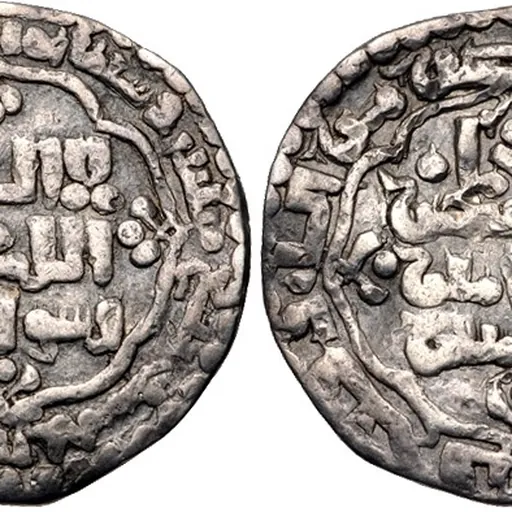
Al-Mustansir
36th and Penultimate Abbasid Caliph (r. 1226–1242)
About Al-Mustansir
Lived 1192 – 1242 (aged 49). Al-Mustansir was an Arab caliph.
Abu Ja'far al-Mansur ibn al-Zahir (17 February 1192 – 2 December 1242), commonly known as al-Mustansir, was the 36th Abbasid caliph, ruling from 1226 to 1242. He succeeded al-Zahir as caliph in the year 1226, and was the penultimate caliph to rule from Baghdad. He was the second-to-last caliph of the Abbasid Caliphate.
Biography The name of Caliph al-Mustansir appears in this contemporary painting from folio 164v of the Maqamat al-Hariri, 1237 edition (BNF Arabe 5847). Al-Mustansir was born in Baghdad on 1192. He was the son of Abu Nasr Muhammad (future caliph al-Zahir). His mother was a Turkish Umm walad. called Zahra. His full name was Mansur ibn Muhammad al-Zahir and his Kunya was Abu Jaʿfar. At the time of his birth, his father was a prince. When his father ascended to the throne in 1225. His father, lowered the taxes of Iraq, and built a strong army to resist invasions. He died on 10 July 1226, nine months after his accession.
On his father's death in 1226 he has succeeded his father Az-Zahir as the thirty-sixth Abbasid caliph in Baghdad. Al-Mustansir is particularly known for establishing the Mustansiriyya Madrasa (currently a part of the Al-Mustansiriya University) in 1227/32/34. The Madrasa, at the time, taught many subjects including medicine, mathematics, literature, grammar and Islamic religious studies, becoming a prominent and high-ranking center for Islamic studies in Baghdad.
The Madrasas during the Abbasid period were used as the predominant instrument to foster the spread of Islamic thought as well as a way to extend the founder's pious ideals. thumb The Courtyard of the Mustansiriyya MadrasaThe ruler of Erbil, Muzaffar ad-Din Gökböri was being without a male heir, Gökböri willed Erbil to the Abbasid caliph al-Mustansir. After the death of Gökböri in 1233, the Erbil city came under Abbasid control.
Al-Mustansir died on 5 December 1242. His son Al-Musta'sim succeeded him as the thirty-seventh and last Caliph of the Abbasid Caliphate.
Family One of Al-Mustansir's concubines was Shahan. She was a Greek, and had been formerly a slave of Khata Khatun, the daughter of the commander Sunqur al-Nasiri the Tall and the wife of the commander Jamal al-Din Baklak al-Nasiri. After Al-Mustansir's accession to the throne, Khata presented Shahan to him as a gift, as part of a group of slaves. Shahan alone among them became his concubine and favourite. Another of his concubines was Hajir. She was the mother of the future Caliph Al-Musta'sim.
Don’t just read it —
keep it.
Full-length biographies made to live with: read them, listen on the way to work, watch them tonight.
- E-book
- Audio
- Video
Instant download · yours to keep · every purchase keeps this site free
Important facts
Family & relationships
People in Al-Mustansir's life
Named in this biography and alive at the same time
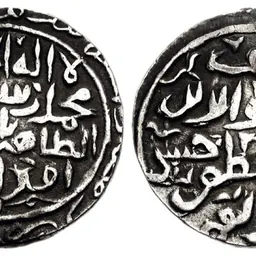
Related people
Same field, nearest in time

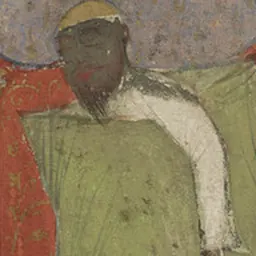

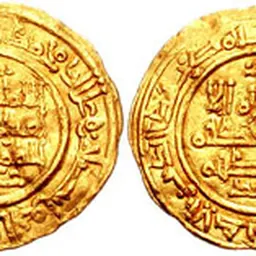
Contemporaries
People whose lives overlapped Al-Mustansir's




Frequently asked questions
Who was Al-Mustansir?
36th and Penultimate Abbasid Caliph (r. 1226–1242)
When was Al-Mustansir born?
Al-Mustansir was born on 17 February 1192 in Baghdad.
When did Al-Mustansir die?
Al-Mustansir died on 17 January 1242 in Baghdad.
What was Al-Mustansir's occupation?
Al-Mustansir was a caliph.
What nationality was Al-Mustansir?
Al-Mustansir was Arab.
Sources & further reading
Cite this page
APA: Biography.guide. (2026). Al-Mustansir. https://biography.guide/al-mustansir-caliph/
MLA: "Al-Mustansir." Biography.guide, https://biography.guide/al-mustansir-caliph/.
Chicago: "Al-Mustansir." Biography.guide. https://biography.guide/al-mustansir-caliph/.
Data last updated: 2026-09-22 · Spot an error? Report a correction.
Portrait: Wikimedia Commons · author & licence
Page generated 2026-09-27 05:04 UTC