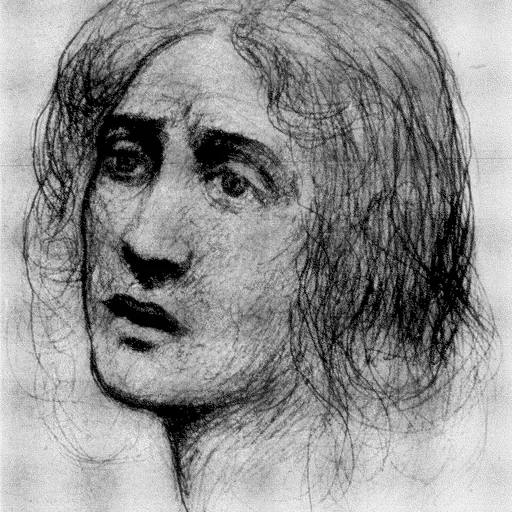
About al-Khansāʼ
Lived 575 – 645 (aged 69–70). al-Khansāʼ was a poet and writer.
Tumāḍir bint ʿAmr ibn al-Ḥārith ibn al-Sharīd al-Sulamīyah , usually simply referred to as al-Khansāʾ (, meaning "snub-nosed", an Arabic epithet for a gazelle as metaphor for beauty) was a 7th-century tribeswoman, living in the Arabian Peninsula. She was one of the most influential poets of the pre-Islamic and early Islamic periods.
In her time, the role of a female poet was to write elegies for the dead and perform them for the tribe in public oral competitions. Al-Khansāʾ won respect and fame in these competitions with her elegies, and is widely considered as the finest author of Arabic elegies and one of the greatest and best known female Arab poets of all time. In 629, she went to Medina with a deputation from her clan and, after meeting the Islamic prophet Muhammad, embraced the new religion. Her poetry was later recorded by Muslim scholars, who were studying unaltered Arabic of her time in order to explicate the language of early Islamic texts.
Life Al-Khansāʾ was born and raised in the Najd in the Arabian Peninsula into a wealthy family of the tribe of Sulaym, and was the daughter of the head of the al-Sharid clan. Similarly, another anecdote says that al-Nabigha told al-Khansāʾ, "If Abu Basir had not already recited to me, I would have said that you are the greatest poet of the Arabs. Go, for you are the greatest poet among those with breasts". She responded by saying, "I'm the greatest poet among those with testicles, too".
She was a contemporary of Muhammad, and eventually converted to Islam. Muhammad even rated al-Khansāʾ over Imru' al-Qais, the most famous poet of the classical Arabic tradition, as the one with greater poetic abilities.
She was married at least twice, and had six children, all of whom were also poets and eventually converted to Islam.
She died in 645 or 646.
Poetry and importance in the history of Arabic literature The poems of al-Khansā’ are short and marked by a strong and traditional sense of despair at the irrevocable loss of life. Apart from her poetical talent, her significance lies in having raised the early Arabic elegiac tradition to the level of qarīd poetry instead of sadj‘ or radjaz. Her style and expression, which assured her a superiority in this genre, became stereotyped in the later rithā’ poetry. As an outstanding poet and female figure in the history of Arabic literature, the position of al-Khansā’ is unique. Al-Khansa’s elegies were later collected by Ibn al-Sikkit (802–858 CE), a literary scholar of the early Abbasid era. Nearly a thousand lines of her poetry remain.
Don’t just read it —
keep it.
Full-length biographies made to live with: read them, listen on the way to work, watch them tonight.
- E-book
- Audio
- Video
Instant download · yours to keep · every purchase keeps this site free
Important facts
People in al-Khansāʼ's life
Named in this biography and alive at the same time
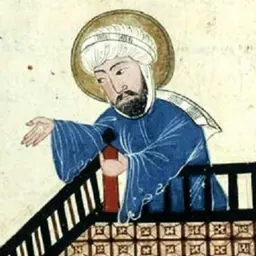
Related people
Same field, nearest in time


Contemporaries
People whose lives overlapped al-Khansāʼ's





Frequently asked questions
Who was al-Khansāʼ?
Arab poet
When was al-Khansāʼ born?
al-Khansāʼ was born in 575 in Najd.
When did al-Khansāʼ die?
al-Khansāʼ died in 645 in Najd.
What was al-Khansāʼ's occupation?
al-Khansāʼ was a poet and writer.
Sources & further reading
Cite this page
APA: Biography.guide. (2026). al-Khansāʼ. https://biography.guide/al-khansa/
MLA: "al-Khansāʼ." Biography.guide, https://biography.guide/al-khansa/.
Chicago: "al-Khansāʼ." Biography.guide. https://biography.guide/al-khansa/.
Data last updated: 2026-09-22 · Spot an error? Report a correction.
Portrait: Wikimedia Commons · author & licence
Page generated 2026-09-27 05:02 UTC