
About Akira Iwasaki
Lived 1903 – 1981 (aged 77). Akira Iwasaki was a Japanese journalist, film critic, film producer, film historian, film director and cinematographer.
(18 November 1903 – 16 September 1981) was a prominent left-wing Japanese film critic, historian, and producer. Born in Tokyo, he became interested in film from his student days at Tokyo University. Early on, he helped introduce German experimental film in Japan, and was instrumental in getting Teinosuke Kinugasa's masterpiece A Page of Madness screened in Tokyo. Afterward, he became involved in Marxist politics and established a career promoting progressive cinema and criticism. He wrote or edited over thirty books of film criticism, history, theory and biography during his career. He was also involved in film production, first serving from the late 1920s as a central member of the Proletarian Film League of Japan (Prokino), where he acted as not only the theoretical brain of the movement alongside Genjū Sasa, but also as a filmmaker. When Prokino was effectively eliminated by police oppression under the Peace Preservation Law, Iwasaki continued his critical activities, becoming involved in the Yuibutsuron Kenkyūkai with such thinkers as Jun Tosaka, but was eventually arrested in 1940, in part for his opposition to the Film Law, which authorized increased government control of the film industry. He was the only film critic arrested by the ideological police during the war. After his release, he worked for a time at the Tokyo office of the Manchukuo Film Association thanks to the help of Kan'ichi Negishi.
After Japan's defeat in World War II, Iwasaki was active in criticizing those who participated in the war effort. He joined Nihon Eigasha (Nichiei), primarily a documentary film company, and helped produce two important, but ill-fated documentaries: The Effects of the Atomic Bomb on Hiroshima and Nagasaki, which was confiscated by Occupation authorities, and The Japanese Tragedy, directed by Fumio Kamei, which was banned for its critical depiction of Emperor Hirohito. While continuing to work as a film critic from the 1950s on, including pursuing a vigorous debate on the nature of cinematic realism with Taihei Imamura, Iwasaki helped produce some of the independent films made by Tadashi Imai and Satsuo Yamamoto after many left-wingers were expelled from the major studios in the Red Purge.
In 1974, he was a member of the jury at the 24th Berlin International Film Festival.
Don’t just read it —
keep it.
Full-length biographies made to live with: read them, listen on the way to work, watch them tonight.
- E-book
- Audio
- Video
Instant download · yours to keep · every purchase keeps this site free
Important facts
People in Akira Iwasaki's life
Named in this biography and alive at the same time

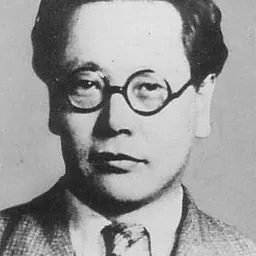
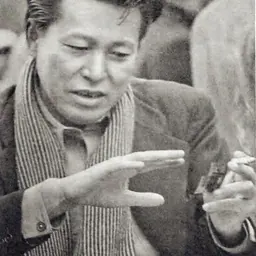
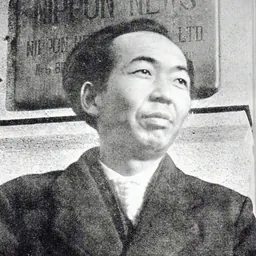

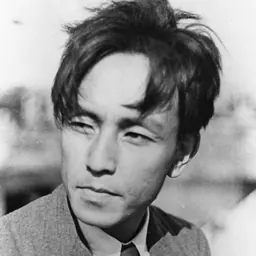

Related people
Same field, nearest in time




Contemporaries
People whose lives overlapped Akira Iwasaki's

Frequently asked questions
Who was Akira Iwasaki?
Japanese film critic (1903–1981)
When was Akira Iwasaki born?
Akira Iwasaki was born on 18 November 1903 in Tokyo.
When did Akira Iwasaki die?
Akira Iwasaki died on 16 September 1981 in Tokyo.
What was Akira Iwasaki's occupation?
Akira Iwasaki was a journalist, film critic, film producer, film historian, film director and cinematographer.
What nationality was Akira Iwasaki?
Akira Iwasaki was Japanese.
Sources & further reading
Cite this page
APA: Biography.guide. (2026). Akira Iwasaki. https://biography.guide/akira-iwasaki/
MLA: "Akira Iwasaki." Biography.guide, https://biography.guide/akira-iwasaki/.
Chicago: "Akira Iwasaki." Biography.guide. https://biography.guide/akira-iwasaki/.
Data last updated: 2026-09-20 · Spot an error? Report a correction.
Page generated 2026-09-27 05:26 UTC