
About Akio Kashiwagi
Lived 1937 – 1992 (aged 54–55). Akio Kashiwagi was a Japanese businessperson.
, also known as "The Warrior", was a Japanese businessman and gambler who was known for his extravagant lifestyle and alleged connections to organized crime. In the early 1990s, Kashiwagi gained international notoriety for his high-stakes gambling at casinos in the United States and Australia. He was involved in several publicized incidents, including a dispute with then businessman Donald Trump and with other casinos over his gambling debts. In 1992, Kashiwagi was murdered in his home in Japan. The culprit was never found.
Early life Kashiwagi was the son of a carpenter and was born in a poor family, with nine siblings.
Business career In the early 1960s, Kashiwagi moved to Kawaguchiko, and became a real estate developer. Over the decade, the area's infrastructure improved and it became a popular tourist destination. According to Japanese press, local real estate values increased a millionfold. which he used to intimidate tenants. He was known by casino owners as a "whale", someone who gambles substantial sums of money, and is further incentivized with a very high credit line. which made him famous in the gambling world. Kashiwagi experienced streaks of gains and losses throughout his stay,
To improve his chances in a rematch with Kashiwagi, Trump enlisted the assistance of mathematician Jess Marcum. Marcum calculated that Kashiwagi's odds would decrease the longer he played. Trump noticed that Kashiwagi seemed to have worse luck when the dealers were a group of young women, so he instructed they remain assigned to Kashiwagi.
Kashiwagi paid Trump $6 million of the $10 million he owed, he was unable to pay the rest. Gomes, of the Trump Taj Mahal, stated that Kashiwagi had a reputation for renegotiating debts to his advantage. Afterwards, Kashiwagi flew to Europe in an attempt to recoup his losses, but ended up losing an additional $15.4 million. Following the burst of the Japanese asset price bubble in 1988, Kashiwagi Shoji went underwater on its large amounts of borrowing; it was reported that Kashiwagi owed $131 million to a bank, which exceeded the book value of his company's assets. He only paid back European creditors $5.3 million, and still owed $5 million to the Las Vegas Hilton, and $4 million to Trump Plaza and Casino. The latter had written off $1 million of the debt by the time of Kashiwagi's death.
Personal life Kashiwagi owned several luxury cars, and numerous expensive diamonds. He also owned rare artwork, including paintings by Yokoyama Taikan, which he sometimes loaned to museums. He spent $38 million building his home, known as the Kashiwagi Castle or Kashiwagi Palace, located on the shore of Lake Kawaguchiko, near Mount Fuji.
In public, Kashiwagi had a subdued style, and did not wear jewelry or cufflinks. The Wall Street Journal described him as wearing a "rumpled blue-striped shirt and plain black slippers", with "the look of a quarter slot-machine player just off the bus from Hoboken". Other outlets describe him as "always [wearing] blue-and-white striped shirts [and] somber ties", and a bank clerk's grey suit. While staying at American casinos, he often ordered BLT sandwiches and a dish of marinated monkey meat.
Kashiwagi had three children.
Murder On January 3, 1992, between 7:00 p.m. and 8:00 p.m., Kashiwagi was found murdered in the kitchen of his Mount Fuji home, aged 54 years old. He had been stabbed with an object similar to a katana sword, and media reports disagree on whether he was stabbed 10 times, 20 times, "dozens of times", or "up to 150" times. His diamonds, antiques, and $770,000 in cash were left untouched, and there was no sign of a break-in.
At the time of his death, Kashiwagi owed U.S. casinos "at least" $9 million, and owed European creditors around $10 million. Kashiwagi had recently failed to repay his European creditors, leading Japanese media to speculate that he had been made an example of.
On February 1, 1992, the Japanese police arrested a man belonging to the yakuza and a woman, charging them with murder and destruction of evidence, respectively. The man had known Kashiwagi's son and was reportedly "deeply in debt". Kashiwagi had previously purchased a car worth ¥3.5 million ($34,500) from the man, who claimed that Kashiwagi had not paid him. The woman was accused of helping the man wipe Kashiwagi's blood from the getaway car. Both suspects denied the charges. After the police were unable to find the murder weapon, the suspects were released.
The culprit was never found, and the statute of limitations for Kashiwagi's murder expired in January 2007, after 15 years.
Don’t just read it —
keep it.
Full-length biographies made to live with: read them, listen on the way to work, watch them tonight.
- E-book
- Audio
- Video
Instant download · yours to keep · every purchase keeps this site free
Important facts
People in Akio Kashiwagi's life
Named in this biography and alive at the same time
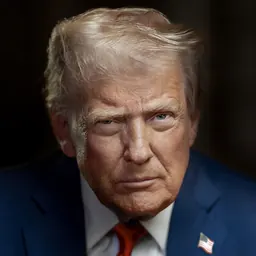
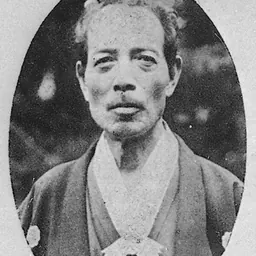

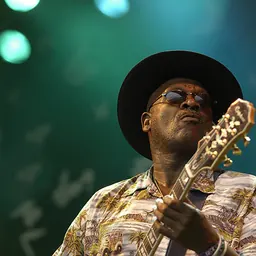
Related people
Same field, nearest in time


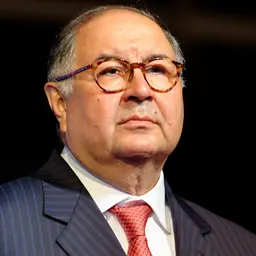

Contemporaries
People whose lives overlapped Akio Kashiwagi's



Frequently asked questions
Who was Akio Kashiwagi?
Japanese businessman
When was Akio Kashiwagi born?
Akio Kashiwagi was born in 1937 in Fujiyoshida.
When did Akio Kashiwagi die?
Akio Kashiwagi died on 3 January 1992 in Kawaguchiko.
What was Akio Kashiwagi's occupation?
Akio Kashiwagi was a businessperson.
What nationality was Akio Kashiwagi?
Akio Kashiwagi was Japanese.
Sources & further reading
Cite this page
APA: Biography.guide. (2026). Akio Kashiwagi. https://biography.guide/akio-kashiwagi/
MLA: "Akio Kashiwagi." Biography.guide, https://biography.guide/akio-kashiwagi/.
Chicago: "Akio Kashiwagi." Biography.guide. https://biography.guide/akio-kashiwagi/.
Data last updated: 2026-09-20 · Spot an error? Report a correction.
Page generated 2026-09-27 05:28 UTC