
Akhtar Abdur Rahman
Pakistani intelligence chief
About Akhtar Abdur Rahman
Lived 1924 – 1988 (aged 64). Akhtar Abdur Rahman was a Pakistani and Indian statesperson, financier and military personnel.
Early life and education Akhtar Abdur Rahman was born on 11 June 1924 in Peshawar, to a Kakazai Pashtun family. His father, Abdur Rahman Khan, was a doctor at a government hospital over here. before enrolling himself in the Government College University (Faisalabad) in 1941, subsequently earning a bachelor's degree in Science and Statistics
Military career
Rising through the ranks Rahman joined the British Indian Army in 1946, before becoming Captain in the Pakistan Army three years later. He was later transferred back to General Headquarters (GHQ) as a staff officer, a position he held from April 1956 to February 1957. Later, he was promoted to the two-star general rank of a major-general, and served as the general officer commanding (GOC) of the 12th Infantry Division stationed in Murree. As the GOC of the 12th Infantry Division, Rahman was considered very close to Prime Minister Zulfiqar Ali Bhutto and personally received him whenever he visited the command office of the 12th Division.
Rahman did not take part in the 1977 Pakistani military coup, and privately opposed the martial law to remove Bhutto. Six months after the military coup of 1977, he was appointed as the adjutant general at the General Headquarters, which would last two years.
Death and investigation
On 17 August 1988, Rahman died in a plane crash along with several other high-profile generals, including then-president of Pakistan Zia-ul-Haq, and the U.S. Ambassador to Pakistan, Arnold Lewis Raphel. Rahman had accompanied Zia to Bahawalpur in his C-130B Hercules presidential aircraft jet, to witness a U.S. M1 Abrams tank demonstration. After the generals witnessed the demonstration, it was time to leave. The aircraft departed from Bahawalpur Airport and was expected to reach Islamabad International Airport after a few hours. The takeoff was smooth, but shortly after, about minutes into the flight, the control tower lost contact with the aircraft. Witnesses who saw the plane in the air claimed that it was flying erratically and that it nosedived and exploded on impact, killing all 31 passengers on board.
Shortly after the plane crash, the senate chairman, Ghulam Ishaq Khan, became president and announced Zia-al-Haq's death on radio and TV. There is speculation that various state intelligence agencies including the CIA, the Soviet KGB, the Indian RAW, the Israeli Mossad and the Afghan KHAD (in retaliation of Pakistani support for the Afghan mujahideen), or an alliance of the four intelligence agencies along with the dissident groups in the Pakistan Army, were involved in the incident.
Not long after, a board of inquiry was set up to investigate. It concluded 'the most probable cause of the crash was a criminal act of sabotage perpetrated in the aircraft. It also suggested that poisonous gases were released that incapacitated the passengers and crew, which explains why no Mayday signal was given. There was also speculations about other facts involving the details of the investigation. Although a black box was installed in the aircraft, it was not located after the crash. To this day, the cause of the plane crash remains unknown and has given a rise to many conspiracy theories.
Personal life Rahman married Rashida Akhtar Khan in 1951 and had four children: Akbar Akhtar Khan (born 1953), Humayun Akhtar Khan (born 1955), Haroon Akhtar Khan (born 1957), and Ghazi Akhtar Khan (born 1959).
Wealth Rahman, as the head of Pakistani intelligence agency, helped funnel billions of dollars in cash and other aid from the U.S. and other countries for the Afghan mujahedeen, to support their fight against the Soviet Union. A Credit Suisse account was opened in 1985, in the name of three of Rahman's sons. Years later, the account would grow to hold $3.7 million, as what the leaked records show. Akbar Akhtar Khan and Haroon Akhtar Khan, did not respond to the requests for comment on the reporting project. In a text message, Ghazi Akhtar Khan, the youngest of the Akhtar brothers, said the information about the accounts was "not correct," adding, "The content is conjectural."
Awards and decorations
Nishan-e-Imtiaz (Military)
(Order of Excellence)Hilal-e-Imtiaz (Military)
(Crescent of Excellence)Sitara-e-Basalat (Star of Good Conduct)Tamgha-e-Imtiaz (Military)
(Medal of Excellence)Tamgha-e-Diffa (General Service Medal)Sitara-e-Harb 1965 War (War Star 1965)Sitara-e-Harb 1971 War (War Star 1971)Tamgha-e-Jang 1965 War (War Medal 1965)Tamgha-e-Jang 1971 War (War Medal 1971)Pakistan Tamgha (Pakistan Medal) 1947Tamgha-e-Sad Saala Jashan-e- Wiladat-e-Quaid-e-Azam
(100th Birth Anniversary of
Muhammad Ali Jinnah)Tamgha-e-Jamhuria (Republic Commemoration Medal)
1956Hijri Tamgha (Hijri Medal)
1979
Books mentioning Rahman Fateh by Haroon-ur-Rasheed Silent soldier by Mohammad Yousaf The Bear Trap by Mohammad Yousaf and Mark Adkin Charlie Wilson's War by George Crile Ghost Wars by Steve Coll A Case of Exploding Mango's Mohammad Hanif Profiles of Intelligence by Brigadier Syed A. I. Tirmizi
Don’t just read it —
keep it.
Full-length biographies made to live with: read them, listen on the way to work, watch them tonight.
- E-book
- Audio
- Video
Instant download · yours to keep · every purchase keeps this site free
Important facts
People in Akhtar Abdur Rahman's life
Named in this biography and alive at the same time





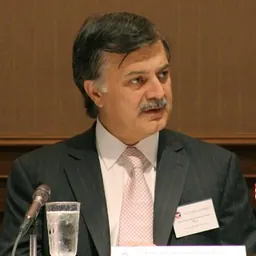
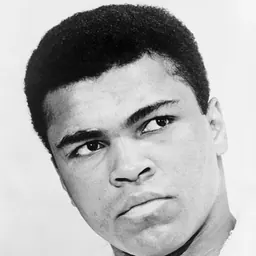
Related people
Same field, nearest in time
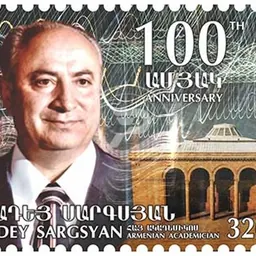
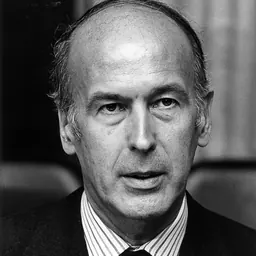
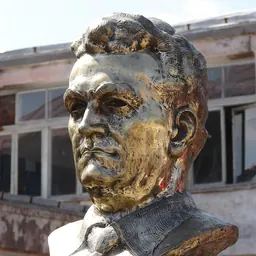


Contemporaries
People whose lives overlapped Akhtar Abdur Rahman's
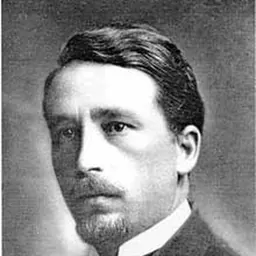

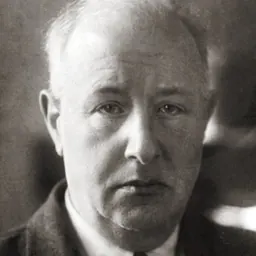

Frequently asked questions
Who was Akhtar Abdur Rahman?
Pakistani intelligence chief (1924–1988)
When was Akhtar Abdur Rahman born?
Akhtar Abdur Rahman was born on 11 June 1924 in Rampur.
When did Akhtar Abdur Rahman die?
Akhtar Abdur Rahman died on 17 August 1988 in Bahawalpur.
What was Akhtar Abdur Rahman's occupation?
Akhtar Abdur Rahman was a statesperson, financier and military personnel.
What nationality was Akhtar Abdur Rahman?
Akhtar Abdur Rahman was Pakistani and Indian.
Sources & further reading
· Wikipedia: Akhtar Abdur Rahman
· DBpedia: Akhtar Abdur Rahman
Cite this page
APA: Biography.guide. (2026). Akhtar Abdur Rahman. https://biography.guide/akhtar-abdur-rahman/
MLA: "Akhtar Abdur Rahman." Biography.guide, https://biography.guide/akhtar-abdur-rahman/.
Chicago: "Akhtar Abdur Rahman." Biography.guide. https://biography.guide/akhtar-abdur-rahman/.
Data last updated: 2026-09-20 · Spot an error? Report a correction.
Page generated 2026-09-27 05:08 UTC