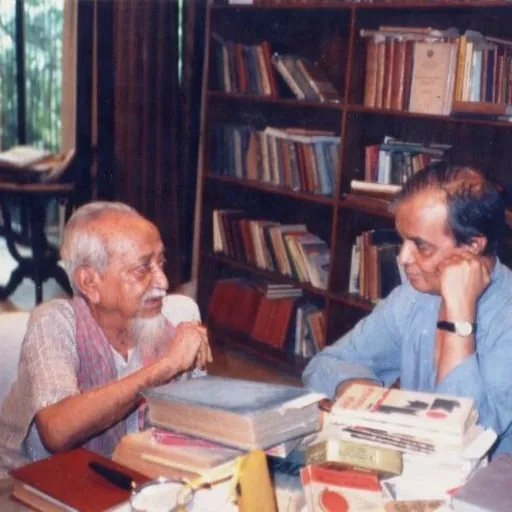
About Ahmed Sofa
Lived 1943 – 2001 (aged 58). Ahmed Sofa was a Bangladeshi, Indian and Pakistani poet.
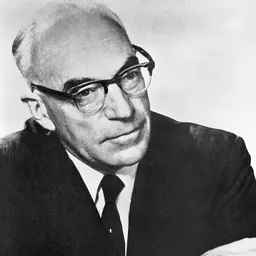
Ahmed Sofa (, ; 30 June 194328 July 2001) was a Bangladeshi writer, thinker, novelist, poet, philosopher and public intellectual. Sofa is considered by many, including National Professor Abdur Razzaq and Salimullah Khan, to be the most important Bengali Muslim writer after Mir Mosharraf Hossain and Kazi Nazrul Islam. A writer by occupation, Sofa wrote 18 non-fiction books, 8 novels, 4 collections of poems, 2 collections of short stories, and several books in other genres.
Sofa's Bangali Musalmaner Man (The Mind of the Bengali Muslims, 1981) is a highly acclaimed critical survey of the formation of Bengali Muslims' identity, causes of their backwardness, their development as a community, and their intellectual progress. Anisuzzaman and many others consider Sofa's Bangali Musalmaner Man one of the greatest non-fiction books written in the Bengali language. In Buddhibrittir Natun Binyas (A New Mode of Intellectualism, 1972), Sofa mapped the intellectual landscape of Bangladesh, delineating general opportunistic tendencies of Bangladeshi intellectuals, their collaboration with the Establishment, and their failure to bring any real material change in postcolonial Bangladesh.
Characterized by “a freshness of language”, and "constant experimentation, and novelty" of subject matter and narration, his fictions portrayed Bangladesh with all its social, spiritual and political nuances. Critics acclaimed his intricate characterization depicting psychological and sociocultural subtleties with realism. Abul Fazal, and many others considered Sofa's Omkar (The Om, 1975) the best literary expression of the liberation movement of Bangladesh. Pushpa Briksa ebang Bihanga Puran (Tales of Flowers, Trees, and Birds, 1996) recounts Sofa's spiritual attachments with birds, plants and trees reflecting his profound biophilia and ecoconsciousness. Some of his long poems include Ekti Prabeen Bater Kache Prarthana (Prayer to an Ancient Banayan Tree, 1977), and Basti Ujar (The Eviction of the Shanti Town Dwellers), etc. Muhammed Zafar Iqbal, Farhad Mazhar, Salimullah Khan, etc. He remains one of the most powerful intellectual influences in Bangladesh through his works and legacy. For a bohemian lifestyle, and outspoken nature, Sofa was a controversial figure during his lifetime. He was called rebel, mad, insolent, devoid of respect for authority, and an overly uncompromising figure among the intellectuals. He was awarded Ekushe Padak posthumously by the Government of Bangladesh in 2002. He was supported by his elder brother, Abdus Sobi, to carry on his work in literature. He received his secondary and higher secondary education in Chattogram. He moved to Dhaka in 1962 and were admitted to the Department of Bangla in the University of Dhaka. At the University of Dhaka, he stopped attending classes after getting rebuked by Ahmed Sharif once. In 1967, he earned a bachelor's degree as a private candidate from Brahmanbaria College. In 1970, he earned his master's in political science from the University of Dhaka. This led to his lifelong friendship with Abdur Razzaq though Sofa did not finish his PhD program. He began his writing career in the 1960s. He was buried in the close to the Mirpur Martyred Intellectual Graveyard.
Though Sofa never married, he had relationships with several women; among them, his relationships with Shamim Sikder and Suraya Khanam are notable. These relationships were the basis of Sofa's novel, Ardhek Nari Ardhek Ishvari (Half Women Half Goddess, 1995). Upon publication, it polarized critics' opinion, some welcoming and others condemning the work. Sofa reminded the intellectuals of their true responsibility in the newly independent country and warned about the grim future of fascism unless they performed their responsibility properly.
Fictions As a pioneering novelist of Bangladesh, Sofa brought fresh air both in forms and contents. Sofa's novels and stories were often based on his personal experience and observation. The novel has been called "a heart-warming tale of communal harmony" in a country ridden by communal conflicts and violence. The novel delineates the sociopolitical condition of the society as well as the sociofamilial environment very minutely.
In Ekjan Ali Kenaner Utthan Patan (The Rise and Fall of an Ali Kenan, 1988), Sofa created an existentialist character Ali Kenan in a backdrop of Mazar culture in Bangladesh. The political scenes, from Ayub Khan to Sheikh Mujib, are explored from the viewpoint of the people living on the fringe of the society. The minister opens up his mind and makes a confession of his misdeeds to his attendant Moula Box. Sofa placed the supreme institution of Bangladesh, Dhaka University, in a satirical milieu in Gabhi Bittano. People at Dhaka University were appalled by Sofa's portrayal of them in this novel.
Ardhek Nari Ardhek Ishvari (Half Woman and Half Goddess, 1996), a semi-autobiographical novel, pivots around the protagonists romantic relations with two women.
Pushpa Briksha ebang Bihanga Puran (Tales of Flowers, Trees and Birds, 1996) reflects Sofa's eco-consciousness and biophilia. In this autobiographical novel, Sofa "describes humanism in its most intimate form, an existential reality where we are inextricably connected with the environment that sustains us through our bonds with animals and plants." Jadyapi Amar Guru (He Is Still My Teacher, 1998) is his "outstanding memoir" of his friendship with his mentor Professor Abdur Razzaq. He also organized Sampradayik Dangar Biruddhe Sampreeti Committee (1992–94), Taranga (1993–96), Nagarik Shakti (1995), etc.
Legacy and influence
Today, Sofa is widely regarded as one of the greatest writers in the Bengali language. He was described as a public intellectual "against opportunism", a "dissenting" writer fearless to speak the truth, and a "champion of idealism and progressive culture". National Professor Abdur Razzaq stated that Sofa's works "constitute a treasure trove for Bengali literature" and "they create their own worlds where one can easily forget himself"/herself. Muhammad Zafar Iqbal called Sofa a 100% writer-litterateur from head to toe and wrote "It is our great fortune that a genius like him [Sofa] was born" in Bangladesh. In Farhad Mazhar's opinion, Ahmed Sofa examined and surveyed Bengali Muslim society and the birth of Bangladesh so closely and intimately that nobody would make any progress in any field in Bangladesh, be it Bangladeshi politics, literature, or culture unless one studies and understands Sofa's works properly. and the biggest enemy of religious fundamentalism. During his lifetime, Sofa was "the ever uncompromising conscience of the nation, always upholding the truth and justice." Sharif also said that if Bangladesh had few more Sofas, the country would be on the right track to a progressive society. Salimullah Khan hailed Sofa as a visionary thinker and one of the world's greatest story-tellers In Aktharuzzaman Elias's opinion, readers accompany Sofa in his journey to feel intimately the human in history and history in the human. and mentioned Sofa as his "mentor." In Chittagong, Ahmed Sofa Centers founded by a teacher at Chittagong University commemorates his work through its activity.
Sofa's novels and stories are frequently adapted into plays, films, etc. Kaler Nayak (The Hero of the Age, 2014) written by Gazi Tanzia is a novel based on Ahmed Sofa's life.
There is a street in Dhaka named Ahmed Sofa Sarani after him.
In July 2026, nearly 25 years after his death, Sofa's remains were transferred from the general section of the Martyred Intellectuals Graveyard in Mirpur to the section reserved for nationally recognized intellectuals and freedom fighters. The reinterment was carried out under the supervision of the Dhaka North City Corporation (DNCC) following an application submitted by his family. According to bdnews24.com, Sofa's nephew Nurul Anwar submitted the application on 11 January 2026, and the proposal was unanimously approved at the 14th meeting of the DNCC on 13 April 2026.
Controversy and criticism For a bohemian lifestyle, and outspoken nature, Sofa was a controversial figure during his lifetime. Rahat Khan once called him mad. His disagreements with Humayun Azad, Taslima Nasreen, and few others and subsequent denunciation of one another through write-ups were very much discussed and are still discussed by peers and new generation of writers. A professional writer, Sofa endured financial hardship though he was also known for his prodigality helping many in their need. Many speculate that early in Sofa's life, he used to frequent Abdur Razzaq's residence to seek financial help. German embassy in Dhaka financed Sofa's translation of Johann Wolfgang von Goethe's Faust. Sofa helped publish Muammar Gaddafi's The Green Book in Bengali. Many were critical of his connection with Libyan and German embassies.
Sofa wanted to immolate himself with a tinful of kerosene in 1972 to protest an attempted eviction of Humayun Ahmed's family from a house (allotted by government for the martyrs' family); Sikandar Abu Zafar stopped him from self-immolation by assuring and ensuring the prevention of the eviction. Humayun Ahmed reminisced about the event many times in his different memoirs.
Selected bibliography Sofa published 18 non-fiction books, 8 novels, 4 collections of poems, 1 collection of short stories, and several books in other genres. His writings were initially published in journals, newspapers, weekly and monthly magazines, then reprinted in standard book formats. Essays Jagrata Bangladesh (Watchful Bangladesh, 1971) Buddhibrttir Natun Binyas (A New Mode of Intellectualism, 1972) Banglabhasha: Rajnitir Aloke (The Bengali Language: In the Light of Politics, 1975) Bangladesher Rajnoitik Jatilata (Political Complications in Bangladesh, 1977) Sipahi Yuddher Itihas (History of the Sepoy Movement, 1979) Bangali Musalmaner Man (The Mind of the Bengali Muslims, 1981) Sheikh Mjibur Rahman O Anyanya Prabantdha (Sheikh Mujibur Rahman and Other Essays, 1989) Rajnitir Lekha (Political Writings, 1993) Anupurbik Taslima O Anyanya Sparshakatara Prasanga (Taslima from Beginning to End and Other Sensitive Issues, 1994) Samprathik Bibechana: Buddhibrittir Natun Binyas (Reconsideration: A New Mode of Intellectualism, 1997) Shantichukti O Nirabachita Prabandha (Peace Treaty and Selected Essays, 1998) Yadyapi Amar Guru (He is Still My Teacher, 1998) Novels Surjo Tumi Sathi (Sun, You are My Companion, 1967) Omkar (The Om, 1975) Ekjan Ali Kenaner Utthan Patan (The Rise and Fall of an Ali Kenan, 1989) Maranbilas (Death-Wish, 1989) Alatachakra (A Circle of Fire, 1990) Gabhi Bittanta (A Tale of a Cow, 1994) Ardhek Nari Ardhek Ishvari (Half Woman and Half Goddess, 1996) Puspa Briksa ebang Bihanga Puran (Tales of Flowers, Trees and Birds, 1996) Short stories Nihata Nakshatra (Slain Star, 1969) Poems Jallad Samay (Time, the Hangman, 1975) Ekti Prabin Bater Kachhe Prarthana (Prayer to an Ancient Banayan Tree, 1977) Lenin Ghumobe Ebar (Lenin Will Sleep Now, 1999) Juvenile stories Dolo Amar Kanakchapa (Let's Rock, My Kanakchapa, 1968) Nursery rhymes Go-Hakim (Bovine Justice, 1977)
Footnotes
Don’t just read it —
keep it.
Full-length biographies made to live with: read them, listen on the way to work, watch them tonight.
- E-book
- Audio
- Video
Instant download · yours to keep · every purchase keeps this site free
Important facts
People in Ahmed Sofa's life
Named in this biography and alive at the same time


Related people
Same field, nearest in time

Contemporaries
People whose lives overlapped Ahmed Sofa's


Frequently asked questions
Who was Ahmed Sofa?
Bangladeshi writer, thinker, novelist, poet, and public intellectual (1943–2001)
When was Ahmed Sofa born?
Ahmed Sofa was born on 30 June 1943 in Chittagong.
When did Ahmed Sofa die?
Ahmed Sofa died on 28 July 2001 in Dhaka.
What was Ahmed Sofa's occupation?
Ahmed Sofa was a poet.
What nationality was Ahmed Sofa?
Ahmed Sofa was Bangladeshi, Indian and Pakistani.
Sources & further reading
Cite this page
APA: Biography.guide. (2026). Ahmed Sofa. https://biography.guide/ahmed-sofa/
MLA: "Ahmed Sofa." Biography.guide, https://biography.guide/ahmed-sofa/.
Chicago: "Ahmed Sofa." Biography.guide. https://biography.guide/ahmed-sofa/.
Data last updated: 2026-09-20 · Spot an error? Report a correction.
Portrait: Wikimedia Commons · author & licence
Page generated 2026-09-27 04:58 UTC