
About Ahmad Sirhindi
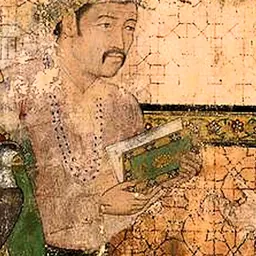
Lived 1564 – 1624 (aged 60). Ahmad Sirhindi was an Indian imam, theologian, mystic, scholar and sufi.
Imām Rabbānī Shāykh Aḥmad ibn 'Abd al-Ahad al-Fārūqī al-Sirhindī Mūjaddīd al-Alf al-Thanī or simply known as Ahmad Sirhindi (1564 – 1624/1625) was an Indian Islamic scholar, Hanafi jurist, and member of the Naqshbandī Sufi order who lived during the era of Mughal Empire.
While early and modern South Asian scholarship credited him for contributing to conservative trends in Indian Islam, more recent works, such as Abul Hasan Ali Hasani Nadwi Sirhindi received most of his early education from his father, 'Abd al-Ahad, his brother, Muhammad Sadiq and from a Lahore-based scholar Muhammad Tahir al-Lahuri. He also memorised the Qur'an. He then studied in Sialkot, which had become an intellectual centre under the scholar Kamaluddin Kashmiri. Qazi Bahlol Badakhshani taught him jurisprudence, Seerah and history. He eventually joined the Naqshbandī order through the Sufi missionary Khwaja Baqi Billah when he was 36 years old, and became a leading master of the order. His deputies traversed the Mughal Empire in order to popularize the order and eventually won favour with the Mughal court. Sirhindi underwent his first Hajj pilgrimage in 1598, after the death of his father.
During the reign of emperor Akbar, Ahmad Sirhindi wrote hundreds of letters which were aimed towards his disciples, Mughal nobles, and even the emperor himself, to denounce the participations of Hindu figures in the government. Annemarie Schimmel recorded about 534 letters has been wrote by Ahmad Sirhindi regarding the subject of Syncretism.
Ahmad Sirhindi's letters contain heavy tone of support towards this spirit of religious reform by restoring Sharia and departure from Akbar's policy under the rule of Jahangir, as shown of the letter has stated: 'Today there is a revolution/transformation in the state (':wa lamma vaqa'a al-anabal-inqilabu fi al-duwali')'.
According to jesuit missionary Pierre de Jarric, Ahmad Sirhindi also sent letters to his disciple, Shaikh Farid Bukhari, a Mir Bakshi official who had been appointed as representative of the muslim orthodox faction of Mughal court, to support the future emperor Jahangir. The orthodox faction extracted promise from Jahangir that he would support the cause of orthodox faction's cause if he succeeded his father. In the process, it is recorded from these correspondence which compiled in 1617, that Farid Murtaza Khan took Ahmad Sirhindi advices regarding this matter.
At some point during the reign of Jahangir, Ahmad Sirhimdi sent many pupils for academic missionaries into various places, such as: 70 individuals which led by his pupil named Muhammad Qasim to Turkestan. 40 individuals under another pupil named Faruh Hussain into Arabian Peninsula, Yemen, Syria, and Anatolia. 10 individuals under another pupil named Muhammad Sadiq into Kashgar. 30 individuals under another pupil named Shaykh Ahmad Bakri into the outskirt of Turkestan, Badakhshan, and Khurasan.
Later, Ahmad Sirhindi was imprisoned by the emperor. This happened in 1618, Emperor Jahangir, who distanced himself from the Islam orthodoxy and admired Vaishnavite ascetic, Chitrarup. But later the emperor rectified his order and freed Ahmad Sirhindi. However, Ahmad Sirhindi was imprisoned once again in 1622, suggested to be due to the jealousy of several nobles for his popularity, before being released again after spending one year in Gwalior prison and another three years in a prison within emperor Jahangir army entourage. Aurangzeb himself provided Khwaja Muhammad and his youngest son, Muhammad Ubaidullah, with fifteen ships to seek refugee during the conflict to embark for Hajj pilgrimage, and Khwaja Muhammad returned to India after Aurangzeb won the conflict two years later. Similarly, Aḥmad ʻArafāt Qāḍi from Cairo University also likened the thoughts of Ahmad Sirhindi to the views of Ibn Taymiyya. , an Egyptian writer, suggested Sirhindi's views were similar to the Wahhabism movement that arose two centuries after Ahmad Sirhindi's death, with both arguing for the resurrection and revival of religious discourse, which also influenced Shah Waliullah Dehlawi.
Ahmad Sirhindi repeatedly emphasised his proud ancestry to Rashidun caliph Umar ibn al-Khattab to show he was similarly in favour of orthodoxy. On another occasion, in a letter to Lãlã Beg (a Subahdar of Bihar ), he described Akbar's prohibition of cow-slaughter as interference against the religious freedom of Muslims.
In particular, Ahmad Sirhindi believed that every ritualistic practice which is not documented in Sunnah, such as the annual prophet anniversary, was forbidden in Islam. He also criticized practices such as Sufi whirling (Raqs), the tradition of Sujud or prostrating towards the ruler,
The non-governmental influential class Members of the imperial courts The king Scholars Heretics and ignorant Sufis Liberal scholars
At the same time, Ahmad Sirhindi personally accepted the use of Ijtihad and Qiyas in Fiqh and defended the use of both. Ahmad Sirhindi argued that Qiyas and Itjihad are not Bidʻah (heresy). Ahmad Sirhindi also rejected the ideas of philosophy, particularly those rooted from Greek philosophy. Furthermore, Sirhindi criticize the method of interpretating the meaning of Quran with philosophy. He argued that the doctrine of Ibn Arabi is incompatible with Islam. In his book, Ahmad Sirhindi criticized the doctrine of Waḥdat al-Wujūd, by saying in his book, Al-Muntakhabaat Min Al-Maktubaat, that God is never united with anything, and nothing can be united with God. Ahmad Sirhindi argued that forms of pantheism were components of Hinduism.
Despite this, Sirhindi still used Ibn al-'Arabi's vocabulary without hesitation. Ahmad Sirhindi advanced the notion of Wahdat ash-Shuhūd (oneness of appearance). Sirhindi considered Wahdat ash-Shuhūd to be superior to Wahdat al-Wujūd (oneness of being),
Aside from the doctrine of pantheism of Ibn 'Arabi, Ahmad Sirhindi also expressed his opposition towards the idea of Metempsychosis or the migration of soul from one body to another.
Shia Sirhindi also wrote a treatise under the title "Radd-e-Rawafiz" to justify the execution of Shia nobles by Abdullah Khan Uzbek in Mashhad. Ahmad Sirhindi argues that since the Shiite were cursing the first three Rashidun caliphs; Abu Bakr, Umar, and Uthman, and also chastising the Wives of Muhammad, he advocated for the oppression towards Shiite and supported the destruction of their buildings and confiscating their properties. Ahmad Sirhindi also expressed his hate towards Shias in his letters, where according to him, the worst distorters of faith "are those who bear malice against the companions of Prophet Muhammad. God has called them Kafirs in the Quran." In a letter to his discple Sheikh Farid, the Mir Bakhshi of the Mughal Empire, he said that showing respect to the distorters of faith (Ahl-e-Bidʻah) amounted to destruction of Islam. Ahmad Sirhindi believed the Shia, Mahdawi, and the mystics were responsible for the decline of Sunni Muslim unity in India.
Sikh
Ahmad Sirhindi recorded his hostility towards the Sikhs. In his Makutbat letter 193, he is said to have stated [sic]:
As a hard-line supporter of Islamic orthodoxy and a highly influential religious revivalist, Ahmad Sirhindi had opposed Akbar's policy of religious tolerance. He had concerns about the spread of Sikhism in Punjab. So, he cheered on the murder of the Guru, thus giving it a religious rather than political colour.
Sufi One of the biggest criticism of Ahmad Sirhindi towards the ritual and practice of his contemporary Sufi community was their neglection of Sharia, since he viewed those who followed Sufi Tariqa viewed that Sharia is not enough for pursuing Ma'rifa. Ahmad Sirhindi even goes so far that in his book he branded such kind of Sufi who abandon Sharia as apostates.
Ahmad Sirhindi's teaching emphasized the inter-dependence of both the Sufi path and Sharia, stating that "what is outside the path shown by the prophet is forbidden." In his criticism of the superficial jurists, he states: "For a worm hidden under a rock, the sky is the bottom of the rock." Meanwhile, Muhammad ibn Ahmad Hamid ad-Din al Farghani ad-Dimasyqi al-Hanafi, a Hanafite scholar who lived during 9th AH, recorded in his book, Jihad Ulama al-Hanafiyat fi 'Ibthal 'Aqaa'id al-Quburiyya, that Ahmad Sirhindi were one of Hanafite Imam who opposed the practice of Quburiyyun among Sufist.
According to Simon Digby, "modern hagiographical literature emphasizing Ahmad Sirhindi effort for strict Islamic orthodoxy, Sharia and religious observance." modern scholar Yohanan Friedmann also noted about the commitment of Ahmad Sirhindi in exhotation about Sharia or practical observance Islam remains extreme, despite his huge focus on the discourse about Sufi experience.
Ahmad Sirhindi had originally declared the "reality of the Quran" (haqiqat-i quran) and "the reality of the Kaaba" (haqiqat-i ka'ba-yi rabbani) to be above the reality of Muhammad (haqiqat-i Muhammadi). This notion were deemed controversial by his contemporary, as it caused furor and opposition among certain Sufi followers and Ulama in Hejaz. Sirhindi responded to their criticism by stating that while the reality of Muhammad is superior to any creature, he is not meant to be worshipped through Sujud or prostrations, in contrast with Kaaba, which God commanded to be the direction of prostration or Qibla.
Legacy
The shrine of Ahmad Sirhindi, known as Rauza Sharif, is located in Sirhind, Punjab, India.
Ahmet Özel from Atatürk University has reported in his work on Diyanet İslâm Ansiklopedisi, el-Alemgiriyye, that some of Ahmad Sirhindi works were compiled in Fatawa 'Alamgiri.
Islamic orthodoxy There are at least 60 kind of Maktubat (letters) recorded from Ahmad Sirhindi which he delivered to various notables, officials, and shaykhs during his life.
Due to his fervent orthodoxy, Ahmad Sirhindi's followers bestowed him the title of Mujaddid. During 16th century, a Pantheism religious movements of Wahdat al wajood that are championed by Dara Shikoh, Sarmad Kashani, and Bawa Lal Dayal.
According to Mohammad Yasin in his work, A Social History of Islamic India, the impact of Ahmad Sirhindi in Muslim community in 17th century for reversing the spread of heterodox thinking was seen as huge success. Yohanan Friedmann has noted that according to many modern historians and thinkers, the puritanical thought of Ahmad Sirhindi has inspired the religious orthodoxy of emperor Aurangzeb. This was noted by how Ahmad Sirhindi managed to influence the successor of emperor Akbar, starting from Jahangir, into reversing Akbar's policies, such as lifting marriage age limits, mosque abolishments, and Hijra methodology revival which was abandoned by his father. It is noted by historians that this influence has been significantly recorded during the conquest of Kangra under Jahangir, that at the presence of Ahmad Sirhindi who observed the campaign, the Mughal forces had the Idols broken, a cow slaughtered, Khutbah sermon read, and other Islamic rituals performed. Further mark of Jahangir's departure from Akbar's secular policy was recorded by Terry, a traveller, who came and observed the Indian region between 1616 and 1619, where he found the mosques full of worshippers, the exaltation of Quran and Hadith practical teaching, and the complete observance of Fasting during Ramadan and Eid al-Fitr celebrations.
Gerardus Willebrordus Joannes Drewes argues that the influences of Ahmad Sirhindi idea of Islamic reformation and anti Ibn Arabi's pantheism has spread as far as Aceh, with the indication of how Aceh Sultanate scholar Nuruddin ar-Raniri seems held the similar view with Ahmad Sirhindi regarding he rejection against Ibn Arabi.
His letters (Maktubat) also circulated and was translated into Turkish by a historian and dervish named Müstakimzade Sa'deddin Efendi (d. 1788).
Abul A'la Maududi, modern Hanafite thinker and political activist, were recorded to quote Ahmad Sirhindi role in opposing the "religious impurities" which were introduced by Akbar earlier:
Abul A'la Maududi
According to Chanfi Ahmed, many historians regards Ahmad Sirhindi as the pioneer of Islamic reformism of Salafism in seventeenth century India. Although Chanfi Ahmed regards the movement were marked by Shah Waliullah Dehlawi instead.
In field of Hadith scholarships, Ahmad Sirhindi also wrote commentary or sharh of Sahih al-Tirmidhi.
Naqshbandi Sufism By the latter part of the nineteenth century, the consensus of the Naqshbandi community had placed the prophetic realities closer to God than the divine realities. The rationale for this development may have been to neutralize unnecessary discord with the large Muslim community whose emotional attachment to Muhammad was greater than any understanding of philosophical fine points.
Ahmad Sirhindi criticize the practice of Khalwa or ascetism by calling it as heresy, due to no arguments that showed that the early generations of Muslims practiced it.
Naqshbandi Sufis claim that Ahmad Sirhindi is descended from a long line of "spiritual masters" which were claimed by the order: Muhammad, d. 11 AH, buried in Medina, Saudi Arabia (570/571–632 CE) Abu Bakar Siddique, d. 13 AH, buried in Medina, Saudi Arabia Salman al-Farsi, d. 35 AH, buried in Madaa'in, Saudi Arabia Qasim ibn Muhammad ibn Abi Bakr, d. 107 AH, buried in Medina, Saudi Arabia. Jafar Sadiq, d. 148 AH, buried in Medina, Saudi Arabia. Bayazid Bastami, d. 261 AH, buried in Bastaam, Iran (804 - 874 CE). Abu al-Hassan al-Kharaqani, d. 425 AH, buried Kharqaan, Iran. Abul Qasim Gurgani, d. 450 AH, buried in Gurgan, Iran. Abu ali Farmadi, d. 477 AH, buried in Tous, Khorasan, Iran. Abu Yaqub Yusuf Hamadani, d. 535 AH, buried in Maru, Khorosan, Iran. Abdul Khaliq Ghujdawani, d. 575 AH, buried in Ghajdawan, Bukhara, Uzbekistan. Arif Riwgari, d. 616 AH, buried in Reogar, Bukhara, Uzbekistan. Mahmood Anjir-Faghnawi, d. 715 AH, buried in Waabakni, Mawarannahr, Uzbekistan. Azizan Ali Ramitani, d. 715 AH, buried in Khwarezm, Bukhara, Uzbekistan. Mohammad Baba As-Samasi, d. 755 AH, buried in Samaas, Bukhara, Uzbekistan. Amir Kulal, d. 772 AH, buried in Saukhaar, Bukhara, Uzbekistan. Baha-ud-Din Naqshband Bukhari, d. 791 AH, buried in Qasr-e-Aarifan, Bukhara, Uzbekistan (1318–1389 CE). Sayyid Alauddin Atar Bukhari, buried in Jafaaniyan, Mawranahar, Uzbekistan. Yaqub al-Charkhi, d. 851 AH, buried in Tajikistan Khwaja Ahrar, d. 895 AH, buried in Samarkand, Uzbekistan. Muhammad Zahid Wakhshi, d. 936 AH, buried in Wakhsh, Malk Hasaar, Tajikistan Darwish Muhammad, d. 970 AH, buried in Samarkand, Uzbekistan Muhammad Amkanagi, d. 1008 AH, buried in Akang, Bukhara, Uzbekistan Khwaja Baqi Billah, d. 1012 AH, buried in Delhi, India Ahmad al-Farūqī al-Sirhindī (Ahmad Sirhindi, subject of this article)
Works TitleOriginal languageEnglish titleBrief descriptionMaktubat-e-Imam Rabbani (مکتوبات امام ربانی)PersianLetters of Imam RabbaniA collection of letters addressing theology, Sufism, religious reform, and adherence to Sunni orthodoxy; regarded as his principal work.Ithbat al-Nubuwwa (اثبات النبوت)Affirmation of ProphethoodA theological treatise defending the necessity and finality of prophethood against philosophical and mystical interpretations.Asrar al-Tashahhud (اسرار التشہد)ArabicThe Mysteries of the TashahhudA short work interpreting the spiritual meanings of the tashahhud prayer formula.
Don’t just read it —
keep it.
Full-length biographies made to live with: read them, listen on the way to work, watch them tonight.
- E-book
- Audio
- Video
Instant download · yours to keep · every purchase keeps this site free
Important facts
People in Ahmad Sirhindi's life
Named in this biography and alive at the same time





Related people
Same field, nearest in time


Contemporaries
People whose lives overlapped Ahmad Sirhindi's





Frequently asked questions
Who was Ahmad Sirhindi?
Philosopher (1564-1624)
When was Ahmad Sirhindi born?
Ahmad Sirhindi was born on 26 June 1564 in Sirhind-Fategarh.
When did Ahmad Sirhindi die?
Ahmad Sirhindi died on 10 December 1624 in Sirhind-Fategarh.
What was Ahmad Sirhindi's occupation?
Ahmad Sirhindi was an imam, theologian, mystic, scholar and sufi.
What nationality was Ahmad Sirhindi?
Ahmad Sirhindi was Indian.
Sources & further reading
Cite this page
APA: Biography.guide. (2026). Ahmad Sirhindi. https://biography.guide/ahmad-sirhindi/
MLA: "Ahmad Sirhindi." Biography.guide, https://biography.guide/ahmad-sirhindi/.
Chicago: "Ahmad Sirhindi." Biography.guide. https://biography.guide/ahmad-sirhindi/.
Data last updated: 2026-09-27 · Spot an error? Report a correction.
Page generated 2026-09-27 05:16 UTC