
About Ahmad Samani
Lived 870 – 914 (aged 43–44). Ahmad Samani was a ruler.
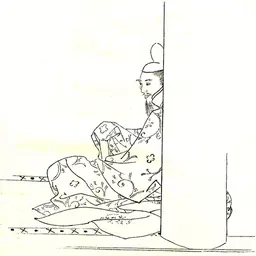
Ahmad ibn Ismail (; died 24 January 914) was amir of the Samanids (907–914). He was the son of Ismail Samani. He was known as the "Martyred Amir".
Biography Ahmad is first mentioned in the early 900s, when he was appointed as the governor of Gurgan. However, Ahmad was soon removed from the governorship because of his failure to wage war against the Justanids of Daylam.
Ahmad became amir upon his father's death in late 907. Some time afterwards, he was granted the rights to Sistan, the heart of the Saffarid realm, by Caliph al-Muqtadir. The Saffarids' infighting made the job much easier. Ahmad's army travelled from Farah to Bust, where they met little resistance. At the same time, Ahmad's Turkic general Simjur al-Dawati received the surrender of Zarang from al-Mu'addal. The conquest of the Saffarids complete (911), Ahmad appointed his cousin Abu Salih Mansur as governor of Sistan in the following year. The Samanids also captured a Caliphal rebel, Turkic warlord Sebük-eri, and sent him to Baghdad.
Mansur's oppressive taxation policies sparked a revolt in Sistan within a year of his appointment. The garrison at Zaranj was destroyed, and Abu Salih Mansur was captured. Amr ibn Ya'qub, a Saffarid, was installed, first as a puppet for the leader of the rebellion, then as amir in his own right. A Samanid army, however, under the control of Husain ibn 'Ali Marvarrudhi restored Samanid control to the region. 'Amr was sent to Samarkand; the other rebel leaders were killed.
Simjur al-Dawati was then installed as governor of Sistan. Tabaristan and Gurgan, however, soon revolted against Samanid authority as well, and Ahmad was killed before he could deal with them. He was decapitated while sleeping in his tent near Bukhara by some of his Turkic slaves (24 January 914). After his death, he was brought to Bukhara and buried in Naukanda. Some of his slaves who had killed the Amir were caught and executed, while others fled to Turkestan. He was designated as the "Martyred Amir".
Ahmad may have become unpopular among his subjects for his order to change the language of the court from Persian to Arabic; this order was soon rescinded. He was succeeded by his young son Nasr II.
Don’t just read it —
keep it.
Full-length biographies made to live with: read them, listen on the way to work, watch them tonight.
- E-book
- Audio
- Video
Instant download · yours to keep · every purchase keeps this site free
Important facts
Family & relationships
Related people
Same field, nearest in time



Contemporaries
People whose lives overlapped Ahmad Samani's



Frequently asked questions
Who was Ahmad Samani?
the third king of Samanid dynasty (907–914)
When was Ahmad Samani born?
Ahmad Samani was born in 870.
When did Ahmad Samani die?
Ahmad Samani died on 12 January 914 in Bukhara.
What was Ahmad Samani's occupation?
Ahmad Samani was a ruler.
Sources & further reading
Cite this page
APA: Biography.guide. (2026). Ahmad Samani. https://biography.guide/ahmad-samani-ruler/
MLA: "Ahmad Samani." Biography.guide, https://biography.guide/ahmad-samani-ruler/.
Chicago: "Ahmad Samani." Biography.guide. https://biography.guide/ahmad-samani-ruler/.
Data last updated: 2026-09-20 · Spot an error? Report a correction.
Page generated 2026-09-27 05:27 UTC