
About Ahmad Motevaselian
Born 1954. Ahmad Motevaselian is an Iranian diplomat.
Ahmad Motevaselian was an Iranian military officer and attaché who was one of four Iranians who disappeared in Lebanon in 1982. and established the 27th Muhammad Rasulullah Division. He played a role in the Second Battle of Khorramshahr and later, as part of a senior diplomatic group of political and military leaders, went to Syria. On 5 July 1982, when the vehicle carrying the diplomats was passing through a checkpoint post on its way to Beirut, it was intercepted by Phalangists. The car and four passengers completely disappeared.
Early life Ahmad Motevaselian was born in a religious family in 1954 in the south of Tehran. He spent his primary school years in Mostafavi school in Tehran. During his education, Motevaselian helped his father in his pastry shop. When he was a teenager, he participated in religious ceremonies and masque and started dissident activities against the then ruling regime of Mohammad Reza Pahlavi, the Shah of Iran. After finishing his primary education, he went to industrial school and received his diploma in 1973.
Before the Iranian Revolution After graduation, Motevaselian went to Shiraz for military service and participated in a special tank training course and was then dispatched to Sarpol-e Zahab. During his service, he continued his political activities against the Shah. After military service, he was employed in a private company and after a few months was sent to Khorramabad. In 1976, the SAVAK (the secret police during the reign of the Shah) arrested him for his political activities. He was jailed for five months in solitary confinement in Falak-ol-Aflak Castle in Khorramabad. Motevaselian actively participated in the 1979 Revolution in his neighborhood and also the south of Tehran. After the victory of the Revolution, he established the Committee of the Islamic Republic in the district near his home, and later joined the Islamic Revolutionary Guard Corps. The operations against opposition within Kurdistan Province Fighting anti-revolutionaries in Bokan, Baneh, and Saghez in 1979 Liberation of Sanandaj in western Iran from anti-revolutionaries Liberation of Paveh-Kermanshah road in 1980 Liberation of Marivan city in May 1980 Liberation of Dezli heights Established the 27th Muhammad Rasoolullah Division Operation Beit ol-Moqaddas on 30 April 1982
Mission in Lebanon After the Second Battle of Khorramshahr (known in Iran as the Liberation of Khorramshahr), Motevaselian knew that Israel had invaded Lebanon. In June 1982, he went to the Lebanese-Syrian border as head of a commando unit, but the unit was sent back to Iran by Syrian authorities but Motevaselian stayed for protecting Iran's embassy from Israeli forces and Phalange Party. On 5 July 1982, when the vehicle carrying the diplomats was passing through a checkpoint post on its way to Beirut, it was intercepted by Phalange Party, and the car and four passengers disappeared, despite diplomatic immunity and that they were using an official state vehicle. They were then abducted by the Phalange Party. The missing diplomats are Motevaselian, military attaché and the commander of the commandos of the June dispatch; Seyed Mohsen Mousavi, chargé d'affaires for the Iranian embassy in Beirut; and Taghi Rastegar Moghadam, the embassy technician; plus Kazem Akhavan, a journalist for Islamic Republic Press Agency. Iran has accused Israel of kidnapping and holding them in Israeli jails and covering up their fate.
Prior to his assassination, Qasem Soleimani, the former head commander of the Quds Force, a paramilitary wing of the IRGC, confirmed a historian's (Davoud Hamidabadi) theory after 25 years of investigating the case that the four Iranian diplomats, including Motevaselian, were all killed on that day and were not in Israeli prisons. He also continued to say that he had done an exchange of prisoners with Lebanese Forces sometime before and that the bones and remains of their bodies were given to him and were returned to Tehran, although the DNA tests said the remains did not match the DNA of Motevaselian. Soleimani's confirmation was widely accepted in Iran.
In popular culture
As Tough As Iron 3 The third volume of the As Tough As Iron collection is about the life of Ahmad Motevaselian, written by Zahra Rajabi Matin. This book is published by Alhoda International Publications and is published in English and Arabic. As Tough As Iron consists of seven sections; "Ahmad Motevaselian, A Man who Struggled", "Motevaselian and the Revolution Guards Corps", "Motevaselian Sent to Kurdistan", and "Motevaselian Goes to Khuzestan" are some of the book's sections.
Ambush of July 1982 Ambush of July 1982 is calendar of events about kidnapping Iranian diplomats from 1982 to 2005, written by Hamid Davood-abadi حمید داودآبادی. This is valuable book for knowing what happened to the Iranian diplomats in Lebanon. English translation of book was unveiled by the head of Foundation for the preservation of relics and values of the Holy Defense, Mohammad Bagherzadeh. The book published by Chamran Foundation and Foundation for the preservation of relics and values of the Holy Defense in 292 pages.
Standing in the Dust
Standing in the Dust is a 2016 film about Ahmad Motevaselian, directed by Mohammad Hossein Mahdavian and produced by Habibollah Valinezhad. The film won the Crystal Simorgh for Best Film at the 34th Fajr Film Festival.
Ahmad Motevaselian Memorial There is a statue of Ahmad Motevaselian installed in Maroun al-Ras , a Lebanese village in Jabal Amel (Mount Amel) of the Nabatiye Governorate. The statue is a memorial and tries to demonstrate that the commander was kidnapped.
Abdol Majid Farahani, the designer of Motevaselian statue, stated:
Don’t just read it —
keep it.
Full-length biographies made to live with: read them, listen on the way to work, watch them tonight.
- E-book
- Audio
- Video
Instant download · yours to keep · every purchase keeps this site free
Important facts
People in Ahmad Motevaselian's life
Named in this biography and alive at the same time

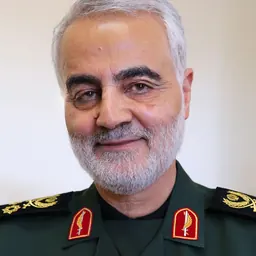



Related people
Same field, nearest in time

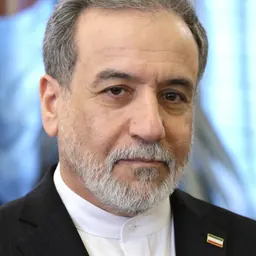

Contemporaries
People whose lives overlapped Ahmad Motevaselian's
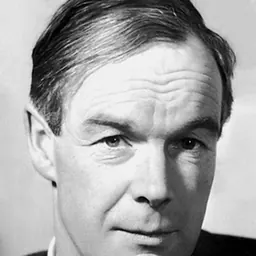


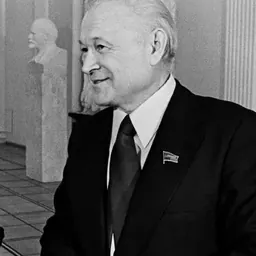
Frequently asked questions
Who is Ahmad Motevaselian?
Iranian diplomat
When was Ahmad Motevaselian born?
Ahmad Motevaselian was born on 11 March 1954 in Tehran.
What is Ahmad Motevaselian's occupation?
Ahmad Motevaselian is a diplomat.
What nationality is Ahmad Motevaselian?
Ahmad Motevaselian is Iranian.
Sources & further reading
· Wikipedia: Ahmad Motevaselian
Cite this page
APA: Biography.guide. (2026). Ahmad Motevaselian. https://biography.guide/ahmad-motevaselian/
MLA: "Ahmad Motevaselian." Biography.guide, https://biography.guide/ahmad-motevaselian/.
Chicago: "Ahmad Motevaselian." Biography.guide. https://biography.guide/ahmad-motevaselian/.
Data last updated: 2026-09-20 · Spot an error? Report a correction.
Page generated 2026-09-27 05:14 UTC