
About Ahmad ibn Qasim Al-Hajarī
Lived 1570 – 1601 (aged 30–31). Ahmad ibn Qasim Al-Hajarī was a Moroccan linguist, diplomat, writer, researcher and interpreter.
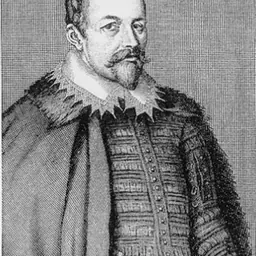
Ahmad ibn Qāsim Al-Hajarī (; – ), also known as Al-Hajari, Afoukay, Chihab, Afokai or Afoqai , was a Muslim Morisco who worked as a translator in Morocco during the reigns of the Saadi sultans, Ahmad al-Mansur, Zidan Abu Maali, Abu Marwan Abd al-Malik II and Al Walid ibn Zidan. He was later sent as an envoy by Sultan Zidan Abu Maali of Morocco who sent him to France and Netherlands to negotiate the release of some Moriscos who were captured by privateers and thrown on the shores of the mentioned countries.
Early life Al-Hajari fled Spain for Morocco in 1599, following the persecutions of the Moriscos. He was involved in arms smuggling while in southern France, and visited Paris and Leiden. After sailing from Safi to Le Havre, Al-Hajari met with the King, and obtained a safe-conduct to visit the country. In Bordeaux he obtained some financial compensation from the shipowners who had been involved in the Moriscos affair.
Oriental studies Thomas Erpenius received Lessons in Arabic grammar under al-Hajari. Then he wrote, Grammatica Arabica in 1617.
Al-Hajari met with the Orientalist Thomas Erpenius in September 1611 in Paris, and taught him some Classical Arabic. Through the introduction of Erpenius, Al-Hajari also met with the French Arabist Étienne Hubert d'Orléans, who had been a court physician for Moroccan ruler Ahmad al-Mansur in Marrakesh from 1598 to 1601. Etienne Hubert offered to help him in his proceeding and to represent him "to all people of authority". He also discussed with the Dutch Prince Maurice of Orange the possibility of an alliance between the Dutch Republic, the Ottoman Empire, Morocco and the Moriscos, against the common enemy Spain. as well as the religious reasons for the good relations between Islam and Protestantism at the time:
He then met with Erpenius there, as well as with the future explorer Peter Nuyts. In the series of Moroccan envoys to the Dutch Crown, Al-Hajari was preceded by Muhammad Alguazir, and succeeded by Yusuf Biscaino.
He seems to have died in Tunis in the 1640s.
Don’t just read it —
keep it.
Full-length biographies made to live with: read them, listen on the way to work, watch them tonight.
- E-book
- Audio
- Video
Instant download · yours to keep · every purchase keeps this site free
Important facts
People in Ahmad ibn Qasim Al-Hajarī's life
Named in this biography and alive at the same time

Related people
Same field, nearest in time


Contemporaries
People whose lives overlapped Ahmad ibn Qasim Al-Hajarī's



Frequently asked questions
Who was Ahmad ibn Qasim Al-Hajarī?
Moroccan translator of Morisco origin
When was Ahmad ibn Qasim Al-Hajarī born?
Ahmad ibn Qasim Al-Hajarī was born in 1570 in Andalusia.
When did Ahmad ibn Qasim Al-Hajarī die?
Ahmad ibn Qasim Al-Hajarī died in 1601 in Tunis.
What was Ahmad ibn Qasim Al-Hajarī's occupation?
Ahmad ibn Qasim Al-Hajarī was a linguist, diplomat, writer, researcher and interpreter.
What nationality was Ahmad ibn Qasim Al-Hajarī?
Ahmad ibn Qasim Al-Hajarī was Moroccan.
Sources & further reading
· Wikipedia: Ahmad ibn Qasim Al-Hajarī
· DBpedia: Ahmad ibn Qasim al-Hajari
Cite this page
APA: Biography.guide. (2026). Ahmad ibn Qasim Al-Hajarī. https://biography.guide/ahmad-ibn-qasim-al-hajari/
MLA: "Ahmad ibn Qasim Al-Hajarī." Biography.guide, https://biography.guide/ahmad-ibn-qasim-al-hajari/.
Chicago: "Ahmad ibn Qasim Al-Hajarī." Biography.guide. https://biography.guide/ahmad-ibn-qasim-al-hajari/.
Data last updated: 2026-09-20 · Spot an error? Report a correction.
Page generated 2026-09-27 05:29 UTC