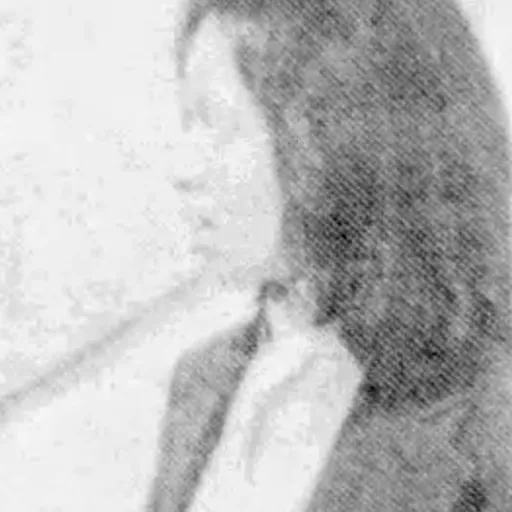
About Adrienne W. Hoard
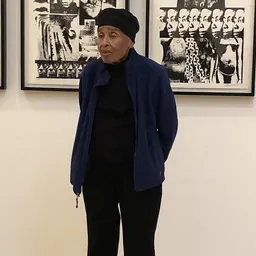
Born 1949. Adrienne W. Hoard is an American painter and visual artist.
Adrienne Walker Hoard (born January 22, 1949) is an African-American woman artist. She is well known for working with color and abstraction in her shaped canvas paintings and being influenced by her travels to different places in the world. She is a retired professor since 2019.
Early life Hoard was born in Jefferson City, Missouri, on January 22, 1949, as the first of three children to parents Charles M. Hoard and Yvonne W. Hoard who both taught at Lincoln University in Missouri. In 1957, she met her first African-American artist role model June Price, an art practice teacher at Washington School, the elementary section of the Lincoln University Laboratory School. In 1962, she won her first two art contests for a drawing of an imaginary man fly-fishing and a drawing of an imaginary lighthouse respectively. In 1963, she won her next two art contests with a drawing of an imaginary lighthouse and a pen & ink drawing of an imaginary student thinking about Latin exams and dreaming about gladiators respectively. She graduated from high school in 1966. She was studying psychology at first but disliked being in science labs. She continued her undergraduate studies and changed her studies to art at Lincoln University (MO) in 1968 where she would be able to be taught by James Dallas Parks (educator, painter, and co-founder of the National Conference of Artists), Leon Hicks (printmaker), Mary Jo Williams (watercolorist & jeweler), and Willie F. Longshore (photographer). She studied drawing with Ted Ramsey. and she had a feature in Ebony Magazine. it is stated that Hoard studied in Seoul, South Korea as a Fulbright Scholar in 1975 and returned to Korea again in 1980. It is also mentioned in the St. James Guide to Black Artists that she studied in Seoul in 1975 and again later. During her time in Korea, she was a visiting professor at Hong-Ik University under the Department of Western oil painting and also a visiting professor at Ewha Women's University under the Department of Decorative Arts. In 1981, she was featured in a Korea Times article. She was a visiting associate professor at Northwestern University under the Department of Art Theory and Practice from 1985 to 1986.
1986–88 Later in 1986 after she earned her Ed. D, Hoard left her previous position and became an associate professor of fine art and art education and also a college coordinator at Louisiana State University through 1988.
In the summer of 1996, she traveled to South Africa independently to do research with Ndebele women artists.
"The Black Aesthetic" would be used and cited as support and an example for shifting attention from art an object to attention on context, product, and inquiry around the art as well later in 1996 in an article by Elizabeth Manley Delacruz. In 1997, Hoard reviewed Voices of Color: Art and Society in the Americas and through her review, shared her belief of building solidarity with others over differences and called for people to reflect on how and why they make meaning out of art. She also pushed for teaching children through a comprehensive art education that teaches about themselves and others and for art educators to move in lockstep with art and artists who have decided to take a more direct political path, such as those from the 1960s. Hoard was able to continue her research in South Africa in 1998 thanks to a grant through the Missouri University International Center. Through an article written in 2005, Hoard revealed that in her decade-long experience in South Africa, her original purpose of looking at diaspora art changed to a focus on the changes to and impacts on the art and lives of Ndebele people, specifically Ndebele women, due to globalization and technological advancements affecting economic survival. She published further writing and research in the following months.
Hoard also wrote a review of the exhibition catalogue for Vive Haïti! Contemporary Art of the Haitian Diaspora that same year.
In 2006, she was on a panel for a colloquium honoring Faith Ringgold that was held at Howard University. The panel she spoke on was titled "The Black Arts Movement: Pedagogical Perspectives".
In 2009, her previous work, "The Black Aesthetic", was cited in support of teaching multiculturalism in schools.
On July 26, 2013, it was announced that Hoard would become the director of the Black Studies program at the University of Missouri-Kansas City.
2013–19 From 2013 to 2019, she was a professor under the Department of Art and Art History as a part of the Black Studies program at the University of Missouri–Kansas City. From 2017 to 2019, she was a consultant/lead community advisor at the Nelson Atkins Museum of Art.
Artistic practice and career Hoard's academic career and her career as an artist were intertwined with each other as they were closely related; she developed both simultaneously. She is primarily a painter who works with oil and acrylics, but has also expanded her practice as a multimedia artist, and has worked with oils on paper, oil pastels, mixed media paintings, watercolors, collage, silkscreen paintings, photography, and more. Her paintings grew in scale and complexity of color in 1974. The following year in 1975, she would receive a CAPS Grant in Painting from the New York State Council on the Arts which allowed her to organize a four-week public seminar series in her personal loft titled "Women in the Arts". She invited the artists Valerie Maynard, Helen Evans Ramsaran, Ernestine Robinson, and Dindga McCannon to speak as presenters. She also met Al Held and Budd Hopkins that year.
Hoard said that her artworks from 1971 to 1975 explored two overlapping themes, "one..being the pursuit of lifescape; a humanistic view of landscape painting allowing the canvas to encompass the rhythmic essence of a place, its timbre of people sounds, sights, colors, and emotions; and the second theme...an exploration of a key or hieroglyphic symbol defining a 'unity of passage', which symbolically discusses an inspirational mental movement or transcendence to a higher level of consciousness or awareness by a collective body of persons at the same point in time. This key projects a way in which multitudes can pass through the power of like consciousness. After giving these two lines over into my own contained shape, I utilized this shape to open various levels and distances in space with color".
From 1976–77, Hoard worked on a citywide mural project with her students from her class in the Department of Black Studies at Ohio State University which was written about in a New York Times article published in June 1977 where Hoard is quoted saying that art history courses at that time did not even mention Henry Tanner.
Studio Museum in Harlem exhibition (1977) In 1977, Hoard had a one woman exhibition at the Studio Museum in Harlem where she showed her prints, paintings, both traditional rectangular paintings and shaped canvas paintings, and drawings. David C. Driskell, Lois Mailou Jones, and Melvin Edwards contributed to the catalogue. In the exhibit's brochure, Driskell wrote in the foreword that besides a search for peace, her paintings are also able to deliver "the joy of living immediately in the experience of beautiful art forms". Driskell praises the silence of Hoard's paintings and also said that Egypt, North Africa, and Central and North American architecture and decorative art can be seen in her artworks. Lois Jones Peirre-Noel, who had written about her before, also contributed writing to the brochure, acknowledging her sensitivity in responding to nature and recognizing that her approach to shaped canvas paintings is also similar to the way she approaches prints and collages. She is praised with "he excells in her portrayals of birds, beasts and fish which reveal her deep mysteries and dreams which encompass them and soar to great heights of abstract expression which captivate the eye through glowing and moving shapes". Melvin Edwards observed that in Hoard's art there is a preference for variations of orange and blue with red magenta and green. Edwards also said that marine life and other life forms serve as reference for Hoard.
June Kelly in 1978 wrote that "Hoard's deep-felt need to depict the universal human desire to glorify life and the recognition of something greater than mankind is ever present the reaching, striving, the tranquility that comes with knowing oneself".
In 1987, she was named as an artist in lineage with Laura Wheeler Waring alongside artists Clementine Hunter, Varnette Honeywood, and Ann Tanksley.
In 1988, she won a juried contract with Centaur Records and was able to place paintings on cover booklets for seven compact disc recordings of synchronic computer music.
In 1990, Hoard was also written about in Samella S. Lewis' book African American Art and Artists, listed in the "Symbolism: Geometric, Organic, Figurative" section of the book. Lewis wrote on how abstraction allowed Hoard more freedom in expression and that boundaries served as exploration for her. Lewis also observed Hoard's themes of nature in her artwork as respect and appreciation of nature. Hoard is quoted saying "...Internally, the change has occurred. I am into nuances; tiny color changes, softness and motion and free-form. Now I am able to make my thoughts and my expressions match. And I love it..." Lewis also noted that for Hoard, her roles as artist and educator informed and influenced each other. As an educator, Hoard said that "...Art teachers are the bottom line. If they don't teach people that there is an esthetic wealth in the community and that they should go and take advantage of the opportunities offered, a disservice is being done. The quality of life and culture is diminished". Hoard's oil pastel and watercolor artwork Le Phoenix is also reproduced in the book.
In March 2023, she had a solo exhibition, LOVE is a Body in Motion, held by the Kansas City Artists Coalition, which featured paintings that were more figurative and representational than her shaped canvas paintings, but still had a strong focus on colors, movement, and rhythm.
Work
Hoard said that her painting Night Oasis painted in 1974 specifically is an example of her exploring the theme of lifescape and that another 1974 painting, Aurora, specifically explores the theme of "unity of passage".
Hoard's The Women of Power-Spirit Mask series her first series of painted photographs, 12 photographs printed on archival inkjet paper painted over with oil or acrylic. This sets the series apart from her shaped canvas paintings. Hoard uses the concept of masking as protection and also as dressing up to express oneself. In this series, Hoard continues to think about her travels around the world. Hoard's initial inspiration came from Gordon Parks' photograph American Gothic, Washington, D.C.. She asked a custodian in her art building to pose for her in a similar manner. In doing so, Hoard made the central subject matter about Black women. She directly talks about womenhood as a theme in the series, prompting viewers to create their own model of a powerful woman.
“LOVE is a Body in Motion” is a series of 15 painted photographs that are based on original photographs Hoard took at an annual Spring Dance Troupe at Lincoln University (MO). She explained that painting over the photographs was not her initial intention. She wanted to capture a moment in time and have the viewer to be able to connect with that moment.
List of known works
Africa at the Equator, Trip I, acrylic on shaped canvas, 50 x 60 x 12", 1972 Solar (Gift from the Sun), shaped canvas, 96 x 48", 1977 Lute Song, acrylic on shaped canvas, 87 x 57', 1977 Love Portrait, acrylic on shaped canvas, 86 x 48", 1976 Women of the Ouled Nail, acrylic on shaped canvas, 36 x 48", 1980 Korean Impressions Series: Peaceful Peninsula, gouache on mulberry paper, 18 x 28", 1981
LOVE is a Body in Motion
Fire Dance, 16 x 19", 2020 Flame Duet, 16 x 19", 2020 The Visitation, 16 x 19", 2020 Three Some, 16 x 19, 2022 The Guardian, 16 x 19", 2022 Embraced, 16 x 19", 2022 Ancestral Soirée, 16 x 19", 2022 Four Hand Play, 16 x 19", 2023 The Chase, 16 x 19", 2023
Source:
Awards and honors
Who's Who in American Art, 1978 International Who's Who of Women, 1978 International Who's Who in Community Service, 1976 Outstanding Young Women in America, 1976 Grant, New York State Council on the Arts, 1974–75 Who's Who Among Students in American Colleges and Universities, 1970 10th Julia Margaret Cameron International Award for Women Photographers, (finalist in portrait category), 2016 12th Julia Margaret Cameron International Award for Women Photographers, (finalist in daily life & culture category), 2018 13th Julia Margaret Cameron International Award for Women Photographers, (honorable mention in 4 categories) 2019 14th Julia Margaret Cameron International Award for Women Photographers, (honorable mention in culture category) 2020
Exhibitions
Aames Gallery, Hardedge 75, Soho, New York City (group exhibition), 1975 Artforce Gallery, Columbus, Ohio (one-woman exhibit, lecture, and workshop), 1976 The Studio Museum in Harlem, New York City (one-woman exhibit and lecture), 1977 Black Artists Together, Invitational Exhibition, Columbus, Ohio, 1978 Ohio State University, Newark Campus (one-woman exhibit and lecture), 1979 Chi-Wara Gallery, Atlanta, (group exhibition), April 16 – May 7, 1980 Shelton Gallery, New York City (one-woman exhibition), April 3 – May 10, 1980 International Communication Agency Exhibition Hall, American Embassy, Korean Impressions: Painting and Photography, Seoul (one-woman exhibition), April 16–30, 1981 Illinois State University Gallery, Joslyn Art Museum (Omaha, NE), Montgomery Museum of Fine Art (AL), Gibbs Art Gallery (Charleston, SC), University of Maryland College Park Art Gallery, Indianapolis Museum of Art (IN), Forever Free: Art by African-American Women, 1862–1980 (traveling group exhibition), January 30, 1981 – February 15, 1982 The Schomburg Center for Research in Black Culture Art Collection, New York City (group exhibition), February 19 – March 11, 1982 Ralston Purina Corporate Headquarters Gallery, St. Louis (MO) (featured artist of group exhibition), October 3–19, 1983 Nexus Galleries. Atlanta (group exhibition), August 2–28, 1984 The Woman's Bank (New York City), Cinque Gallery Group Exhibition, April 4 – May 11, 1985 Evanston Art Center (IL), Roots: A Contemporary Inspiration (group exhibition of African American artists), February 14 – March 30, 1986 Louisiana State University Union Gallery, Faculty Exhibitions, 1986–88 Southern University, John B. Cade Gallery (two-person exhibition), Lavergne-Hoard, October 9–26, 1987 Dillard University, Will Alexander Gallery (two-person exhibition), Lavergne-Hoard, February 7–26, 1988 New Orleans General Hospital (one-woman exhibition), February 2–28, 1988 University of Missouri George Caleb Bingham Gallery, Faculty Exhibitions, 1988–98 Manhattan East Gallery of Fine Art (New York City), Women in Color (international group exhibition), March 16 – April 16, 1989 Fontbonne College Gallery (St. Louis), Cosmic Movements (one-woman exhibition), December 1–21, 1991 Portfolio Gallery (St. Louis), Visions 1992 (group exhibition), February 10 – March 20, 1992 Columbus Museum of Art (Ohio), People, Places and Things: An African American Perspective, September 5, 1992 – February 28, 1993 Hotel Park Palace (Florence, Italy), Etruscan Voyage, (one woman exhibition), April 9–17, 1994 George Caleb Bingham Gallery (University of Missouri), Etruscan Voyage Faculty Leave Exhibition, August 28 – September 9, 1994 Missouri University Ellis Library Galleries Not Your Typical Tuscan: An African American Perspective on Italy, (one woman exhibition), February 1–28, 1996 Museum of Science & Industry, Chicago, Black Creativity, January 26 – February 28, 1996 Lincoln University Memorial Hall Gallery (MO), Soweto to Salvador: Paintings and Photography (one woman exhibition), October 13 – November 22, 1996 Margaret Harwell Art Museum (MO), African Odyssey (two-person exhibition), February 8 – March 2, 1997 Bruce R. Watkins Cultural Center Gallery (Kansas City), Two Decades of Float Shapes: A 22 Year Retrospective of Shaped Canvas Paintings (one-woman exhibition), March 8 – April 4, 1998 Georgetown University, The Atrium Gallery at the Lombardi Center (Washington, D.C.), Two Decades of Float Shapes: A 22 Year Retrospective of Shaped Canvas Paintings (one-woman exhibition), April 30 – May 29, 1998 National Museum of the American Indian, Smithsonian Institution, Washington, D.C., IndiVisible: African-Native American Lives in the Americas, 2009–2016 George Caleb Bingham Gallery, University of Missouri, Colombia, MO, 50 Years of Civil Rights: The Movement in Expressive Images (two-person show), January – February 2014 4th Berlin Biennale of Fine Art and Documentary Photography, Unter den Linden, Berlin, Germany, 2016 Dean's Gallery, Miller Nichols Library, University of Missouri-Kansas City, Inside the Art World of Adrienne Walker Hoard, January–May 2017 5th Foto Biennale of Fine Art and Documentary Photography, Space Nau Bostik, Barcelona, Spain, 2018 6th Foto Biennale of Fine Art and Documentary Photography, Space Nau Bostik, Barcelona, Spain, 2019 Worldwide Photography Gala Awards, FotoNostrum Gallery, Barcelona, Spain 2020 The Box Gallery, Kansas City, Painted Poses, September 4, 2020 – October 30, 2020 Kansas City Artists Coalition, LOVE is a Body in Motion, March 2023
Don’t just read it —
keep it.
Full-length biographies made to live with: read them, listen on the way to work, watch them tonight.
- E-book
- Audio
- Video
Instant download · yours to keep · every purchase keeps this site free
Important facts
People in Adrienne W. Hoard's life
Named in this biography and alive at the same time




Related people
Same field, nearest in time



Contemporaries
People whose lives overlapped Adrienne W. Hoard's

Frequently asked questions
Who is Adrienne W. Hoard?
American artist (born 1949)
When was Adrienne W. Hoard born?
Adrienne W. Hoard was born in 1949.
What is Adrienne W. Hoard's occupation?
Adrienne W. Hoard is a painter and visual artist.
What nationality is Adrienne W. Hoard?
Adrienne W. Hoard is American.
Sources & further reading
· Wikipedia: Adrienne W. Hoard
Cite this page
APA: Biography.guide. (2026). Adrienne W. Hoard. https://biography.guide/adrienne-w-hoard/
MLA: "Adrienne W. Hoard." Biography.guide, https://biography.guide/adrienne-w-hoard/.
Chicago: "Adrienne W. Hoard." Biography.guide. https://biography.guide/adrienne-w-hoard/.
Data last updated: 2026-09-20 · Spot an error? Report a correction.
Portrait: Wikimedia Commons · author & licence
Page generated 2026-09-27 04:58 UTC