
About Adrian Feint
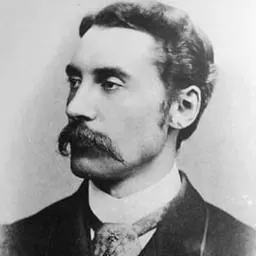
Lived 1894 – 1971 (aged 76). Adrian Feint was an Australian painter, etcher and exlibrist.
Adrian George Feint (28 June 1894 – 25 April 1971) was an Australian artist. He worked in various media, and is noted for his bookplate designs.
Education and military service
Feint was born in Narrandera, New South Wales. He served with the rank of Private with the 15th Australian Field Ambulance and on 8 September 1918 he was given an official Recommendation for his service. Before being demobbed in 1919, he was granted three months leave to study at the Académie Julian in Paris. He studied plate etching from 1922 to 1926; woodblock-engraving from 1926 to 1928, with assistance from Thea Proctor in 1927; and oil painting beginning in 1938, with Margaret Preston. That year he joined and exhibited with Robert Menzies' anti-modernist foundation, the Australian Academy of Art, of which Proctor and Preston were also members.
Artwork
He was co-director (with bookbinder Wal Taylor) and manager of Grosvenor Gallery, 219 George Street Sydney, from 1924 to 1928. Exhibitors included the now-famous Thea Proctor, Elioth Gruner, Margaret Preston, Roland Wakelin, Roy De Maistre and George Washington Lambert.
He was employed as assistant editor (to Sydney Ure Smith) of Art in Australia from 1928 to 1940, contributing many cover illustrations to this and filling many commissions for his advertising agency Smith and Julius. Between 1927 and 1939, Feint made 18 covers for Ure Smith's magazine The Home, including the famous illustration on the October 1928 issue in collaboration with Hera Roberts.
He abandoned graphic arts around 1939 (he reworked one bookplate in 1944) to work as a bookbinder with Benjamin Waite
In the same year Feint was selected to paint a large mural for the Australian Pavilion at the New Zealand Centennial Exhibition in Wellington. Feint produced his design of Australian birds, accompanied by other prominent artists Frank Hinder, Douglas Annand, and William Dobell.
Feint's still life and landscapes, painted in the English decorative style, received critical acclaim through the 1940s and 1950s. This creativity was brought into focus with Adrian Feint: flower paintings, edited and published by Sydney Ure Smith in 1948. Galleries across Australia hold examples of Feint's work, including many still life flower paintings produced during these decades. The Art Gallery of New South Wales holds forty five of his works, including almost surreal paintings of flowers with hand-made objects. Flowers in Sunlight is such a work. A contemporary of Feint, the artist Douglas Dundas described his works as 'flower arrangements, meticulously designed, superbly painted, and set in a related environment of time and space'. Feint would paint two scenes for the saloon, a landscape and the other a seascape. The paintings, “which took two months to complete, will be flown to London and hung in the ship."
One of the many activities planned for the tour of Australia by Queen Elizabeth and the Duke of Edinburgh in 1954 was a Royal Gala Performance. Feint's design was “selected for the cover of the Royal Gala Performance” at the Tivoli Theatre on 6 February. The eight page booklet with its lyrebird cover was published by the Organising Committee for the Royal Gala Performance.
Bookplates Feint's bookplates are regarded by many as his greatest legacy. Thea Proctor, Dorothea Mackellar, Ethel Turner, Ethel Curlewis, John Lane Mullins, Frank Clune, Peter Tansey and the Duke and Duchess of York were among those who commissioned personal ex libris plates. In 1930 his bookplate designs were recognised by an exhibition at the Division of Fine Arts, Library of Congress, Washington US (organised by the American Society of Bookplate Collectors and Designers), and in 1933 were highlights of the first International Exhibition of Bookplates held in Sydney. They are prized by collectors such as members of the American Society of Bookplate Collectors and Designers and the New Australian Bookplate Collectors Society. commenting that his works are shown in public and private galleries across Australia.
The 2009 publication Adrian Feint: Cornucopia, reveals a continuing interest in Feint's oil paintings and reasserts his contribution to Australian art.
Awards and memberships Feint was elected to the Society of Artists, and was a member of the Australian Painter-Etchers Society.
Awards Bookplate Association International first prize 1930 for Raoul Lempriere bookplate His portrait, by Nora Heysen, hangs in the National Library, Canberra.
Don’t just read it —
keep it.
Full-length biographies made to live with: read them, listen on the way to work, watch them tonight.
- E-book
- Audio
- Video
Instant download · yours to keep · every purchase keeps this site free
Important facts
People in Adrian Feint's life
Named in this biography and alive at the same time






Related people
Same field, nearest in time


Contemporaries
People whose lives overlapped Adrian Feint's


Frequently asked questions
Who was Adrian Feint?
Australian artist (1894-1971)
When was Adrian Feint born?
Adrian Feint was born on 28 June 1894 in Narrandera.
When did Adrian Feint die?
Adrian Feint died on 25 April 1971.
What was Adrian Feint's occupation?
Adrian Feint was a painter, etcher and exlibrist.
What nationality was Adrian Feint?
Adrian Feint was Australian.
Sources & further reading
Cite this page
APA: Biography.guide. (2026). Adrian Feint. https://biography.guide/adrian-feint/
MLA: "Adrian Feint." Biography.guide, https://biography.guide/adrian-feint/.
Chicago: "Adrian Feint." Biography.guide. https://biography.guide/adrian-feint/.
Data last updated: 2026-09-20 · Spot an error? Report a correction.
Page generated 2026-09-27 05:15 UTC