
Adolphus Frederick Alexander Woodford
Pioneering Masonic Researcher
About Adolphus Frederick Alexander Woodford
Lived 1821 – 1887 (aged 66).
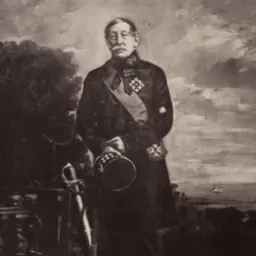
Adolphus Frederick Alexander Woodford (1821–1887) was the eldest son of Alexander George Woodford, a career soldier who was already a hero of Waterloo, and would rise to Field Marshal, ending his days in command of Chelsea Hospital. After a short stay in the Coldstream Guards, Adolphus entered the Anglican Church, having the living of Swillington from 1847 to 1872. On leaving the Army, he also became a Freemason, rising to become Grand Chaplain in 1863, commuting from Yorkshire to his London duties.
After moving to London, his editorship of the Freemason ignited an interest in the study of Masonic history, and led to the establishment of Quatuor Coronati Lodge, dedicated to masonic research. Woodford was the first Immediate Past Master of the lodge, and as such convened the lodge for much of its first two years, during the frequent absences of Charles Warren, the master. Just before his death, towards the end of 1887, he passed on a set of coded papers which resulted in the establishment of the Hermetic Order of the Golden Dawn.
Birth, Army and Vocation
Adolphus Woodford was born on 9 July 1821. His father was already a distinguished soldier, and as eldest son he was named after the Colonel-in-Chief of his father's regiment, the Coldstream Guards. It seems a natural progression for Adolphus to have become an officer in the same regiment. He was gazetted as a lieutenant on 25 December 1838, but resigned on 23 April 1841. His father was, by this time, Governor-general of Gibraltar, and it was there, on 9 February 1842, that Adolphus was initiated into his father's lodge, the Lodge of Friendship No 345 (now the Royal Lodge of Friendship No 278). He took the customary three degrees of Entered Apprentice, Fellowcraft and Master Mason, and is known to have attended nine meetings of the lodge in total, before returning to England in the autumn, matriculating at the University of Durham to study Theology.
He was awarded his Bachelor of Arts in 1846, and Licentiate of Theology in 1847. Meanwhile, he joined Marquis of Granby Lodge No 146 (now 124), and served two years as Master. His second year as master, 1847, also saw him appointed Provincial Grand Chaplain for the County of Durham. His academic achievements, while less than impressive, saw him ordained Priest that same year, and appointed Rector of St. Mary's Church, Swillington, where he would remain for the next twenty-five years.
The Rector of Swillington
In 1847 Swillington, to the south-east of Leeds, was still a rural community, although mining was starting to assert itself as the driving force of the local economy. Woodford was still the Provincial Grand Chaplain in Durham, while completing structural work on his church in Yorkshire. It was not until 1854 that he joined Philanthropic Lodge No 382 (now 304). The next year he was appointed Provincial Grand Chaplain for West Yorkshire. He was master of Philanthropic in 1856 and 1858, and the lodge history asserts that it thrived during the years of his regular attendance. He re-wrote their ritual in a unique form, which was shared with five daughter and granddaughter lodges.
He joined the Lodge of Antiquity in London in 1863, and that same year became Grand Chaplain of United Grand Lodge. While still Rector of Swillington, his new masonic duties took him to the consecration of many new lodges, and saw him deliver the oration at the laying of the foundation stone for the new extension to Freemason's Hall in Great Queen Street, London, the next year. In the same period, Woodford started to contribute articles on masonic history, starting with his researches into the old York lodges. He became known to local booksellers as he began to collect old manuscripts. The following year, he moved to London, resigning his living for a career in Masonic publishing. He had already made a strong case that the mystic and philosophical elements which allowed Freemasonry to evolve from a purely operative to a speculative society were likely to have been imported from some aspects of the Hermeticism practised during the Renaissance.
Don’t just read it —
keep it.
Full-length biographies made to live with: read them, listen on the way to work, watch them tonight.
- E-book
- Audio
- Video
Instant download · yours to keep · every purchase keeps this site free
Important facts
People in Adolphus Frederick Alexander Woodford's life
Named in this biography and alive at the same time
Contemporaries
People whose lives overlapped Adolphus Frederick Alexander Woodford's



Frequently asked questions
Who was Adolphus Frederick Alexander Woodford?
Pioneering Masonic Researcher (1821–1887)
When was Adolphus Frederick Alexander Woodford born?
Adolphus Frederick Alexander Woodford was born on 9 July 1821.
When did Adolphus Frederick Alexander Woodford die?
Adolphus Frederick Alexander Woodford died on 23 December 1887.
Sources & further reading
· Wikipedia: Adolphus Frederick Alexander Woodford
· DBpedia: Adolphus Frederick Alexander Woodford
Cite this page
APA: Biography.guide. (2026). Adolphus Frederick Alexander Woodford. https://biography.guide/adolphus-frederick-alexander-woodford/
MLA: "Adolphus Frederick Alexander Woodford." Biography.guide, https://biography.guide/adolphus-frederick-alexander-woodford/.
Chicago: "Adolphus Frederick Alexander Woodford." Biography.guide. https://biography.guide/adolphus-frederick-alexander-woodford/.
Data last updated: 2026-09-20 · Spot an error? Report a correction.
Page generated 2026-09-27 05:27 UTC