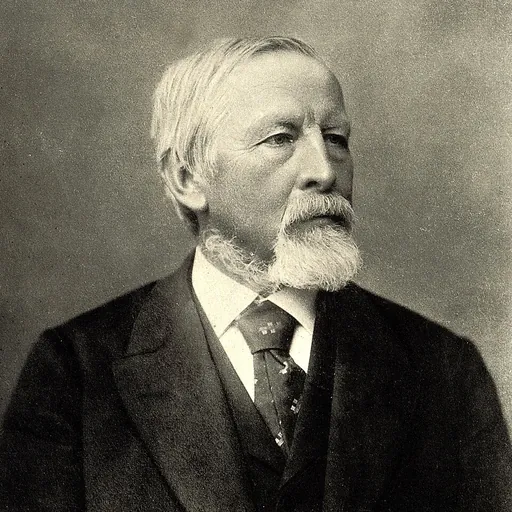
About Adolf Kußmaul
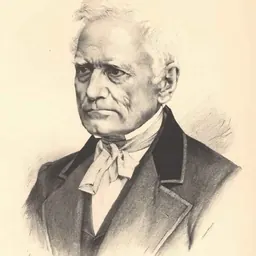
Lived 1822 – 1902 (aged 80). Adolf Kußmaul was a German physician writer, internist, university teacher, surgeon, gastroenterologist and writer.
Adolf Kussmaul (; 22 February 1822 – 28 May 1902) was a German physician and a leading clinician of his time.
Biography Adolf Kussmaul was born as the son and grandson of physicians in Graben near Karlsruhe. He studied medicine at Heidelberg University. In 1846, he passed the staatsexamen and became assistant to Karl von Pfeufer. He entered the army after graduation and spent two years as an army surgeon. This was followed by a period as a general practitioner before he went to Würzburg to study for his doctorate under Virchow.
He was subsequently Professor of Medicine at Heidelberg (1857), Erlangen (1859), Freiburg (1859) and Straßburg (1876).
Beyond his medical skills he was also active in literature. He is regarded as one of the creators of the term Biedermeier, an art movement.
He died in Heidelberg.
Eponymous terms His name continues to be used in eponyms. He described two medical signs and one disease which have eponymous names that remain in use: Kussmaul breathing – very deep and labored breathing with normal, rapid or reduced frequency seen in severe diabetic ketoacidosis (DKA). Kussmaul's sign – paradoxical rise in the jugular venous pressure (JVP) on inhalation in constrictive pericarditis or chronic obstructive pulmonary disease (COPD). Kussmaul disease (also called Kussmaul–Maier disease) – polyarteritis nodosa. Named with Rudolf Robert Maier (1824–1888). The following eponymous terms are considered archaic: Kussmaul's coma – diabetic coma due to ketoacidosis. Kussmaul's aphasia – selective mutism. Kussmaul's pulse – pulsus paradoxus. Kussmaul–Landry paralysis – Guillain–Barré syndrome. haemorrhage. Kussmaul asserts that, after a violent death, in a muscular subject, rigor mortis often continues for 14 days or longer.
Firsts First to describe dyslexia in 1877, which he called 'word blindness'.
Don’t just read it —
keep it.
Full-length biographies made to live with: read them, listen on the way to work, watch them tonight.
- E-book
- Audio
- Video
Instant download · yours to keep · every purchase keeps this site free
Important facts
People in Adolf Kußmaul's life
Named in this biography and alive at the same time


Related people
Same field, nearest in time



Contemporaries
People whose lives overlapped Adolf Kußmaul's




Frequently asked questions
Who was Adolf Kußmaul?
German surgeon (1822–1902)
When was Adolf Kußmaul born?
Adolf Kußmaul was born on 22 February 1822 in Graben-Neudorf.
When did Adolf Kußmaul die?
Adolf Kußmaul died on 28 May 1902 in Heidelberg.
What was Adolf Kußmaul's occupation?
Adolf Kußmaul was a physician writer, internist, university teacher, surgeon, gastroenterologist and writer.
What nationality was Adolf Kußmaul?
Adolf Kußmaul was German.
Sources & further reading
Cite this page
APA: Biography.guide. (2026). Adolf Kußmaul. https://biography.guide/adolf-kussmaul/
MLA: "Adolf Kußmaul." Biography.guide, https://biography.guide/adolf-kussmaul/.
Chicago: "Adolf Kußmaul." Biography.guide. https://biography.guide/adolf-kussmaul/.
Data last updated: 2026-09-21 · Spot an error? Report a correction.
Portrait: Wikimedia Commons · author & licence
Page generated 2026-09-27 04:58 UTC