
About Adolf Engström
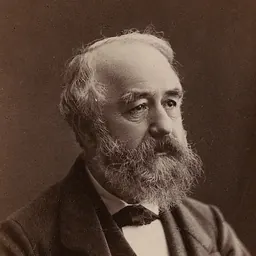
Lived 1855 – 1924 (aged 69). Adolf Engström was a Finnish businessperson.
module2 = module3 = module4 = module5 = module6 = signature = signature_size =
footnotes =
Carl Adolf Engström (17 February 1855 – 19 June 1924) was a Finnish engineer, businessman and vuorineuvos.
Engström got familiar already at early age with large machinery and engineering workshop environment due to his stepfather's work as engineer in the Finnish State Railways. After completing his mechanical engineering studies in Helsinki Polytechnic School in 1877, Engström went to gain experience abroad in Sweden, Germany, United Kingdom and United States.
Upon his return in 1884, Engström got vacance in the State Railways. He took successfully part in steam locomotive designing, which was followed by railway projects in Savonia and Karelia. He worked as director for stone company Ab Granit in 1889–1895, after which he returned to State Railways for another five years.
Engström was appointed manager of Hietalahti Shipyard and Engineering Works in 1900. During his time the company developed rapidly and the sales increased significantly, largely due to Russo-Japanese War and the First World War. On the other hand, the time was difficult due to increased strikes and confrontation between the workers and employers. Engström left his position as company manager in 1918; this was affected by the death of his son in the previous Finnish Civil War.
Early life Adolf Engström was born in Vörå, Ostrobothnia. Engström sometimes faced situations which needed quick decisions – he for example received repair work of a shipwrecked vessel which was too large to the dock; the dock was extended during the salvage process.
The Russo-Japanese War in 1904–1905 led to increased order intake of torpedo boats for the Imperial Russian Navy. During 1900–1914 the company built total about 60 steam and motor vessels. In addition to shipbuilding, the company produced large number of ship engines, steam boilers and also railway wagons. Engström's personal contribution was significant in the rolling stock production, and the wagon projects balanced the wintertime docking workload drop.
Engström developed and modernised the shipyard; this meant new methods, as electrical welding and pneumatic tools. The dock was further extended in 1910 and 1912 and a new brass foundry was taken into use in 1914. Two years later a new main engineering workshop was opened. Prior to the First World War, the company employed 597 people and the annual sales reached 2.4 million marks. The First World War increased the business again; during 1915–1917 the company docked total 400 vessels. Engström had also further plans which did not actualise, such as a new dock layout, that would have enabled building many large ships simultaneously. All the investments were funded by company profit, and the company did not collect capital from outside during that. By 1919, when Engström left his position, the share capital had grown from half million to six million marks.
Engström's era as shipyard leader was the time of organisation of labour and employers. The yard experienced some occasional strikes at the late 19th century, and after the yard faced larger strikes and conflicts in 1902, Engström called other engineering industry employers to negotiate about forming an employers' association. The first general collective agreement between the union and employers was signed in 1906. Already in 1908 the employers planned to end the agreements because they had not put an end to striking. At the beginning Engström supported collective agreements, but changed his mind in 1909. This led to a long-term strike, which eventually ended to defeat for the union – the engineering industry workers returned to work without having a collective agreement. Consequently, the relations between employers' association and trade unions suffered badly.
Organisational activities Engström was founding member of the 1903 created Finnish Engineering Industry Employers' Association and deputy chairman until 1911, after which he served as chairman until 1919. He also took part in founding the Swedish Technical Science Academy of Finland and he became honorary member of the Finnish Technical Association in 1920. During 1903–1911 he was member of Helsinki City Council.
Committee memberships Railway Economy Investigation Committee, 1885–1895 and 1906 Railway Committee, 1892–1893 Committee for Railway Rolling Stock Construction Promotion, 1896 Representative of Finland in International Railway Conference, 1895 Vocational Education Committee, 1908 Advisor member of Railway Administration, 1908–1916 Domestic Shipbuilding Promotion Committee, 1912 and 1919 Railway Administration Inspector General, 1919–1922
Personal life Engström married Eva Alexandra Karolina née Jansson in 1885. Their only son died in the Finnish Civil War in 1918. This made Engström to leave his position as company manager. The couple donated a large sum to be shared as scholarships to young technicians, who were orientated to shipbuilding and engineering industry.
Don’t just read it —
keep it.
Full-length biographies made to live with: read them, listen on the way to work, watch them tonight.
- E-book
- Audio
- Video
Instant download · yours to keep · every purchase keeps this site free
Important facts
Related people
Same field, nearest in time


Contemporaries
People whose lives overlapped Adolf Engström's




Frequently asked questions
Who was Adolf Engström?
Finnish engineer
When was Adolf Engström born?
Adolf Engström was born on 17 February 1855 in Vörå.
When did Adolf Engström die?
Adolf Engström died on 19 June 1924 in Helsinki.
What was Adolf Engström's occupation?
Adolf Engström was a businessperson.
What nationality was Adolf Engström?
Adolf Engström was Finnish.
Sources & further reading
Cite this page
APA: Biography.guide. (2026). Adolf Engström. https://biography.guide/adolf-engstrom/
MLA: "Adolf Engström." Biography.guide, https://biography.guide/adolf-engstrom/.
Chicago: "Adolf Engström." Biography.guide. https://biography.guide/adolf-engstrom/.
Data last updated: 2026-09-25 · Spot an error? Report a correction.
Page generated 2026-09-27 05:08 UTC