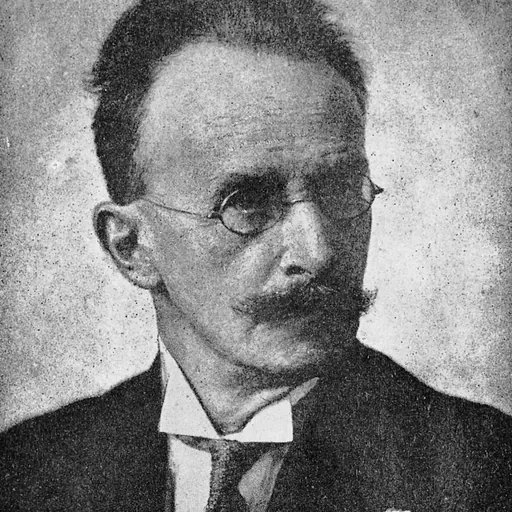
About Adolf Dirr
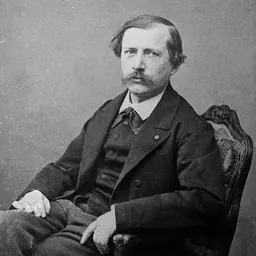
Lived 1867 – 1930 (aged 62). Adolf Dirr was a German linguist, ethnologist and philologist.
Adolf Dirr (17 December 1867 – 9 April 1930) was a German philologist, linguist, ethnologist, folklorist, Orientalist, and Caucasus scholar. He was among the foundational figures in the modern academic study of the Caucasian languages, particularly through his fieldwork, grammars, folklore collections, and ethnographic documentation.
Dirr conducted extensive linguistic and ethnographic research in the Caucasus during the late Russian imperial period, documenting a number of poorly described or endangered languages, including Ubykh, Udi, and Tabasaran. His collection (“Caucasian Folk Tales”) became one of the earliest major anthologies to introduce the oral traditions of the Caucasus to a wider European readership.
Early life and education
Dirr was born in Augsburg, Kingdom of Bavaria, on 17 December 1867.
Between 1892 and 1898 he studied Oriental languages and philology in Paris at the École des Langues Orientales Vivantes, the Collège de France, and the École d'Anthropologie de Paris. Before turning primarily to Caucasian studies, he worked on a variety of languages outside Europe, including Hausa, Egyptian Arabic, Vietnamese, and Malay.
Linguistic historian Wolfgang Schulze later described Dirr's work as marking the revival of serious field research in the North Caucasus after the earlier pioneering efforts of von Uslar.
Ubykh research
Dirr's work on the Ubykh language was especially significant. Ubykh, a Northwest Caucasian language formerly spoken along the eastern coast of the Black Sea, later became extinct in the twentieth century.
His study Die Sprache der Ubychen. Grammatische Skizze (“The Language of the Ubykhs: A Grammatical Sketch”), published in 1928, became one of the foundational descriptive works on the language. Because Ubykh later disappeared as a spoken language, Dirr's documentation acquired lasting importance for comparative and historical linguistics.
Museum and academic career
In 1908, Dirr received an honorary doctorate from the Ludwig-Maximilians-Universität München.
From 1913 until his death, he served as Conservator at the Museum für Völkerkunde in Munich.
Folklore and ethnography
In addition to his linguistic work, Dirr collected folklore, songs, oral traditions, ethnographic objects, photographs, and sound recordings from numerous peoples of the Caucasus.
His best-known work is (“Caucasian Folk Tales”), published in 1920 by Eugen Diederichs Verlag in Jena as part of the series Die Märchen der Weltliteratur (“The Fairy Tales of World Literature”).
The collection includes traditions from: Abkhazians, Aghuls, Archins, Avars, Imeretians, Kabardians, Karachays, Mingrelians, Laks, Kumyks, Ossetians, Svans, Tabasarans, Tats, Chechens, Udis, and Tsakhurs.
The anthology presents ninety-eight examples of Caucasian oral literature, including: fairy tales, animal fables, Nart sagas, legends of Rostam, legends of Prometheus, legends of Polyphemus, stories of Solomon, legends of Alexander the Great, trickster tales, comic anecdotes, and stories concerning Mulla Nasreddin.
The work helped introduce Caucasian oral traditions to a broader European readership and illustrated the complex interaction of Caucasian, Iranian, Turkic, Greek, and Islamic narrative traditions in the region.
An English translation by Lucy Menzies appeared in 1925 under the title Caucasian Folk-Tales.
Publications
Books and monographs
Grammatica Udinskago jazyka. Tiflis, 1903. Dirr's Colloquial Egyptian Arabic Grammar, for the Use of Tourists. 1904. Grammatičeskij očerk tabassaranskago jazyka s tekstami, sbornikom tabassaranskich slov i russkim k nemu ukazatelem. Tiflis, 1905. . Eugen Diederichs, Jena, 1920. Einführung in das Studium der kaukasischen Sprachen. Asia Major, Leipzig, 1928. Die Sprache der Ubychen. Grammatische Skizze. Asia Major, Leipzig, 1928. Praktisches Lehrbuch der Ostarmenischen Sprache. A. Hartleben's Verlag, Vienna and Leipzig.
Articles and contributions
“Kaukasusvölker. Georgische Gesänge.” In Gesänge russischer Kriegsgefangener, vol. 3, part 1, 1928.
Legacy
Dirr is regarded as one of the major pioneers of Caucasian linguistics and ethnography.
Don’t just read it —
keep it.
Full-length biographies made to live with: read them, listen on the way to work, watch them tonight.
- E-book
- Audio
- Video
Instant download · yours to keep · every purchase keeps this site free
Important facts
People in Adolf Dirr's life
Named in this biography and alive at the same time

Related people
Same field, nearest in time


Contemporaries
People whose lives overlapped Adolf Dirr's




Frequently asked questions
Who was Adolf Dirr?
German linguist and ethnologist (1867-1930)
When was Adolf Dirr born?
Adolf Dirr was born on 17 December 1867 in Augsburg.
When did Adolf Dirr die?
Adolf Dirr died on 9 April 1930 in Passau.
What was Adolf Dirr's occupation?
Adolf Dirr was a linguist, ethnologist and philologist.
What nationality was Adolf Dirr?
Adolf Dirr was German.
Sources & further reading
Cite this page
APA: Biography.guide. (2026). Adolf Dirr. https://biography.guide/adolf-dirr/
MLA: "Adolf Dirr." Biography.guide, https://biography.guide/adolf-dirr/.
Chicago: "Adolf Dirr." Biography.guide. https://biography.guide/adolf-dirr/.
Data last updated: 2026-09-23 · Spot an error? Report a correction.
Portrait: Wikimedia Commons · author & licence
Page generated 2026-09-27 05:04 UTC