
Adolf Anderssen
German chess champion, after Paul Morphy (1858-1860), second unofficial world chess champion (1851-1858, 1860-1865, 1867-1871), chess publicist
About Adolf Anderssen
Lived 1818 – 1879 (aged 60). Adolf Anderssen was a German chess player, non-fiction writer, chess composer and mathematician.
Karl Ernst Adolf Anderssen (6 July 1818 – 13 March 1879) was a German chess master. He won the great international tournaments of 1851 and 1862, but lost matches to Paul Morphy in 1858, and to Wilhelm Steinitz in 1866. Accordingly, he is generally regarded as having been the world's leading chess player from 1851 to 1858, and leading active player from 1862 to 1866, although the title of World Chess Champion did not yet exist.
Anderssen became the most successful tournament player in Europe, winning over half the events he entered, including the very strong Baden-Baden 1870 chess tournament. He achieved most of these successes when he was over the age of 50.
Anderssen is famous today for his brilliant sacrificial attacking play, particularly in the Immortal Game (1851) and the Evergreen Game (1852). He was an important figure in the development of chess problems, driving forward the transition from the "Old School" of problem composition to the elegance and complexity of modern compositions. He was also one of the most likeable of chess masters and became an elder statesman of the game, to whom others turned for advice or arbitration.
Background and early life Anderssen was born in Breslau (now called Wrocław, Poland), in the Prussian Province of Silesia, in 1818. He lived there for most of his life, sharing a house with and supporting his widowed mother and his unmarried sister. Anderssen never married. He graduated from the public gymnasium (high school) in Breslau and then attended university, where he studied mathematics and philosophy. After graduating in 1847 at the age of 29, he took a position at the Friedrichs-Gymnasium in Breslau as an instructor and later as professor of Mathematics. Anderssen lived a quiet, stable, responsible, respectable middle-class life. His career was teaching mathematics, while his hobby and passion was playing chess. These brought him to the attention of the "Berlin Pleiades" group, which included some of the strongest players of the time, and he played matches against some of them. In 1846, he became the editor of the magazine Schachzeitung der Berliner Schachgesellschaft (later called Deutsche Schachzeitung) when its founder Ludwig Bledow, one of the Berlin Pleiades, died. Anderssen held this post until 1865.
London 1851 Howard Staunton was the principal organiser of the 1851 London International Tournament, and offered to pay Anderssen's travel expenses, should he fail to win. In 1848, Anderssen drew a match with the professional player Daniel Harrwitz.
Anderssen's preparations for the 1851 London International Tournament produced a surge in his playing strength: he played over 100 games in early 1851 against strong opponents including Carl Mayet, Ernst Falkbeer, Max Lange and Jean Dufresne. that is equivalent to about £240,000 ($370,200) in 2006's money. When Anderssen and Szén found they were to play each other, they agreed that, if either won the tournament, the other would receive one-third of the prize; this does not appear to have been considered in any way unethical. one of the organizers of the 1851 London International Tournament had said the contest was for "the baton of the World's Chess Champion". In fact Anderssen was not described as "the world champion", but the tournament established Anderssen as the world's leading chess player. Although Anderssen knew as well as anyone how to attack, Morphy understood much better when to attack and how to prepare an attack. Morphy had recently scored equally convincing wins in matches against other top-class players: Johann Löwenthal, the Rev. John Owen and Daniel Harrwitz. Morphy returned to the United States in 1859, however, and soon afterwards announced his retirement from serious chess, making Anderssen once again the strongest active player. This opening move, now referred to as Anderssen's Opening, has never been popular in serious competition.
Other games 1851–1862 Shortly after the 1851 London International Tournament, Anderssen played his two most famous games, both encounters which he won by combinations that involved several sacrifices. In the first, as White against Lionel Kieseritzky in London on 21 June 1851, just after the International Tournament (1851) and now called the "Immortal Game", he sacrificed a bishop, both rooks and finally his queen. In the second, played in Berlin in 1852 as White against Jean Dufresne and now called the "Evergreen Game", the total sacrifice was more modest, but still exceeded a queen and a minor piece.
After the match with Morphy, Anderssen played two matches against Ignác Kolisch, one of the leading players of the time, who later became a wealthy banker and patron of chess. Anderssen drew their match in 1860 and narrowly won in 1861 (5/9; won four, drew two, lost three; Kolisch was ahead at the half-way stage). and finished two points ahead of Louis Paulsen, who had the best playing record in the early 1860s. Morphy had retired from chess at this time, so Anderssen was again generally regarded as the world's leading active player.
Shortly after the tournament, he played a match against tournament runner-up Paulsen, ending in a draw (3 wins, 3 losses, 2 draws). In 1864, he drew another match (3 wins, 3 losses, and 2 draws) against Berthold Suhle,
Steinitz match, 1866
In 1866, Anderssen lost a close match with 30-year-old Wilhelm Steinitz (six wins, eight losses, and no draws; Steinitz won the last two games). This is generally seen as the point at which Steinitz succeeded Anderssen as the world's leading active player. Although ideas of a contest for the world championship had been floating around since the 1840s,
1866–1879 By this time tournaments were becoming more frequent, and the round-robin format was adopted. At the same time, Anderssen, after losing the match to Morphy in 1858 and to Steinitz in 1866, rededicated himself to chess, particularly studying both endgames and positional play. The result was that Anderssen, in his early fifties, was playing the finest chess of his career. As a result, Anderssen compiled a very successful tournament record in the late stages of his career: five first places, two second places, two third places; and a sixth place in the final year of his life, when his health was failing. One of Anderssen's third places was at the strong Vienna 1873 tournament, when he was 55. About half of Anderssen's tournament successes came at championships of the different regional German Chess Federations; but these were open to all nationalities, and most of them had a few top ten or even top five competitors. Anderssen finished second in the tournament behind Louis Paulsen.
Still at Leipzig, Anderssen lost a match against tournament winner Louis Paulsen (three wins, one draw, and five losses). Matches were Anderssen's relative weakness; his only match win in this period was in 1868, against the 26-year-old Johann Zukertort (eight wins, one draw, and three losses).
Arpad Elo, inventor of the Elo rating system, retroactively calculated ratings through history, and estimated that Anderssen was the first player with a rating over 2600. Chessmetrics ranks Anderssen as one of the top two players for most of the period from 1859 to 1873, and as the strongest player in the world seven months distributed between 1860 and 1870.
Steinitz rated Anderssen as one of the two greatest attacking players of his time: "We all may learn from Morphy and Anderssen how to conduct a attack, and perhaps I myself may not have learnt enough." Although Anderssen is regarded as a member of the "heroic" attacking school, a principle more recently labelled "Makogonov's rule". According to Fine, his approach to was haphazard and he totally failed to understand why Morphy won.
Anderssen has had a more enduring influence on chess problem composition. He started composing in the last years of the "Old School", whose compositions were fairly similar to realistic positions and featured spectacular moves, multiple sacrifices and few variations. Steinitz wrote: "Anderssen was honest and honourable to the core. Without fear or favour he straightforwardly gave his opinion, and his sincere disinterestedness became so patent....that his word alone was usually sufficient to quell disputes...for he had often given his decision in favour of a rival..."
Tournament results Date Location Place Score Notes 1851 London International Tournament 1 15/21 Ahead of Marmaduke Wyvill, Elijah Williams, Howard Staunton, József Szén, Hugh Alexander Kennedy, Bernhard Horwitz, Henry Edward Bird, Lionel Kieseritzky, Carl Mayet, Johann Löwenthal, Edward Löwe, Alfred Brodie, James Mucklow, Samuel Newham and E.S. Kennedy.A knock-out tournament in which the contestants played mini-matches in each round, increasing from best-of-3 in the 1st round to best-of-8 in the final. Anderssen himself beat Kieseritzky, Szen, Staunton and Wyvill – his closest mini-match was +4−2=1 in the final against Wyvill.
Match results Date Opponent Result Location Score Notes 1845 Ludwig Bledow Lost Breslau ½/5 +0=1–4 Sources vary about the score. 1858 Daniel Harrwitz Won Paris 4/6 +3=2–1 Sources give also separate results: +3=3–1 and +2=2–1 1858 Paul Morphy Lost Paris 3/11 +2=2–7 1858 Paul Morphy Lost Paris 1/6 +1=0−5 Casual games 1859 Max Lange Lost Breslau 3½/8 +3=1–4 Casual games 1859 Carl Mayet Won Berlin 7/8 +7=0–1 1859 Jean Dufresne Won Berlin 4/4 +4=0–0 1859 Berthold Suhle Won Berlin 31/48 +27=8–13 Casual games 1860 Philipp Hirschfeld Won Berlin 16½/29 +14=5–10 1860 Ignatz von Kolisch Drew Paris 5½/11 +5=1–5 1860 Paul Journoud Won Paris 3½/5 +3=1–1 1860 Jules Arnous de Rivière Drew Paris 2½/5 +2=1–2 1861 Ignatz von Kolisch Won London 5/9 +4=2–3 1861 Johann Löwenthal Won London 2/3 +2=0–1 Casual games 1862 Louis Paulsen Drew London 4/8 +3=2–3 1862 Wilhelm Steinitz Won London 2/3 +2=0–1 Casual games 1864 Berthold Suhle Drew Berlin 4/8 +3=2–3 1865 Carl Mayet Won Berlin 5½/8 +5=1–2 1866 Johannes Minckwitz Won Berlin 8½/12 +8=1–3 1866 Gustav Neumann Lost Berlin 10/24 +9=2–13 1866 Wilhelm Steinitz Lost London 6/14 +6=0–8 1867 Samuel Mieses Won Breslau 4½/5 +4=1–0 1868 Johannes Zukertort Won Berlin 8½/12 +8=1–3 1870 Louis Paulsen Lost Baden-Baden ½/3 +0=1–2 1871 Johannes Zukertort Lost Berlin 2/7 +2=0–5 1876 Louis Paulsen Lost Leipzig 4½/10 +4=1–5 1877 Louis Paulsen Lost Leipzig 3½/9 +3=1–5 Sources:
Don’t just read it —
keep it.
Full-length biographies made to live with: read them, listen on the way to work, watch them tonight.
- E-book
- Audio
- Video
Instant download · yours to keep · every purchase keeps this site free
Important facts
People in Adolf Anderssen's life
Named in this biography and alive at the same time




Related people
Same field, nearest in time
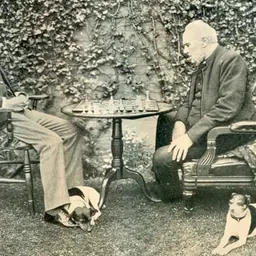


Contemporaries
People whose lives overlapped Adolf Anderssen's

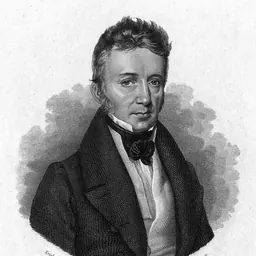

Frequently asked questions
Who was Adolf Anderssen?
German chess champion, after Paul Morphy (1858-1860), second unofficial world chess champion (1851-1858, 1860-1865, 1867-1871), chess publicist
When was Adolf Anderssen born?
Adolf Anderssen was born on 6 July 1818 in Wrocław.
When did Adolf Anderssen die?
Adolf Anderssen died on 13 March 1879 in Wrocław.
What was Adolf Anderssen's occupation?
Adolf Anderssen was a chess player, non-fiction writer, chess composer and mathematician.
What nationality was Adolf Anderssen?
Adolf Anderssen was German.
Sources & further reading
Cite this page
APA: Biography.guide. (2026). Adolf Anderssen. https://biography.guide/adolf-anderssen/
MLA: "Adolf Anderssen." Biography.guide, https://biography.guide/adolf-anderssen/.
Chicago: "Adolf Anderssen." Biography.guide. https://biography.guide/adolf-anderssen/.
Data last updated: 2026-09-20 · Spot an error? Report a correction.
Page generated 2026-09-27 05:17 UTC