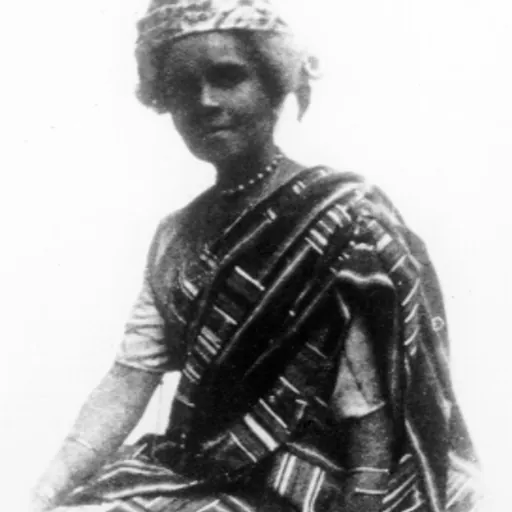
Adelaide Casely-Hayford
Sierra Leonean activist, educator, feminist and writer
About Adelaide Casely-Hayford
Lived 1868 – 1960 (aged 91). Adelaide Casely-Hayford was a writer, educator, women's rights activist, autobiographer and lawyer.
Adelaide Casely-Hayford (née Smith; 2 June 1868 – 24 January 1960), was a Sierra Leone Creole advocate, activist of cultural nationalism, teacher, fiction writer, and feminist. Her commitment to public service led her to improving the conditions of black women and men. She played an important role as an advocate of women's education in Sierra Leone to popularize Pan-Africanist and feminist politics in the early 1900s. In 1923, she founded a Girls' Vocational and Training School in Freetown to instil cultural and racial pride for Sierra Leoneans under colonial rule. The school lasted until 1940 and strongly emphasized the education of African women. She later went on to further her mission of feminism and cultural nationalism from the school by writing short stories and memoirs.
Early life and education Adelaide Smith was born on 2 June 1868 in Freetown, British Sierra Leone. She attended Jersey Ladies' College (now Jersey College for Girls). Her father, William Smith, came to Freetown at seventeen. Her mother, Anne Smith, was part maroon and part mandingo. She was the sixth of eight children. Like many other Sierra Leonean women born into the elite society, she was deeply influenced by Victorian values and ideas of family and gender roles. During a speech in 1905, she emphasized the importance African women could have in social and political development. In 1914, Adelaide and J.E.'s marriage failed, after which she returned to Sierra Leone. The failure of their marriage came from them seeing little of each other with J. E. Casely Hayford practicing law and Adelaide Casely Hayford being an educated woman. Adelaide in the future went on to blame her husband for their past continued financial problems. Upon returning to Sierra Leone in the early 1900s she began a career teaching music and taking on pupils. She was extremely critical of the education system in Africa. She believed that the African education system taught African children to hate themselves. She aimed to help shape the education system to be more focused on instilling racial and cultural pride. She went on to become the lady president for the Freetown branch of the United Negro Improvement Association (UNIA). It was in this capacity that she advocated for African feminism and Pan-Africanism. She went on a speaking tour in the United States to give insight into African societies and ultimately correct improper views of Africa by western society. Her work in America was not limited to her speaking tour. She became an associate to Nannie Burroughs by studying girl's schools in the U.S. for two years. She attended the fourth Pan-African conference in New York in 1927 which was organized by W.E.B. Du Bois. She became the only black female member of the colony's Education Board in 1924. With this position she continued to advocate for equal status of women's educations in comparison to that of men's education. She also pushed for schools to hire trained African teachers, to use African-produced textbooks, and dress in African traditional attire in schools. While abroad Gladys spent much time sharpening her skills in poetry. After some years spent in England studying Gladys returned in 1926 to help her mother in caring for the school and teach.
Adelaide’s relationship with her daughter Gladys reflected the family’s diverse background and played a significant role in her life. After Gladys’s death, Adelaide encountered her daughter’s poetry and artistic work. Adelaide is recognized as a pioneer of girls’ education in West Africa, and Gladys’s achievements illustrate the impact of her efforts. Importance of her connection with Gladys was central to her personal and professional story.
Her teachings Adelaide Casely-Hayford taught African folklore and literature at her Freetown school.
In her address. The Home its Educational Value, to the Aggrey House in London she argued that while women were different to men they were not inferior. In her teachings regarding feminism, she strongly supported the education of women. She felt it was through gaining education women could become economically independent. She also spoke out against polygamy. However, students at the Girls Vocational School were still expected to learn childcare, cooking, and other home making skills. Her teachings also strongly emphasized cultural pride. Regarding nationalism she felt that education needed to instill racial pride, a love of Africa, and admiration for African works.
Her most known piece of writing is a short story, Mista Courifer. In the story Mr. Courifer is a citizen of Sierra Leone who loves everything English. Throughout the story Adelaide pokes fun at Mr. Courifer. In the story Mr. Courifer has a son. His son rejects many of the English customs. The only English custom that the son prefers is that of marriage. The son prefers the small family monogamous marriage traditional of the English.
The story reveals that Adelaide preferred her feminist ideals to her nationalist ideals. Which is why she was open to adopting English customs regarding marriage while still advocating for African pride. Her story and teachings show that she was living in a transitional period. Women were adjusting to adopting feminist stances while still advocating on behalf of their racial views. Ultimately, Adelaide used her teachings to navigate the intersection of African feminism and black nationalism. 1949: she received the MBE.
Don’t just read it —
keep it.
Full-length biographies made to live with: read them, listen on the way to work, watch them tonight.
- E-book
- Audio
- Video
Instant download · yours to keep · every purchase keeps this site free
Important facts
Family & relationships
People in Adelaide Casely-Hayford's life
Named in this biography and alive at the same time

Related people
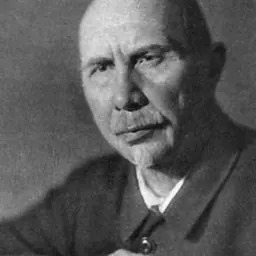
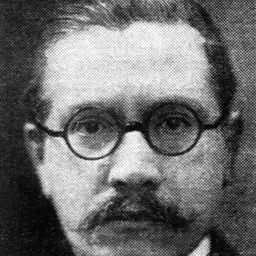
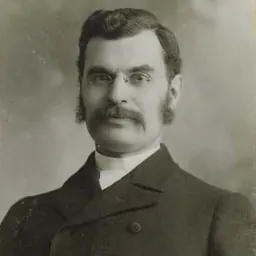
Same field, nearest in time

Contemporaries
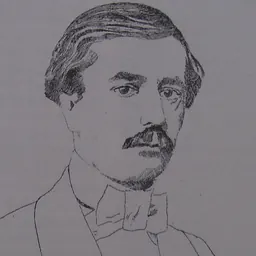
People whose lives overlapped Adelaide Casely-Hayford's



Frequently asked questions
Who was Adelaide Casely-Hayford?
Sierra Leonean activist, educator, feminist and writer (1868–1960)
When was Adelaide Casely-Hayford born?
Adelaide Casely-Hayford was born on 27 June 1868 in Freetown.
When did Adelaide Casely-Hayford die?
Adelaide Casely-Hayford died on 16 January 1960 in Freetown.
What was Adelaide Casely-Hayford's occupation?
Adelaide Casely-Hayford was a writer, educator, women's rights activist, autobiographer and lawyer.
What nationality was Adelaide Casely-Hayford?
Adelaide Casely-Hayford's recorded nationality: Colony of Sierra Leone.
Sources & further reading
· Wikipedia: Adelaide Casely-Hayford
· DBpedia: Adelaide Casely-Hayford
Cite this page
APA: Biography.guide. (2026). Adelaide Casely-Hayford. https://biography.guide/adelaide-casely-hayford/
MLA: "Adelaide Casely-Hayford." Biography.guide, https://biography.guide/adelaide-casely-hayford/.
Chicago: "Adelaide Casely-Hayford." Biography.guide. https://biography.guide/adelaide-casely-hayford/.
Data last updated: 2026-09-24 · Spot an error? Report a correction.
Portrait: Wikimedia Commons · author & licence
Page generated 2026-10-03 09:35 UTC