
About Adam de Stratton
Lived 1201 – 1290 (aged 88–89). Adam de Stratton was a banker and moneylender.
Adam de Stratton (died 1292–94) was a royal moneylender, administrator and clergyman under Edward I of England. He advanced professionally through the patronage of the earls of Devon, and became Chamberlain of the Exchequer and steward of Isabella, Countess of Devon. At the same time he made himself an enormous fortune through moneylending, primarily by acquiring debts from Jewish moneylenders. His business methods were dubious and often involved various illegal activities. In 1290 he fell victim to an investigation of corruption in the royal administration, and from 1292 until his death— no later than 1294—he was held in prison. Stratton has been called by a modern historian "the greatest and probably the most unscrupulous of thirteenth-century money lenders, who eventually met the fate he deserved."
Early career Adam Stratton was the son of Thomas de Argoges, or Arwillis, of Stratton St Margaret in Wiltshire. Adam himself used the name "de Argoges" until 1264, when he appears as "de Stratton"; a change which probably reflects his emergence as a major landowner in that area. He had at least three brothers, Thomas, William and Henry de Stratton, and one sister, Christine. He found Crown employment for all his brothers: Thomas and William had positions in the Exchequer, while Henry was a judge in Ireland in the 1270s. Nothing is known of Adam's early life; the first mention of him dates from 1256, when he was a royal clerk at the Exchequer. It is likely that he procured this position from the Redvers earls of Devon, with whom he had a strong connection throughout his career. The earls of Devon were hereditary chamberlains of the Exchequer. In 1276 Countess Isabella enfeoffed him with the chamberlainship, a position that was accompanied by several manors in Wiltshire.
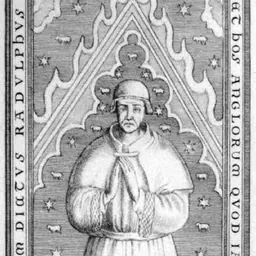
The majority of his fortune, however, came from moneylending. Up until their expulsion in 1290, the major moneylenders in England were Jews, who were not covered by Christian bans on usury. During the reign of Henry III, however, the Jews were taxed at extortionate rates, and many were forced to sell acquired debts at reduced prices. These debts were lucrative because the buyers were not bound by the existing contract. They could demand higher rates, or sometimes even take forfeit in land. Stratton was one of the greater beneficiaries of the opportunities offered by trading in Jewish debts. From at least 1271 he was also associated with the Riccardi, a major Italian financier family. It was in this post that he committed some of his most grievous offences. In 1278 he was accused of cutting off the seal of a charter from Quarr Abbey, thereby invalidating its authenticity. As a result, several other similar cases were brought to light, but none led to conviction. It was widely believed that he had bought himself off with bribes. Stratton's transgressions continued, however, and by the late 1280s, the complaints reached King Edward I. Edward returned from a prolonged stay in Gascony in late 1289, and immediately started a purge of corruption in the royal administration, including proceedings against Ralph de Hengham, Chief Justice of the King's Bench. Stratton was relieved of his office of chamberlain, along with his temporal possessions, on 17 January 1290. On his arrest, £12,666 17s 7d was found in his possession, a vast sum at the time, equivalent to about £ in present-day terms. According to the chronicle of Bartholomew Cotton, a silk-lined chest was also discovered, containing fingernail and toenail clippings, women's pubic hair, and feet of toads and moles. These were considered the ingredients of witchcraft, and the box was sealed up by officials, but Stratton managed to break the seal and throw the contents down into a latrine.
His friends procured a pardon for 500 marks by 12 June 1291, and Stratton was released. He retained his ecclesiastical rents of £1,000, which still made him a wealthy man. By 14 August 1294 he was dead, though it is not known whether he was executed or died from natural causes. According to F. M. Powicke, "the career of Adam de Stratton deserves our attention as a striking example of the interplay of public and private, local and central, royal and baronial, financial and administrative activities in social life."
Don’t just read it —
keep it.
Full-length biographies made to live with: read them, listen on the way to work, watch them tonight.
- E-book
- Audio
- Video
Instant download · yours to keep · every purchase keeps this site free
Important facts
People in Adam de Stratton's life
Named in this biography and alive at the same time
Related people
Same field, nearest in time




Contemporaries
People whose lives overlapped Adam de Stratton's



Frequently asked questions
Who was Adam de Stratton?
moneylender
When was Adam de Stratton born?
Adam de Stratton was born in 1201 in Stratton St Margaret.
When did Adam de Stratton die?
Adam de Stratton died in 1290.
What was Adam de Stratton's occupation?
Adam de Stratton was a banker and moneylender.
Sources & further reading
Cite this page
APA: Biography.guide. (2026). Adam de Stratton. https://biography.guide/adam-de-stratton/
MLA: "Adam de Stratton." Biography.guide, https://biography.guide/adam-de-stratton/.
Chicago: "Adam de Stratton." Biography.guide. https://biography.guide/adam-de-stratton/.
Data last updated: 2026-09-22 · Spot an error? Report a correction.
Page generated 2026-09-27 05:27 UTC