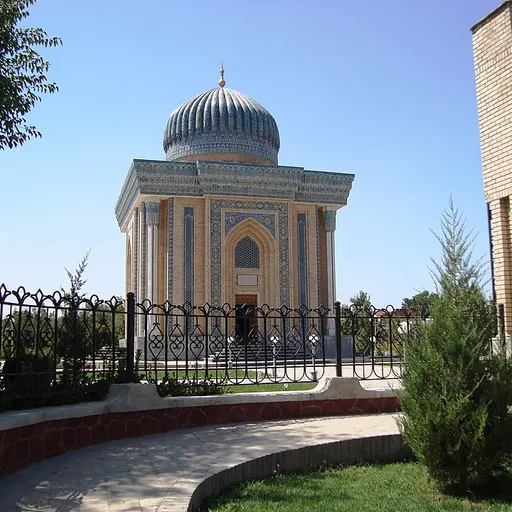
Abu Mansur al-Maturidi
Persian Muslim theologian
About Abu Mansur al-Maturidi
Lived 893 – 944 (aged 50–51). Abu Mansur al-Maturidi was an Arab islamic jurist, mutakallim, qur'anic exegete, philosopher, mystic and theologian.
Work When al-Māturīdī was growing up there was an emerging reaction against some sects, notably Mu'tazilis, Qarmati, and Shi'a. Al-Māturīdī, with other two preeminent scholars, wrote especially on the creed of Islam, the other two being Abu al-Hasan al-Ash'ari in Iraq, and Ahmad ibn Muhammad al-Tahawi in Egypt.
While al-Ash'ari were Sunni together with al-Māturīdī, he constructed his own theology taking from Abu Hanifa's school and systematized it which differed from his contemporary imam al-Tahawi who affirmed the beliefs of Abu Hanifa. Regardless, both were Hanafi in their creed but with different approaches. Gimaret argued that al-Ash'ari enunciated that God creates the individual's power (qudra), will, and the actual act, which according to Hye, gives way to a fatalist school of theology, which was later put in a consolidated form by Al Ghazali. According to Encyclopædia Britannica however, al-Ashari held the doctrine of Kasb as an explanation for how free will and predestination can be reconciled. Al-Māturīdī, followed in Abu Hanifa's footsteps, and presented the "notion that God was the creator of man's acts, although man possessed his own capacity and will to act." Al-Māturīdī and al-Ash'ari also separated from each other in the issue of the attributes of God, as well as some other minor issues.
Later, with the impact of Turkic society states such as Great Seljuq Empire and Ottoman Empire, Hanafi-Maturidi school spread to greater areas where the Hanafi school of law is prevalent, such as Pakistan, Afghanistan, Central Asia, South Asia, Balkan, Russia, China, Caucasus and Turkey.
Al-Māturīdī had immense knowledge of dualist beliefs (Sanawiyya) and of other old Persian religions. His Kitāb al-Tawḥīd in this way has become a primary source for modern researchers with its rich materials about Iranian Manicheanism (Mâniyya), a group of Brahmans (Barähima), and some controversial personalities such as Ibn al-Rawandi, Abu Isa al-Warraq, and Muhammad b. Shabib.
Legacy and veneration His school became the dominant Sunni school of Islamic theology in Central Asia,
Although there was in the medieval period "a tendency to suppress al-Māturīdī's name and to put Ashʿarī forward as the champion of Islam against all heretics," except in Transoxiana, Maturidism gradually "came to be widely recognised as the second orthodox Sunni theological school" besides Ashʿarīsm. It is evident from the surviving fifteenth-century accounts of al-Māturīdī's tomb in the cemetery of Jākardīza in Samarkand that the theologian's tomb was "visited ... and held in honor for a long time" throughout the medieval period. This veneration of the theologian seems to have arisen out of traditions preserved by several later scholars which detailed al-Māturīdī's wisdom and spiritual abilities. For example, Abul Muīn al-Nasafī (d. 1114) stated that Maturidi's spiritual gifts were "immeasurably plentiful" As such, it is often said that mainstream "orthodox Sunnism" constitutes the followers of the theological traditions of al-Māturīdī and Ashʿarī, while Salafism and Wahhabism have often been interpreted by the proponents of the two major schools to be minority splinter theological traditions opposed to the mainstream.
Writings Kitab al-Tawhid ('Book of Monotheism') Ta'wilat Ahl al-Sunnah or Ta'wilat al-Qur'an ('Book of the Interpretations of the Quran') Kitāb Radd Awa'il al-Adilla, a refutation of a Mu'tazili book Radd al-Tahdhib fi al-Jadal, another refutation of a Mu'tazili book Kitāb Bayan Awham al-Mu'tazila ('Book of Exposition of the Errors of Mu'tazila) Kitāb al-Maqalat Ma'akhidh al-Shara'i' in Usul al-Fiqh Al-Jadal fi Usul al-Fiqh Radd al-Usul al-Khamsa, a refutation of Abu Muhammad al-Bahili's exposition of the Five Principles of the Mu'tazila Radd al-Imama, a refutation of the Shi'i conception of the office of Imam; Al-Radd 'ala Usul al-Qaramita Radd Wa'id al-Fussaq, a refutation of the Mu'tazili doctrine that all grave sinners will be eternally in hell fire.
Don’t just read it —
keep it.
Full-length biographies made to live with: read them, listen on the way to work, watch them tonight.
- E-book
- Audio
- Video
Instant download · yours to keep · every purchase keeps this site free
Important facts
People in Abu Mansur al-Maturidi's life
Named in this biography and alive at the same time
Related people
Same field, nearest in time



Contemporaries
People whose lives overlapped Abu Mansur al-Maturidi's




Frequently asked questions
Who was Abu Mansur al-Maturidi?
Persian Muslim theologian (853–944)
When was Abu Mansur al-Maturidi born?
Abu Mansur al-Maturidi was born in 893 in Maturid.
When did Abu Mansur al-Maturidi die?
Abu Mansur al-Maturidi died in 944 in Samarkand.
What was Abu Mansur al-Maturidi's occupation?
Abu Mansur al-Maturidi was an islamic jurist, mutakallim, qur'anic exegete, philosopher, mystic and theologian.
What nationality was Abu Mansur al-Maturidi?
Abu Mansur al-Maturidi was Arab.
Sources & further reading
· Wikipedia: Abu Mansur al-Maturidi
· DBpedia: Abu Mansur al-Maturidi
Cite this page
APA: Biography.guide. (2026). Abu Mansur al-Maturidi. https://biography.guide/abu-mansur-al-maturidi/
MLA: "Abu Mansur al-Maturidi." Biography.guide, https://biography.guide/abu-mansur-al-maturidi/.
Chicago: "Abu Mansur al-Maturidi." Biography.guide. https://biography.guide/abu-mansur-al-maturidi/.
Data last updated: 2026-09-20 · Spot an error? Report a correction.
Portrait: Wikimedia Commons · author & licence
Page generated 2026-09-27 04:57 UTC