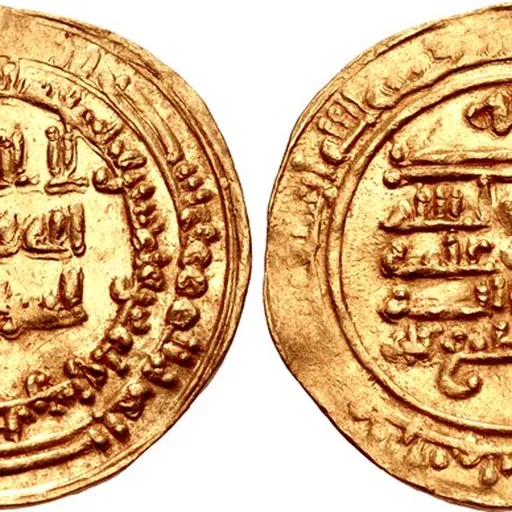
About Abu al-Misk Kafur
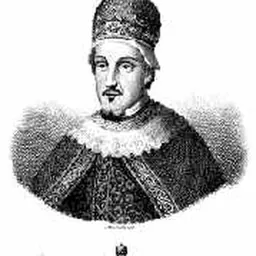
Lived 905 – 968 (aged 62–63). Abu al-Misk Kafur was an Ethiopian and Egyptian regent, amir and governor.
Abu al-Misk Kafur al-Ikhshidi (?–968), also called al-Laithi, al-Suri, al-Labi was a dominant personality of Ikhshidid Egypt and Syria. Originally a black slave, from Abyssinia or Nubia, he was made vizier of Egypt, becoming its de facto ruler from 946 after the death of his master, Muhammad bin Tughj. Thereafter, he ruled the Ikshidid domains—Egypt and southern Syria (including Damascus)—until his death in 968.
Biography Abu al-Misk Kafur, whose name means "musky camphor", is described by the sources variously as coming from Abyssinia (Ethiopia), the Bilad al-Sudan (Land of the Blacks) or Nubia. Muhammad ibn Tughj, the founder of the Ikhshidid dynasty of Egypt, purchased him as a slave in 923. He is recorded as having a dark complexion and being a eunuch. Recognising the slave's intelligence and talent, Ibn Tughj freed him.
Kafur became the de facto ruler of Egypt in 946 (since Kafur was the guardian of bin Tughj's sons, he ruled in their stead upon the death of their father). Though subsequent historians have portrayed him as a just and moderate ruler, he owes a great deal of his fame to the scathing satirical poems directed against him by al-Mutanabbi, a medieval Arab poet.
Kafur died in April 968, and was buried in Jerusalem next to the Ikhshidid emirs, at a location close to the Gate of the Tribes on the Haram al-Sharif.
Status as former slave Kafur's status as a former slave did not hinder him from rising to power under the Ikhshidids. It was customary for mamluks (that is, former slaves) to enter the military organization and even reach high positions in it, and many Africans such as Kafur were employed in various occupations and maintained a cohesive culture interacting with that of their hosts. Kafur's rise to power, from being an African slave to the ruler of Egypt and parts of Syria, is one of the earliest examples in Islamic history of a sovereign with the lowliest of origins.
He was also able to delay the Fatimid expansion into Egypt, frustrating the efforts of the latter's agents. So long as Kafur was alive, the Ikhshidid establishment kept the Fatimids at bay; upon his death, the Fatimids took over.
Economy Kafur generally maintained economic stability in Egypt, despite serious setbacks: A fire devastated the business section of Fustat in 954; A major earthquake rocked Egypt in 955 or early 956; Recurrence of food-price inflation (sometimes resulting in famine), and consequent civil disturbances, in 949, 952, 955, and 963–968.
Excepting the heavy government expenditure, Kafur's administration refrained from extortionate fiscal practices. His gold coinage displayed remarkable stability, though it did fluctuate. Kafur also enrolled the services of competent administrators and merchants, such as Yaqub ibn Killis, contributing to his economic accomplishments.
Patronage of the arts
Abu al-Misk Kafur gained popularity by being the patron of scholars and writers. Perhaps the most celebrated patronage, according to A.S. Ehrenkreutz, was that of the poet al-Mutanabbi. In return al-Mutanabbi praised the former slave. However, after Kafur's failure to reward him with the high office to which he aspired, al-Mutanabbi ridiculed Kafur. Thus Kafur was immortalised in the poetry of al-Mutanabbi, who was the greatest poet of Kafur's time, according to Philip Hitti.
As he was a pious man, Kafur was more comfortable with the ulema (Muslim scholarly establishment) than the poets. He surrounded himself with religious men, some of whom he showered with gifts. He constructed two mosques in Giza and on al-Muqattam and a hospital. Nevertheless, he still clung to superstitions, abandoning a home once, believing it to be under a jinn.
Kafur also maintained a magnificent and luxurious court. This, however, at times of famine, accorded poorly with the general population. In addition to the mosques and the hospital, Kafur constructed a number of sumptuous palaces, and the Kāfūriyya gardens in his capital. No archaeological remains of his contributions have been found thus far.
Don’t just read it —
keep it.
Full-length biographies made to live with: read them, listen on the way to work, watch them tonight.
- E-book
- Audio
- Video
Instant download · yours to keep · every purchase keeps this site free
Important facts
Related people
Same field, nearest in time




Contemporaries
People whose lives overlapped Abu al-Misk Kafur's


Frequently asked questions
Who was Abu al-Misk Kafur?
Ruler of Ikhshidid Egypt and Syria (905–968)
When was Abu al-Misk Kafur born?
Abu al-Misk Kafur was born in 905.
When did Abu al-Misk Kafur die?
Abu al-Misk Kafur died in 968 in Cairo.
What was Abu al-Misk Kafur's occupation?
Abu al-Misk Kafur was a regent, amir and governor.
What nationality was Abu al-Misk Kafur?
Abu al-Misk Kafur was Ethiopian and Egyptian.
Sources & further reading
· Wikipedia: Abu al-Misk Kafur
Cite this page
APA: Biography.guide. (2026). Abu al-Misk Kafur. https://biography.guide/abu-al-misk-kafur/
MLA: "Abu al-Misk Kafur." Biography.guide, https://biography.guide/abu-al-misk-kafur/.
Chicago: "Abu al-Misk Kafur." Biography.guide. https://biography.guide/abu-al-misk-kafur/.
Data last updated: 2026-09-24 · Spot an error? Report a correction.
Portrait: Wikimedia Commons · author & licence
Page generated 2026-09-27 05:08 UTC