
About Abram Shulsky
Born 1942. Abram Shulsky is an American political scientist.
Abram Shulsky (born August 15, 1942) is a neoconservative scholar who has worked for the U.S. government, RAND Corporation, and the Hudson Institute. Shulsky served as Director of the Office of Special Plans, a unit whose function has been compared to the 1970s Team B exercise. In the run-up to the 2003 invasion of Iraq, Shulsky approved OSP memos with talking points about Iraq and weapons of mass destruction and terrorism. Shulsky is critical of the traditional intelligence analysis, which is based upon the social-scientific method, and of independent intelligence agencies. Shulsky favors a military intelligence model which can be used to support policy as, in Shulsky's words, "truth is not the goal" of intelligence operations, but "victory". Shulsky signed a letter to the Clinton White House on Iraq.
He worked for the George W. Bush administration in the "Office of Special Plans".
Education and career Shulsky received his B.A. in mathematics from Cornell University and his M.A. and Ph.D. degrees in political science from the University of Chicago. At Cornell and Chicago, he roomed with Paul Wolfowitz, whom he met during their time as members and residents of the Cornell Branch of the Telluride Association. He is a neoconservative scholar and Straussian.
Shulsky served as staff for the Senate Intelligence Committee in the early 1980s. He worked under Assistant Secretary of Defense Richard Perle during the Reagan Administration and later worked for the RAND Corporation. but Shulsky's "real boss" may have been higher up than Feith. Deputy Secretary of Defense Paul Wolfowitz advocated the creation of the pro-war OSP as he "was impatient with the C.I.A."
After the OSP took control of providing "intelligence" to justify the invasion of Iraq, many veteran intelligence officers were forced into retirement or transferred to other positions despite years of service. Shulsky developed the "intelligence" received by the White House. According to Lt. Colonel Karen Kwiatkowski, Shulsky ran the OSP with a clear agenda, to support the efforts of his fellow neoconservatives. In his position at OSP, Shulsky "directed the writing of Iraq, WMD, and terrorism memos according to strictly supervised talking points" and granted them approval. Franklin Foer of The New Republic, and Mitchell all compare the OSP failures to the problems in the mid-1970s Team B competitive intelligence analysis, with Mitchell noting Shulsky "worked on the staff of the Senate Select Intelligence Committee that reviewed the original Team B exercise during the Cold War." Mary Louise Kelly of NPR noted some concern from C.I.A. officials that he was in this position.
In 2010, Shulsky was working as a senior fellow at the Hudson Institute.
Worldview Shulsky, a Straussian, argues that Leo Strauss would have attacked the dominant method of U.S. intelligence analysis "known as the "social-scientific method," an approach advanced by Sherman Kent, a former Yale History professor and member of the WWII-era Office of Strategic Services (the predecessor to the C.I.A.)".
Shulsky favors the military intelligence model, "in which the intelligence officer works for the commander rather than an independent intelligence agency". Additionally, "In a supportive role, intelligence must concentrate its efforts on finding and analyzing information relevant to implementing the policy" as "truth is not the goal" of intelligence operations, but "victory".
In a 1999 paper, "Leo Strauss and the World of Intelligence (By Which We Do Not Mean Nous)," also co-authored by Schmitt, Shulsky writes that "Strauss's view certainly alerts one to the possibility that political life may be closely linked to deception. Indeed, it suggests that deception is the norm in political life, and the hope, to say nothing of the expectation, of establishing a politics that can dispense with it is the exception." edited by Kenneth L. Deutsch and John Albert Murley (Rowman & Littlefield, 1999) The "Virtual Corporation" and Army Organization, with Francis Fukuyama (RAND Corporation, 1997) Preparing the U.S. Air Force for Military Operations Other Than War, with Vick Alan and John Stillion (RAND Corporation, 1997) Silent Warfare: Understanding the World of Intelligence, with Gary J. Schmitt (1991)
Don’t just read it —
keep it.
Full-length biographies made to live with: read them, listen on the way to work, watch them tonight.
- E-book
- Audio
- Video
Instant download · yours to keep · every purchase keeps this site free
Important facts
People in Abram Shulsky's life
Named in this biography and alive at the same time





Related people
Same field, nearest in time
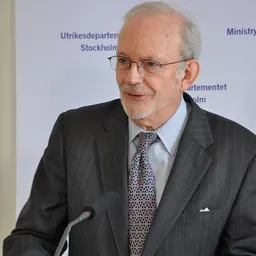




Contemporaries
People whose lives overlapped Abram Shulsky's

Frequently asked questions
Who is Abram Shulsky?
American political scientist
When was Abram Shulsky born?
Abram Shulsky was born on 15 August 1942.
What is Abram Shulsky's occupation?
Abram Shulsky is a political scientist.
What nationality is Abram Shulsky?
Abram Shulsky is American.
Sources & further reading
Cite this page
APA: Biography.guide. (2026). Abram Shulsky. https://biography.guide/abram-shulsky/
MLA: "Abram Shulsky." Biography.guide, https://biography.guide/abram-shulsky/.
Chicago: "Abram Shulsky." Biography.guide. https://biography.guide/abram-shulsky/.
Data last updated: 2026-09-20 · Spot an error? Report a correction.
Page generated 2026-09-27 05:22 UTC