
About Abram Kofman
Lived 1865 – 1940 (aged 74–75). Abram Kofman was a Russian esperantist, bookkeeper, poet and translator.
Abram Antoni Kofman (; –), also known as Abraham S. Kofman, was a Russian-Jewish accountant, and poet and translator in several constructed languages. From Odesa, Russian Empire, Kofman learned Esperanto in 1889 and was an early supporter of the language's adoption. He was one of the first Russian Jews to write poetry in Esperanto and has been described by several as a "pioneer". His work appeared in several Esperanto-language magazines and early anthologies, including the . He was the translator of several sections of the Hebrew Bible in both Esperanto and its daughter language, Ido. He was the first Ancient Greek–Esperanto translator, producing a rendition of parts of the Iliad starting in 1895.
Kofman was also involved in the development of the international religion Hillelism by the creator of Esperanto, L. L. Zamenhof in 1901, denouncing it as dangerous to Esperanto. Eventually, Kofman moved away from Esperanto to support Ido, and later Occidental (now Interlingue). He produced works in both languages, including textbooks and poetry. Kofman purportedly died during aerial bombing in Odesa around 1940.
Esperanto
Background Kofman was from Odesa, he was one of the first Esperantist Russian Jews and one of three Jewish Esperantists in Odesa by 1902.
Scholars of Esperanto literature ramify three periods: Kofman worked in the First , comprising writers until the First World War. identifies three schools of thought during this period: Kofman belonged to the "Slavic School", Although in 1894, Kofman was one of 157 Esperantists who voted against a reform of Esperanto by Zamenhof, in 1907, he shifted his allegiance from Esperanto to Ido: Idists have used the 1894 reform to support the validity of their movement. Ido was introduced by the Delegation for the Adoption of an International Auxiliary Language, and around a tenth of Esperantists would change movement alongside him. He would later come to support Edgar de Wahl's Interlingue (Occidental), In 1979, called Kofman "apparently the only one to have written poetry in three [spoken] constructed languages."
Kofman's date of death is uncertain, but is held to be around 1940.
Don’t just read it —
keep it.
Full-length biographies made to live with: read them, listen on the way to work, watch them tonight.
- E-book
- Audio
- Video
Instant download · yours to keep · every purchase keeps this site free
Important facts
People in Abram Kofman's life
Named in this biography and alive at the same time
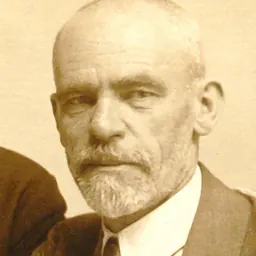
Related people
Same field, nearest in time


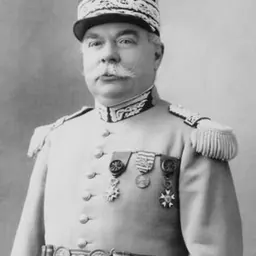

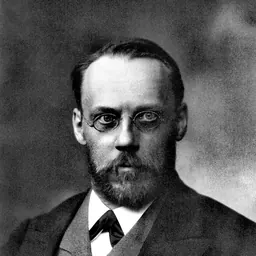

Contemporaries
People whose lives overlapped Abram Kofman's
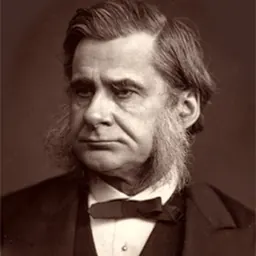



Frequently asked questions
Who was Abram Kofman?
Russian Esperantist
When was Abram Kofman born?
Abram Kofman was born in 1865 in Odesa.
When did Abram Kofman die?
Abram Kofman died in 1940.
What was Abram Kofman's occupation?
Abram Kofman was an esperantist, bookkeeper, poet and translator.
What nationality was Abram Kofman?
Abram Kofman was Russian.
Sources & further reading
Cite this page
APA: Biography.guide. (2026). Abram Kofman. https://biography.guide/abram-kofman/
MLA: "Abram Kofman." Biography.guide, https://biography.guide/abram-kofman/.
Chicago: "Abram Kofman." Biography.guide. https://biography.guide/abram-kofman/.
Data last updated: 2026-09-20 · Spot an error? Report a correction.
Page generated 2026-09-27 05:27 UTC