
About Abraham Sarmiento, Jr.
Lived 1950 – 1977 (aged 27). Abraham Sarmiento, Jr. was a Filipino journalist and student, known for Philippine Collegian.
Abraham "Ditto" Pascual Sarmiento Jr. (June 5, 1950 – November 11, 1977) was a Filipino student journalist who gained prominence as an early and visible critic of the martial law regime of dictator Ferdinand Marcos. As editor-in-chief of the Philippine Collegian, Ditto melded the University of the Philippines student newspaper into an independent though solitary voice against martial law rule at a time when the mass media was under the control of the Marcos government. His subsequent seven-month imprisonment by the military impaired his health and contributed to his premature death.
Early life
Ditto was born in Santa Mesa, Manila. His father, Abraham Sarmiento Sr., was a well-known lawyer and close friend of President Diosdado Macapagal who would be appointed an Associate Justice of the Supreme Court of the Philippines years after his son's death. His mother, Irene, was a member of the Pascual family of Malabon, who founded Pascual Laboratories in 1946. As a child, Ditto was a voracious reader who would engage in discussions with adults about literature, religion and art.
Ditto finished his primary and secondary education at the Ateneo de Manila. His schooling though was frequently impaired by asthma attacks, which necessitated the installation of an oxygen tank in his bedroom.
In 1967, Ditto enrolled at the University of the Philippines in Diliman where he joined the Alpha Phi Beta fraternity, the Greek letter organization of his father. At U.P., he befriended student activists who were increasingly agitated against the presidency of Ferdinand Marcos, especially during the First Quarter Storm. In 1970, Ditto married his girlfriend, Marsha, and dropped out of the university. They had one son together, Abraham III, nicknamed Ditter. He and his wife would separate by 1972.
Philippine Collegian After Marcos placed the Philippines under martial law in 1972, Ditto re-enrolled at the University of the Philippines as a business administration and accountancy student. He joined the staff of the official university newspaper, the Philippine Collegian. In 1975, Ditto was named the editor-in-chief of the Collegian after placing first in the editorial exams.
Philippine newspapers and other mass media outlets had been closed upon the declaration of martial law, with only those sympathetic to the Marcos government being allowed to re-open. Ditto himself penned several editorials which he personally signed, concerning topics such as freedom of speech and of the press.
Ditto was said not to possess radical or leftist beliefs himself but was spurred into action by a sense of justice and fair play. The staff of the Collegian was itself ideologically split between radical leftists and more moderate members, but Ditto was able to bridge the divide among the staff. At a university symposium on January 15, 1976, Ditto read his editorial aloud to the audience. Nine days later, he was arrested at his home. Among the arresting officers was future Senator Panfilo Lacson.
Ditto would remain under detention until August 1976. The official order of arrest, which specified charges of "rumor-mongering and the printing and circulation of leaflets and propaganda materials", was served only five months after his arrest. Ditto likewise refuse to recant his editorials. He wrote to his father, "To back off now would be an abandonment of principles I believe in and a tarnish on my integrity as an individual. I do not believe I could live with myself then."
Ditto's father interceded with Deputy Defense Minister Carmelo Barbero to obtain medical attention for his son. On August 28, 1976, Ditto was released from prison. The University would award a posthumous degree to Ditto in 1978.
After Ditto's death, his father intensified his participation in the political opposition against the Marcos government, and would himself be detained in 1979 after publishing a book critical of the regime. Abraham Sarmiento Sr. would be appointed to the Supreme Court of the Philippines after the ousting of the Marcos Government in 1986.
In 1992, Ditto was listed as among the martyrs who were enshrined in the Wall of Remembrance at the Bantayog ng mga Bayani, a monument to victims and heroes of martial law located at Quezon Avenue in Quezon City.
In 2018, the Human Rights Victims' Claims Board (HRVCB) formally recognized Sarmiento and 126 other individuals as a motu proprio victim of human rights violations committed under the Marcos Sr. dictatorship.
Don’t just read it —
keep it.
Full-length biographies made to live with: read them, listen on the way to work, watch them tonight.
- E-book
- Audio
- Video
Instant download · yours to keep · every purchase keeps this site free
Important facts
People in Abraham Sarmiento, Jr.'s life
Named in this biography and alive at the same time

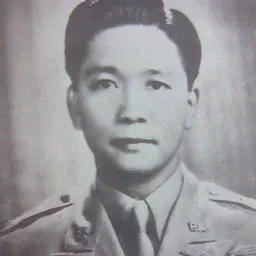

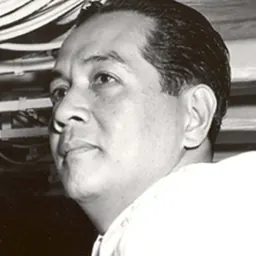

Related people
Same field, nearest in time


Contemporaries
People whose lives overlapped Abraham Sarmiento, Jr.'s



Frequently asked questions
Who was Abraham Sarmiento, Jr.?
Filipino activist journalist (1950–1977)
When was Abraham Sarmiento, Jr. born?
Abraham Sarmiento, Jr. was born on 5 June 1950 in Santa Mesa.
When did Abraham Sarmiento, Jr. die?
Abraham Sarmiento, Jr. died on 11 November 1977 in Quezon City.
What was Abraham Sarmiento, Jr.'s occupation?
Abraham Sarmiento, Jr. was a journalist and student.
What was Abraham Sarmiento, Jr. known for?
Abraham Sarmiento, Jr. was known for Philippine Collegian.
What nationality was Abraham Sarmiento, Jr.?
Abraham Sarmiento, Jr. was Filipino.
Sources & further reading
· Wikipedia: Abraham Sarmiento, Jr.
· DBpedia: Abraham Sarmiento Jr.
Cite this page
APA: Biography.guide. (2026). Abraham Sarmiento, Jr.. https://biography.guide/abraham-sarmiento-jr/
MLA: "Abraham Sarmiento, Jr.." Biography.guide, https://biography.guide/abraham-sarmiento-jr/.
Chicago: "Abraham Sarmiento, Jr.." Biography.guide. https://biography.guide/abraham-sarmiento-jr/.
Data last updated: 2026-09-22 · Spot an error? Report a correction.
Page generated 2026-09-27 05:29 UTC