
About Abolhassan Sadighi
Lived 1894 – 1995 (aged 101). Abolhassan Sadighi was an Iranian painter and sculptor.
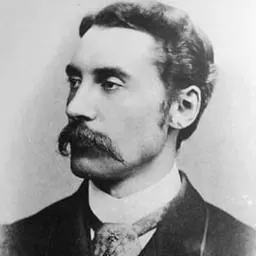
Abolhassan Sadighi (5 October 1894 – 11 December 1995) was an Iranian sculptor and painter and was known as Ostad Sadighi (English: Master Sadighi). He was a student and disciple of Kamal-ol-molk.
The statue of Ferdowsi in the Ferdowsi square, the statue of Khayyam in Laleh Park of Tehran, the statue of Nader Shah at his mausoleum in Mashhad, and the portrait of Abu-Ali Sina are all examples of his works.
Biography Abolhassan Sadighi was born in the Oudlajan neighbourhood of Tehran on 5 October 1894. His father, Mirza Bagher Khan Sadigoddoleh, was from the residents of Nur, Mazandaran; his mother, Malakeh Khanum, was a Qajar princess, known as "Shajan". His family had moved to Tehran years before the birth of Sadighi and settled in Oudlajan, which was, at the time, one of the high-class neighbourhoods of the capital. When he was seven, Sadighi went to Agdasiyyeh school, one of the new schools and was founded by Saeed-ol-Olama Larijani. After finishing elementary education, he went to Alliance School to continue his studies, but at the same time, he started painting without having any mentors; his paintings on the walls of the school incited grievances of the principals. Sadighi's excessive interest in painting and designing made him quit studying in the last year of school and go to Kamal-ol-molk Ghaffari with his friend Ali Mohammad Heydaryan and get attend Ghaffari's class at his School of Fine Arts. After three years of studying, he achieved a high-class diploma in 1920 and started teaching students as a mentor at the same school.
Departure to Europe
1927 is the year Ghaffari quit from all of his posts and moved to Hoseynabad, Nishapur. During departure from Tehran, he suggested to Sadighi to go to Europe and pass his complementary education there, giving Sadighi the money he had saved from the salary coming from the shah. By the departure of the mentor, the protégés and teachers scattered and one year later on 1928, Sadighi went from Tehran to Astara and from there to Baku and Moscow and eventually France. He traveled across some European countries for some time and continued learning and gaining experience in sculpture and stone-cutting under Angealberr at Paris National Fine Arts High School for four years.
Sadighi, who was in Europe during the interwar period, spent most of his time painting. He produced 160 paintings in that period.
National Works Board On 1950, Sadighi joined the National Works Board. During that time, he painted portraits of Iranian science and literature celebrities and formed remarkable statues of the celebrities. Portraits of Sa'di, Abu-Ali Sina, Ferdowsi, and Hafez are the result of that period.
Eventually, he retired from Tehran University in 1961,
Final years During the 1979 revolution, Khayyam's statue received critical damage and its face and fingers broke as a result of stones thrown at. On 11 February 1979, an unknown group decapitated Ferdowsi's statue, which was later repaired. During the revolution, Sadighi was working on Farahani's statue in Italy. The plaster model of the statue had been completed by the time the authorities of the new administration refused to pay the following expenses and the planned bronze statue was never formed. Sadighi returned to Iran after a while and spent his last years in silence and isolation. On 29 June 1992, his wife died. He died on 11 December 1995 at 101 years of age and was buried at the artists section of Behesht-e Zahra. After his death, memorial ceremonies were held. Also a statue of him was ordered to his son Fereydoon Sadighi, and the half-trunk statue is currently kept at the School of Beautiful Arts.
Abolhassan Sadighi has collectively formed 83 statues, from which those having accurate information have been mentioned in this list; in addition he had sculpted statues of contemporary famous people, including Reza Shah, Mohammad Reza Shah and Taqizadeh (then representative of Majlis), Doctor Habibi (one of the directors of agriculture school), Bayat, Kashefossaltaneh (which is in Lahijan), Karim Sa'I, Imam-Quli Khan (governor of Fars at the time of Shah Abbas the Safavid) in the central square of Qeshm.
Paintings Sadighi has left remarkable works in painting and his portrayals of celebrities of classic Persian literature have made their reputations permanent. In addition, he has two paintings in the Saadabad Museum and has a large painting 7 meters long and 3 meters wide in Iranian Embassy in Paris. That is the portrait of first Iranian Ilchikhan (ambassador) in the court of Louis XVI.
In his years in Europe, in addition to painting European landmarks, he had copied paintings a lot similar to works of Raphael, Rembrandt, Rubens, Ingres... in the Louvre Museum. Rubens's painting has been destroyed as a result of poor care, but his copy of the painting of Mary and Jesus by Raphael is in the possession of his son Fereydoon Sadighi. According to that artist: "It's a complete painting of a sourced girl, and since she is too nude, you can't show it everywhere!"
Portraits
Sadighi's portraits of Persian literature figures have grown popular as consolidated works, especially portraits of Abu-Ali Sina, Saadi and Ferdowsi. In order to portray Abu-Ali Sina's face, an expert group was formed in 1944 and designing the face was assigned to Sadighi. In May 1945, he designed a picture with a full face by a black pen and the picture was ratified at the 21st meeting of the National Works Board and it was printed on the Ibn-I Sina lottery papers. In January 1949, a profile of that full-face portrait was painted by Sadighi and was used in stamps, medals and other things. On the same year, a six-member group including Hooshang Seyhoun and Sadighi went to Hamadan to exhume Abu-Ali Sina's grave, and his skull was examined. After building a new mausoleum, Abu-Ali's remains were buried once more. After that, Sadighi was assigned by the National Works Board to form a statue of Abu-Ali Sina; it was formed in 1954 and is currently located at the city of Hamadan.
Oil paint
Watercolor
Destroyed works 1925 – the stone statue of Vènus de Milo, the first stone statue made by Saighi. It was presented to Ahmad Shah and was never found later. 1934 – plaster half-trunk Ferdowsi. Height: 70 centimeters. Full stature of Malekolmotakallemin from marble. It was situated in Park Shahr until 1999 and was transferred to the warehouse of the Parks Agency afterwards. In June 2006, the statue was announced missing.
Don’t just read it —
keep it.
Full-length biographies made to live with: read them, listen on the way to work, watch them tonight.
- E-book
- Audio
- Video
Instant download · yours to keep · every purchase keeps this site free
Important facts
People in Abolhassan Sadighi's life
Named in this biography and alive at the same time


Related people
Same field, nearest in time

Contemporaries
People whose lives overlapped Abolhassan Sadighi's


Frequently asked questions
Who was Abolhassan Sadighi?
Iranian sculptor and painter (1894-1995)
When was Abolhassan Sadighi born?
Abolhassan Sadighi was born on 5 October 1894 in Tehran.
When did Abolhassan Sadighi die?
Abolhassan Sadighi died on 11 December 1995 in Tehran.
What was Abolhassan Sadighi's occupation?
Abolhassan Sadighi was a painter and sculptor.
What nationality was Abolhassan Sadighi?
Abolhassan Sadighi was Iranian.
Sources & further reading
· Wikipedia: Abolhassan Sadighi
Cite this page
APA: Biography.guide. (2026). Abolhassan Sadighi. https://biography.guide/abolhassan-sadighi/
MLA: "Abolhassan Sadighi." Biography.guide, https://biography.guide/abolhassan-sadighi/.
Chicago: "Abolhassan Sadighi." Biography.guide. https://biography.guide/abolhassan-sadighi/.
Data last updated: 2026-09-20 · Spot an error? Report a correction.
Page generated 2026-09-27 05:29 UTC