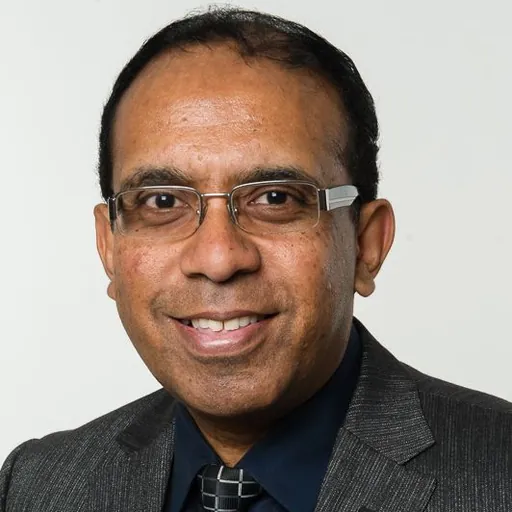
About Abhik Ghosh
Born 1964. Abhik Ghosh is an Indian chemist, bioinorganic chemist, university teacher and university of Tromsø, known for Bioinorganic chemistry, Corrole and History of chemistry.
Abhik Ghosh (Bengali: অভীক ঘোষ) is an Indian inorganic chemist and materials scientist and a professor of chemistry at UiT – The Arctic University of Norway in Tromsø, Norway.
Early life and education
Abhik Ghosh was born in Kolkata, West Bengal, India, in 1964. He attended St. Lawrence High School (1971–1981) and South Point High School (1981–1983).
Ghosh obtained a B.Sc. (Honours) in chemistry from Jadavpur University, Kolkata, India, in 1987. Subsequently, he joined the University of Minnesota, where he completed a PhD under the supervision of Professors Paul G. Gassman and Jan Almlöf in 1992. From 1992-1994, he did postdoctoral research with Lawrence Que Jr. During this period, he reported some of the first ab initio and density functional theory calculations on bioinorganic systems. He did a second, brief postdoctoral stint with David Bocian at the University of California Riverside, focusing on the problem diatomic ligand discrimination by heme proteins.
Career Ghosh moved to UiT – The Arctic University of Norway in 1996 as Associate Professor, rising to Professor in 2000. He has held several secondary affiliations: Senior Fellow of the San Diego Supercomputer Center at the University of California San Diego (1997–2004), Outstanding Younger Researcher awardee of the Research Council of Norway (2004–2010), a co-principal investigator at the national center of excellence Centre for Theoretical and Computational Chemistry (2007–2017), Visiting Professor at the University of Auckland, New Zealand, on many occasions (2006–2016), and Visiting Professor at the University of Rome Tor Vergata (2024-2025). He has authored or coauthored over 300 scientific papers, which have been cited nearly 14,000 times with an h-index of 68 (according to Google Scholar). a monograph on the subject, and Letters to a Young Chemist (Wiley, 2011), a popular science book on careers in chemistry research. In 2014, he coauthored the text Arrow Pushing in Inorganic Chemistry: A Logical Approach to the Chemistry of the Main Group Elements (Wiley), which won the 2015 Prose Award for 'best textbook in the Physical Sciences and Mathematics'.
Research
Ghosh is known primarily for his research on porphyrins and porphyrin analogues.
Computational bioinorganic chemistry. In the 1990s, Ghosh reported some of the earliest large-scale ab initio and density functional theory calculations on porphyrins and other bioinorganic systems. In particular, he worked on the problem of diatomic ligand discrimination by heme proteins, arguing against the then-prevalent steric model and emphasizing the key role of hydrogen bonding in the distal pocket.
Transition metal spin state energetics. In the 1990s, Ghosh showed that common exchange-correlation functionals yield highly divergent results on the energetics of low-energy spin states of transition metal complexes. He showed that classic pure functionals tend to unduly favor lower-spin states, while hybrid functionals such as B3LYP err in the other ditrection, favoring higher-spin states. Subsequently, he showed that GGA functionals based on the OPTX exchange functional often provide a good solution to the problem, as does B3LYP* (with 15% exact exchange).
Noninnocent ligands. Ghosh has made numerous studies of the phenomenon of ligand noninnocence, particularly as it pertains to transition metal corrole derivatives. He has also used multiconfigurational ab initio calculations to tackle the longstanding question of local oxidation states in transition metal nitrosyls.
Heavy element chemistry. Since 2010, Ghosh has developed the field of heavy element coordination chemistry ofcorroles, focusing on 4d or 5d transition metal derivatives. He reported some of the first examples of 99Tc, rhenium, osmium, platinum, and gold corroles. A number of these complexes exhibit near-IR phosphorescence and have found applications as photosensitizers in oxygen sensing, photodynamic therapy, anddye-sensitized solar cells.
Low-barrier hydrogen bonds and tautomerism. Early in his career, Ghosh used X-ray photoelectron spectroscopy (XPS) to study short-strong hydrogen bonds in porphyrin-type molecules. Subsequently, he reported the first example of a stable cis tautomer of a free-base porphyrin in the form of a termolecular hydrogen-bonded complex, ultimately formulating a general approach to synthesizing such species.
Miscellaneous. Ghosh has contributed significantly to a number of other problems in physical organic and physical inorganic chemistry, including transition metal complexes with unusually low and high coordination numbers, stereochemistry of sandwich compounds, metal-metal quadruple bonds and quintuple bonds, transition metal carbides, low-valent main-group species, electronic consequences of scandide contraction, and the perfluoro cage effect.
Science communication Cover of Arrow Pushing in Inorganic Chemistry; design by the authors. In collaboration with linguist Paul Kiparsky, Ghosh has written about the possible influence of Pāṇini's Sanskrit grammar, in particular the periodic Sanskrit alphabet (the Shiva sutras), on Mendeleev's conception of the periodic table, a potentially important, new insight into the history of the periodic table. Ghosh has also published popular articles on arrow pushing, on the occasion of the 100th anniversary of its first use by Sir Robert Robinson, and on the impact of relativity in chemistry, among many others.
As a queer chemist, Ghosh has been involved in a variety of diversity initiatives. The 2011 book Letters to a Young Chemist on the late Martin Gouterman, a noted porphyrin chemist and one of the first openly gay/LGBT scientists, drawing a parallel with astronomer and gay rights activist Frank Kameny (see LGBT history for a more general discussion). Subsequently, he co-edited a Virtual Issue on “Out in Inorganic Chemistry: A Celebration of LGBTQIAPN+ Inorganic Chemists” highlighting queer authors in Inorganic Chemistry and other American Chemical Society journals.
Don’t just read it —
keep it.
Full-length biographies made to live with: read them, listen on the way to work, watch them tonight.
- E-book
- Audio
- Video
Instant download · yours to keep · every purchase keeps this site free
Important facts
more
Relativistic effects, Science communicationFamily & relationships
People in Abhik Ghosh's life
Named in this biography and alive at the same time



Related people
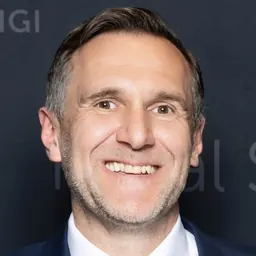
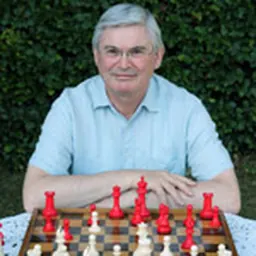
Same field, nearest in time


Contemporaries
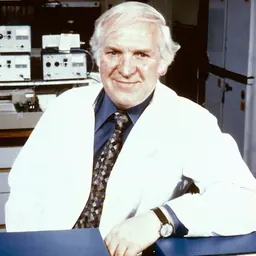
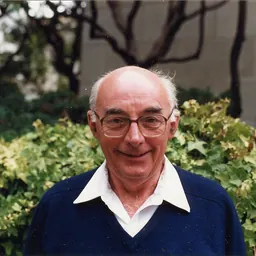
People whose lives overlapped Abhik Ghosh's


Frequently asked questions
Who is Abhik Ghosh?
Indian chemist
When was Abhik Ghosh born?
Abhik Ghosh was born on 12 June 1964 in Kolkata.
What is Abhik Ghosh's occupation?
Abhik Ghosh is a chemist, bioinorganic chemist, university teacher and university of Tromsø.
What is Abhik Ghosh known for?
Abhik Ghosh is known for Bioinorganic chemistry, Corrole, History of chemistry, LGBT history, Porphyrin and Quadruple bond.
What nationality is Abhik Ghosh?
Abhik Ghosh is Indian.
Sources & further reading
Cite this page
APA: Biography.guide. (2026). Abhik Ghosh. https://biography.guide/abhik-ghosh/
MLA: "Abhik Ghosh." Biography.guide, https://biography.guide/abhik-ghosh/.
Chicago: "Abhik Ghosh." Biography.guide. https://biography.guide/abhik-ghosh/.
Data last updated: 2026-09-23 · Spot an error? Report a correction.
Portrait: Wikimedia Commons · author & licence
Page generated 2026-09-27 05:06 UTC