
Abgar VIII
King of Osroene
About Abgar VIII
Lived 200 – 212.
Abgar VIII of Edessa, also known as Abgar the Great, or Abgar bar Ma'nu, was an Arab king of Osroene from 177 CE to 212 CE.
Abgar the Great was most remembered for his alleged conversion to Christianity in about 200 CE and the declaration of Christianity as the official religion of the city at that time. It has been suggested that a cross shown on the tiara of Abgar VIII in coins he minted has a Christian meaning.
Osroene was a client state of the Roman Empire at this time. Prior to Abgar VIII taking the throne, in the Roman military had reinstated Ma'nu VIII and they continued to have a significant presence in the region. Nevertheless, Abgar VIII's initial actions suggest that he was not wholly loyal to Rome nor was closely monitored by Rome. While Abgar VIII's coins bear the image of the Roman Emperor Commodus, Abgar's goals were to maintain a degree of independence and to extend his influence geographically as much as possible without disturbing the greater powers of Rome and Parthia.
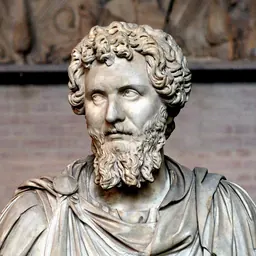
Abgar VIII supported Pescennius Niger as Roman Emperor in . However Pescennius Niger was swiftly challenged and deposed by Emperor Septimius Severus. Abgar VIII's submission to Septimus Severus is portrayed on the Arch of Severus in Rome. He was not deposed, but Osroene was made a Roman province and Abgar's kingdom was reduced to a rump state containing just the city of Edessa. Abgar was fully reconciled with Severus and was later received with honour as a guest of the Emperor in Rome. In an additional display of loyalty, Abgar VIII took on the Roman name Lucius Aelius Aurelius Septimus.
Christianity spread in Edessa significantly during Abgar VIII's reign. The Chronicle of Edessa reports that a Christian church building in Edessa was damaged in a flood in November . The Christian philosopher Bardaisan was a member of Abgar VIII's court.
In 1904 Adolf von Harnack proposed that Lucius of Britain, a ruler mentioned in the Liber Pontificalis as contemporaneous with Pope Eleutherius, actually was Abgar of Edessa. Harnack argued that 'Britanio' was written as an erroneous expansion for 'Britio', a citadel of Edessa. Harnack's proposal has been challenged by British archaeologist David J. Knight, who argued that Abgar of Edessa was never called Lucius of Britio/Birtha in contemporary sources.
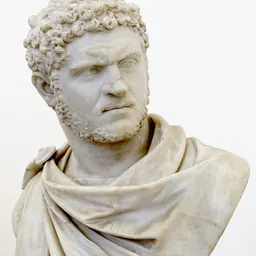
Upon his death in 212 CE, Abgar the Great was succeeded by his son Abgar IX. However, Abgar IX was summoned with his son to Rome in 213 CE and murdered on the orders of Caracalla. A year later Caracalla ended the independence of Osroene and incorporated it as a province into the Roman Empire.
Don’t just read it —
keep it.
Full-length biographies made to live with: read them, listen on the way to work, watch them tonight.
- E-book
- Audio
- Video
Instant download · yours to keep · every purchase keeps this site free
Important facts
People in Abgar VIII's life
Named in this biography and alive at the same time

Frequently asked questions
Who was Abgar VIII?
King of Osroene
When was Abgar VIII born?
Abgar VIII was born in 200.
When did Abgar VIII die?
Abgar VIII died in 212.
What nationality was Abgar VIII?
Abgar VIII's recorded nationality: Osroene.
Sources & further reading
Cite this page
APA: Biography.guide. (2026). Abgar VIII. https://biography.guide/abgar-viii/
MLA: "Abgar VIII." Biography.guide, https://biography.guide/abgar-viii/.
Chicago: "Abgar VIII." Biography.guide. https://biography.guide/abgar-viii/.
Data last updated: 2026-09-20 · Spot an error? Report a correction.
Page generated 2026-09-27 05:30 UTC