
About Abdur Rahman Chughtai
Lived 1894 – 1975 (aged 80). Abdur Rahman Chughtai was a Pakistani and Indian painter and postage stamp designer.
Early life Chughtai was born on 21 September 1897 in Lahore, now in Pakistan. He was the second son of Karim Bukhsh, who belonged to a prominent Punjabi Muslim family of artists descending from generations of craftsmen, architects, and decorators. After leaving the school, he made a living for a while as a photographer and drawing teacher. He eventually became the head instructor in chromo-lithography at the Mayo School. His sketches were used in many books in Punjabi poetry by Bhai Vir Singh for illustrating his famous poems like "Kambadi Kalai" and including his famous epic "Rana Surat Singh". Chughtai offered his gratitude to Bhai Vir Singh for becoming part of these illustrations as a young artist in his letter to him on 11.04.1929
In his sixty years of artistic creation, Chughtai produced nearly 2000 watercolours, thousands of pencil sketches, and nearly 300 etchings and aquatints. He also wrote short stories, and articles on art. He designed stamps, coins, insignia and book covers. He was also an avid collector of miniatures and other art. The Muraqqa-i-Chughtai was a sumptuously illustrated edition of Mirza Ghalib's Urdu poetry,
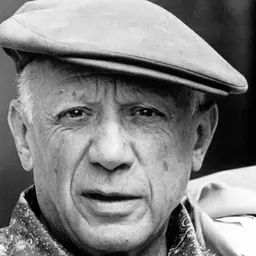
After the creation of Pakistan in 1947, Chughtai came to be regarded as one of the most famous representatives of Pakistan. Chughtai's paintings were given to visiting heads of state. Allama Iqbal, Pablo Picasso, and Elizabeth II were amongst his admirers.
Chughtai's closest associate was his younger brother Abdullah Chughtai, a scholar and researcher of Islamic art.
Abdur Rahman Chughtai also designed the logo for the Pakistan Television Corporation (PTV) at the behest of its first general manager, Ubaidur Rahman. The logo has been tweaked and modified over the years since its inception but remains fundamentally the same. On Pakistan's independence day in 1951, he produced a set of 9 stamps, better known as 'Chughtai Art set'. At that time, this set was considered as the most beautiful stamps of the world.
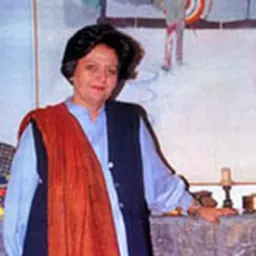
Artist and gallery owner Salima Hashmi deems Chughtai one of South Asia's foremost painters. "He was part of the movement that started in the early part of the 20th century to establish an identity indigenous to the subcontinent", she said. "He rejected the hegemony of the British Colonial aesthetic".
Chughtai produced his first dry-point etching, Under the Arch, in London in 1932 under the private tutelage of Douglas Ian Smart, before further refining his printmaking skills during a 1936 visit where Paul Drury served as his personal etching tutor.”
Painting exhibits Chughtai's works are owned by the British Museum, the Victoria and Albert Museum, the National Gallery of Modern Art (New Delhi), the Peace Palace (in The Hague), United Nations Headquarters, New York, the Kennedy Memorial in Boston, the US State Department (in Washington, D.C.), President's House Bonn, AP State Archaeology Museum,
Queen Juliana's Palace in the Netherlands, Emperor's Palace Bangkok, President House Islamabad, Governors' Houses in Lahore and Karachi, and the National Art Gallery, Islamabad. Many of his works are at the Chughtai Museum Trust in Lahore, Pakistan.
Works Maqalat-i Chughtaʾi. 2 vols. Islamabad: Idarah-yi Saqafat-i Pakistan, 1987. Lahaur ka dabistan-i musavviri. Lahore: Chughtai Museum Trust, 1979. Chughtai’s Paintings. 2nd ed. Lahore: Print Printo Press, 1970. Amal-i Chughtaʾi: Poet of the East Lahore: Self-published, 1968. Naqsh-i Chughtaʾi: Divan-i Ghalib Musavvir. Lahore: Ahsan Bradarz, 1962. Chughtai’s Indian Paintings. New Delhi: Dhoomi Mal, 1951. Muraqqaʿ-i Chughtaʾi. Lahore: Jahangir Book Club, 1927. United Nations Organization art correspondent Jacob-Baal Teshuva wrote that Chughtai's paintings are the largest set released in 1948.
Awards and recognition Awarded the title of 'Khan Bahadur' in 1934 by the British Empire Hilal-i-Imtiaz (Crescent of Excellence) Award in 1960 by the President of Pakistan Pride of Performance Award in 1958 by the President of Pakistan
Gallery
Don’t just read it —
keep it.
Full-length biographies made to live with: read them, listen on the way to work, watch them tonight.
- E-book
- Audio
- Video
Instant download · yours to keep · every purchase keeps this site free
Important facts
People in Abdur Rahman Chughtai's life
Named in this biography and alive at the same time





Related people
Same field, nearest in time

Contemporaries
People whose lives overlapped Abdur Rahman Chughtai's

Frequently asked questions
Who was Abdur Rahman Chughtai?
painter (1894-1975)
When was Abdur Rahman Chughtai born?
Abdur Rahman Chughtai was born on 21 September 1894 in Lahore.
When did Abdur Rahman Chughtai die?
Abdur Rahman Chughtai died on 17 January 1975 in Lahore.
What was Abdur Rahman Chughtai's occupation?
Abdur Rahman Chughtai was a painter and postage stamp designer.
What nationality was Abdur Rahman Chughtai?
Abdur Rahman Chughtai was Pakistani and Indian.
Sources & further reading
· Wikipedia: Abdur Rahman Chughtai
· DBpedia: Abdur Rahman Chughtai
Cite this page
APA: Biography.guide. (2026). Abdur Rahman Chughtai. https://biography.guide/abdur-rahman-chughtai/
MLA: "Abdur Rahman Chughtai." Biography.guide, https://biography.guide/abdur-rahman-chughtai/.
Chicago: "Abdur Rahman Chughtai." Biography.guide. https://biography.guide/abdur-rahman-chughtai/.
Data last updated: 2026-09-20 · Spot an error? Report a correction.
Page generated 2026-09-27 05:12 UTC