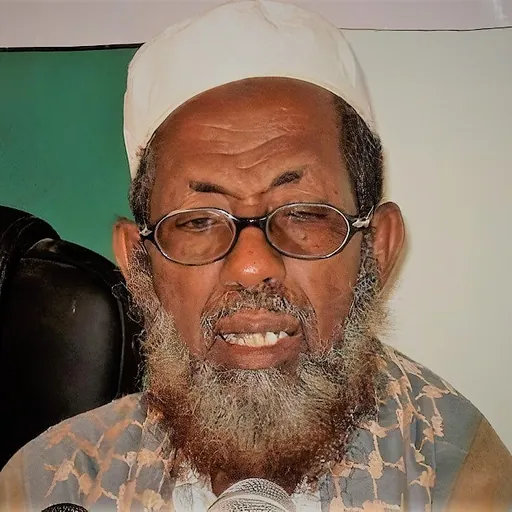
About Abdulkadir Nur Farah
Lived 1940 – 2013 (aged 72–73). Abdulkadir Nur Farah was a Somali da'awah and ulema.
Sheikh Abdulkadir Nur Farah or Sheikh Abdul Qadir Nour Farah (; 1940–15 February 2013, ) was a Somali cleric, preacher, and Islamic scholar of Dawah. He was assassinated by Al-Shabab in Garowe on 15 February 2013.
Early and education Sheikh Abdulkadir Nur Farah was born in the Canjeel Teelawaa in 1940, nearly the town of Eyl in the Nugal region of Puntland, Somalia.
Sheikh Abdulkadir, as recounted in his memoirs compiled by Tutor Judge Mohammed Omar, states:At my birth, during the outbreak of the Second World War around 1940, I entered the world in a place called 'Canjeel Teelawaa,' near Eyl, under the rule of Mohamed Abdullah Hassan, the leader of the Dervish movement. My father, Nur Farah, was present during my upbringing. Unfortunately, he passed away when I was twenty-one. He wasn't the one who imparted life hacks to me, and we were a financially struggling family. Our possessions were limited to a small herd of sheep. He has been devoted to Islamic knowledge since his early years, despite the challenges of pursuing education while also tending to the family's sheep. He moved to the town of Eyl to receive primary education and later traveled to the Somali capital, Mogadishu, in 1960. There, he joined a school affiliated with Al-Azhar Sharif, where he acquired Islamic sciences, graduating in 1967. Following that, he moved to the Saudi Arabia to enroll in the Institute of Islamic Solidarity. Sheikh Abdulkadir quoted again in his memoir:Since my early childhood, I was imbued with a desire of knowledge and religion, and my mother noticed this. When a cleric visited us in our home - and I was only seven or six years old at the time - I would sit with him and listen to what he said and read with interest and listening. When she saw this keenness on my part, She said: Oh my Lord, if my son had learned, I would call him Sheikh Abdulqadir - she meant Sheikh Abdulqadir Al-Jilani.
Despite my passion for knowledge, I faced challenges in seeking it. At the age of 13, I had not yet begun to learn the Arabic alphabet. My desire to seek knowledge grew stronger, and when I reached 13 years of age, I took a wooden tablet and a pencil that I sharpened from wood through my personal efforts. Unfortunately, I did not find a teacher to help me memorize the Qur’an, especially since my family led a nomadic lifestyle.
Despite my passion for knowledge, I lost the means to pursue it. By the age of 13, I hadn't even started learning the alphabet. My desire to seek knowledge grew, and at the age of 13, I took a wooden board and a pen that I crafted from wood with my personal effort. Unfortunately, I couldn't find a teacher to help me memorize the Quran, especially since my family lived in a nomadic setting.
Sheikh Abdulkadir quoted in his memoir:Immediately after graduating from the Islamic University in mid-1974 AD, the Fatwa Presidency assigned my lifelong friend Sheikh Yusuf and me to preach in Niger. Initially, the Nigerian president rejected our presence, deemed our entry illegal, and ordered our immediate expulsion. However, the Saudi government intervened through one of its African embassies. We stayed there for approximately two months, hosted by the religious attaché at the Saudi embassy in Niger. Meanwhile, Muhammad Siad Barre, the head of the Organization of African Unity, was touring many African countries—about 14 countries, at least. When he arrived in Niger, we visited him, and he asked, 'Do you want to stay in Niger or return to Somalia?' We expressed our desire to return to our country. After returning to Mogadishu, I worked in a court for five months after completing a training course. Sheikh Abdulkadir Nur Farah was actively engaging Dawah, and was known for his jurisprudence in scientific seminars in mosques.
Prison Siad Barre's regime arrested several Ulama after the killing of clerics who opposed the Personal Status Law, sparking much controversy. Among those arrested was Sheikh Abdul Qadir, who remained in prison for two years without a court trial.
Sheikh Abdulkadir said in his memoirs::There were notorious prisons established by the regime to incarcerate political opponents and public figures, located on the road between the cities of Marka and Afgooye for over two years. In October 1978, we were released. The days of imprisonment were challenging, yet our conviction remained unwavering, and our determination did not falter.
During my time in prison, I conducted lessons in interpretation, Nahwa, and biography. Most detainees were political figures and former statesmen. The government arrested numerous young people, bringing them together, while many preachers managed to escape. I recall individuals such as Abdul Qadir Sheikh Mahmoud, the head of the Al-Ahl movement, and Abdul Qadir Ghari, among others, who fled towards Kenya and later moved to Saudi Arabia. There, they joined universities and were warmly welcomed by Saudi Arabia, which understood the plight of Somali scholars and Ulama under the brutal communist regime.
Islamic Movement in Somalia Sheikh Abdul Kadir is one of the prominent pioneers of the Islamic movements in Somalia. He was a member of the family movement that engaged in clandestine activities during the communist regime of Somalia, initiated by Sheikh Mohamed Moallim Hassan's episodes. However, the movement faced severe disruption after the arrest of prominent scholars in 1975, leading to the emergence of a Takfiri stream.
Sheikh Abdulkadir Nur Farah quoted:The killing of scholars at the beginning of 1975 marked a blatant war against preaching in general. The regime's suspicions towards preachers increased, intensifying the campaign of arrests under various flimsy excuses. This compelled (Al-Ahli) to continue secret work and protect themselves before their names appeared on the list. During our arrest in 1977, the idea spread. Takfir was forcefully advocated by some who had escaped arrest and returned, determined to propagate it. They took advantage of the absence of scholars from the scene, either in prison or in exile, creating an empty atmosphere for them. Upon my release from prison, Takfir had gained control of the scene. After the collapse of the Central Government of Somalia in 1991, Islamist groups persisted in their demand for Sharia Law, advocating for its implementation in all aspects. Al-Itihad Al-Islam (Salafism) expressed a keen interest in establishing military camps and Islamic courts to govern Somali regions. This pursuit led to conflicts with Somali warlords. In the circumstances of wars that followed temporary control of a number of areas in Somalia, most notably the city of Bosaso, the capital province of Bari, and after the subsequent pursuit of the President of Puntland, Abdullahi Yusuf Ahmed, narrowed the clampdown on the Al-Itihaad al-Islamiya Movement, inflicted successive defeats on the Movement's leaders, gathered and declared the status of arms and demobilized combatants.At the beginning, we faced overwhelming defeat, nearly pushed to the crushed courtyard of Garowe's battles, and the camps, once filled with men, now stood vacant. However, we emerged victorious in the final round of the war. Upon relocating to the Slate of Las Qorey, community leaders engaged in numerous consultations and deliberations about the future.
The plan was to staunchly defend with all available strength, avoiding succumbing to the enemy's onslaught. Simultaneously, if successful in defense, we aimed to prevent expansion and persist in the fight. This decision and vision held sovereignty, despite disagreements from some. The situation demanded unwavering opinions and resolutions, even from a purely legitimate perspective.
The war yielded no beneficial outcomes, necessitating a change. In fact, our inclination was towards peace and impactful reconciliation, avoiding defeat on the ground. However, considering the advocacy's interest, societal concerns, and rectifying the initial mistake, the transformation imposed significant hardships and difficulties upon us. The assassination was perpetrated by the Al-Shabaab terrorist group, which had been sending threatening SMS messages indicating their intent to kill him. This incident followed the assassination of Sheikh Dr. Ahmed Haji Abdirahman, who was also killed after the Fajr prayer at Al-Rawda Mosque in Bosaso on December 4, 2011.
Sheikh Abdulkadir Nur Farah says about Al-Shabaab Militant: The jihad, carried under the banner of those who identified themselves as 'young Mujahideen,' seemed to be directed towards Muslims. They perpetrated numerous assassinations and bombings that claimed the lives of hundreds of Muslims. They rejoiced in this, thanking God who enabled them! Many people were killed in Bosaso, Mogadishu, Garowe, and Galkayo—all of them Muslims. Most of them lost their lives on the doorsteps of mosques. Among the latest victims was Dr. Ahmed Haji Abdirahman.Sheikh Abdulkadir Nur Farah was buried in Garoowe, and his funeral was attended by a large number of citizens، The Somali Scholars Association and the United Nations The perpetrator of the assassination was arrested and executed, and another young man with whom he participated in the crime was sentenced to death by the military station in Puntland.
Reactions President of Puntland Abdirahman Farole called the assassinatiin as act of terrorism, officials Federal Government of Somalia attended the funeral.
Hassan Dahir Aweys, the founder and leader of Hizbul Islam denied his group's involvement in the assassination of Sheikh Abdulkadir Nur Farah, according to Garowe Online on February 18th.
Don’t just read it —
keep it.
Full-length biographies made to live with: read them, listen on the way to work, watch them tonight.
- E-book
- Audio
- Video
Instant download · yours to keep · every purchase keeps this site free
Important facts
People in Abdulkadir Nur Farah's life
Named in this biography and alive at the same time

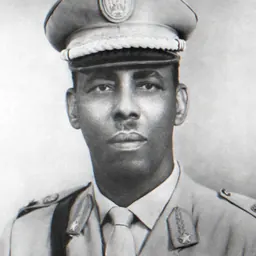
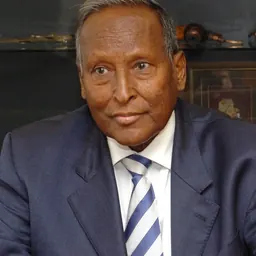

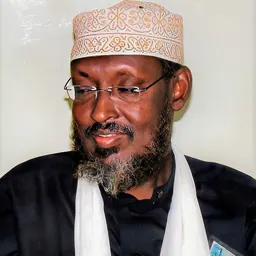

Related people
Same field, nearest in time


Contemporaries
People whose lives overlapped Abdulkadir Nur Farah's


Frequently asked questions
Who was Abdulkadir Nur Farah?
Somali Cleric Scholar
When was Abdulkadir Nur Farah born?
Abdulkadir Nur Farah was born in 1940 in Eyl.
When did Abdulkadir Nur Farah die?
Abdulkadir Nur Farah died on 15 February 2013 in Garowe.
What was Abdulkadir Nur Farah's occupation?
Abdulkadir Nur Farah was a da'awah and ulema.
What nationality was Abdulkadir Nur Farah?
Abdulkadir Nur Farah was Somali.
Sources & further reading
· Wikipedia: Abdulkadir Nur Farah
· DBpedia: Abdulkadir Nur Farah
Cite this page
APA: Biography.guide. (2026). Abdulkadir Nur Farah. https://biography.guide/abdulkadir-nur-farah/
MLA: "Abdulkadir Nur Farah." Biography.guide, https://biography.guide/abdulkadir-nur-farah/.
Chicago: "Abdulkadir Nur Farah." Biography.guide. https://biography.guide/abdulkadir-nur-farah/.
Data last updated: 2026-09-22 · Spot an error? Report a correction.
Portrait: Wikimedia Commons · author & licence
Page generated 2026-09-27 05:02 UTC