
About Abdul Rahim Khan-I-Khana
Lived 1556 – 1626 (aged 69). Abdul Rahim Khan-I-Khana was a poet, writer, military personnel, military officer and politician.
Khanzada Mirza Khan Abdul Rahim (17 December 1556 – 1 October 1627), popularly known as simply Rahim and titled Khan-i-Khanan, was a poet who lived in India during the rule of Mughal emperor Akbar, who was Rahim's mentor. He was one of the nine important ministers (dewan) in Akbar's court, known as the Navaratnas. Rahim was known for his Hindustani dohe (couplets) and his books on astrology.
Biography
Abdul Rahim was born in Lahore, the son of Bairam Khan, Akbar's trusted guardian and mentor, who was of Kara Koyunlu Turkic extraction. When Humayun returned to India from his exile, he asked his nobles to forge matrimonial alliances with various zamindars and feudal lords across the nation. Humayun married the elder daughter of Khanzada Jamal Khan of Mewat (now the Nuh district of Haryana) and he asked Bairam Khan to marry the younger daughter.
The Gazetteer of Ulwur (Alwar) states:
After Babur's death, his successor, Humayun, in 1540 was supplanted as ruler by the Pashtun Sher Shah Suri, who, in 1545, was followed by Islam Shah. During the reign of the latter, a battle was fought and lost by the emperor's troops at Firozpur Jhirka, in Mewat. However, Islam Shah did not lose his hold on power. Adil Shah, the third of the Pathan interlopers, who succeeded Islam Shah in 1552, had to contend for the empire with Humayun.
In these struggles for the restoration of Babur's dynasty the Khanzadas apparently do not figure at all. Humayun seems to have conciliated them by marrying the elder daughter of Khanzada Jamal Khan, nephew of Babur's opponent, Khanzada Hasan Khan Mewati, and by requiring his minister, Bairam Khan, to marry the younger daughter of the same Mewati. the royal family of Muslim Jadon (also spelt as Jadaun) Rajputs, converted to Islam after Islamic conquest of northern India. Khanzada is the Persian form of the Indic word 'Rajput'. They were the Mewati chiefs of the Persian historians, who were the representatives of the lords of Mewat State.
After Bairam Khan was murdered in Patan, Gujarat, his first wife and young Rahim were brought safely from Ahmedabad to Delhi and presented at the royal court of Akbar, who gave him the title of 'Mirza Khan', and subsequently married him to Mah Banu (Moon Lady), sister of Mirza Aziz Kokah, son of Ataga Khan, a noted Mughal noble.
Campaign against Mewar
In 1580, Rahim was appointed as the chief of Ajmer by Akbar. Around the same time, Akbar appointed him to lead another campaign against Maharana Pratap in order to capture or kill him. Rahim placed his family in Sherpura and advanced against Mewar. Pratap took up a position on the hilly pass of Dholan to check the Mughal advance. Meanwhile, his son Prince Amar Singh invaded Sherpura and succeeded in capturing the women of Rahim's family and brought them to Mewar. However, Pratap rebuked his son for capturing the women and ordered him to return them back with honor to Rahim.
Major works Apart from writing various dohas, Rahim translated Babar's memoirs, Baburnama, from the Chagatai language to the Persian language, which was completed in 1589–90. He had an excellent command of the Sanskrit language.
In Sanskrit, he wrote two books on astrology, Khetakautukam (Devanagari: खेटकौतुकम्) and Dwatrimshadyogavali (Devanagari: द्वात्रिंशद्योगावली).
Tomb
His tomb is situated in Nizamuddin East on the Mathura road, near Humayun's Tomb, in New Delhi. He built it for his wife in 1598, and his body was placed in it in 1627. In 1753–54, marble and sandstone from this tomb was used in the construction of Safdarjung's Tomb, also in New Delhi.
In 2014, the InterGlobe Foundation and the Aga Khan Trust for Culture announced a project to conserve and restore Abdul Rahim Khan-i-Khanan's tomb.
The tomb sits prominently along the Mathura Road, formerly the Mughal Grand Trunk Road, and lies close to the Dargah of Nizamuddin Auliya and Humayun's Tomb. In 2020, after six years of restoration work by the Aga Khan Trust for Culture, Rahim Khan's tomb was opened to the public. It is one of the largest conservation projects ever undertaken on any monument of national importance in India. For its architecture and purpose, it has often been compared with Taj Mahal.
Don’t just read it —
keep it.
Full-length biographies made to live with: read them, listen on the way to work, watch them tonight.
- E-book
- Audio
- Video
Instant download · yours to keep · every purchase keeps this site free
Important facts
People in Abdul Rahim Khan-I-Khana's life
Named in this biography and alive at the same time
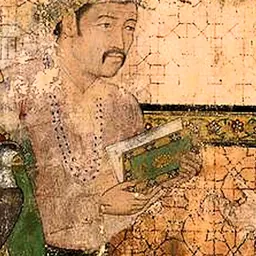

Related people
Same field, nearest in time


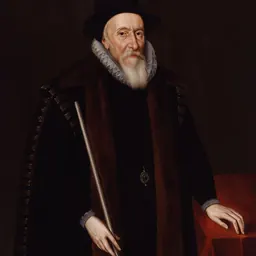
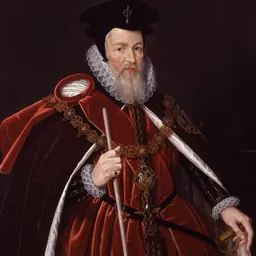
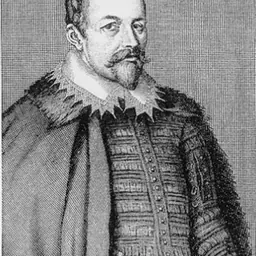
Contemporaries
People whose lives overlapped Abdul Rahim Khan-I-Khana's


Frequently asked questions
Who was Abdul Rahim Khan-I-Khana?
Mughal court poet and minister (1556–1627)
When was Abdul Rahim Khan-I-Khana born?
Abdul Rahim Khan-I-Khana was born on 17 December 1556 in Lahore.
When did Abdul Rahim Khan-I-Khana die?
Abdul Rahim Khan-I-Khana died on 1 October 1626 in Agra, Mughal Empire.
What was Abdul Rahim Khan-I-Khana's occupation?
Abdul Rahim Khan-I-Khana was a poet, writer, military personnel, military officer and politician.
Sources & further reading
· Wikipedia: Abdul Rahim Khan-I-Khana
· DBpedia: Abdul Rahim Khan-i-Khanan
Cite this page
APA: Biography.guide. (2026). Abdul Rahim Khan-I-Khana. https://biography.guide/abdul-rahim-khan-i-khana/
MLA: "Abdul Rahim Khan-I-Khana." Biography.guide, https://biography.guide/abdul-rahim-khan-i-khana/.
Chicago: "Abdul Rahim Khan-I-Khana." Biography.guide. https://biography.guide/abdul-rahim-khan-i-khana/.
Data last updated: 2026-09-20 · Spot an error? Report a correction.
Page generated 2026-09-27 05:26 UTC