
About Abdul Qadeer Khan
Lived 1936 – 2021 (aged 85). Abdul Qadeer Khan was an Indian physicist, engineer, academic, metallurgist, theoretical physicist and nuclear physicist, known for Gaseous diffusion, Graphene morphology and Martensite.
Abdul Qadeer Khan (1 April 1936 – 10 October 2021) was a Pakistani nuclear physicist and metallurgical engineer. He is colloquially known as the "father of Pakistan's atomic weapons program".Efn|Though other people such as Munir Ahmad Khan and Zulfikar Ali Bhutto have also been accorded that title. Khan has also been titled Mohsin-e-Pakistan by the local media. Khan admitted his role in running a nuclear proliferation network – only to retract his statements in later years when he leveled accusations at the former administration of Pakistan's Prime Minister Benazir Bhutto in 1990, and also directed allegations at President Musharraf over the controversy in 2008. Khan was accused of selling nuclear secrets illegally and was put under house arrest in 2004. After years of house arrest, Khan successfully filed a lawsuit against the Government of Pakistan at the Islamabad High Court whose verdict declared his debriefing unconstitutional and freed him from house arrest on 6 February 2009. The United States reacted negatively to the verdict and the Obama administration issued an official statement warning that Khan still remained a "serious proliferation risk".
On account of the knowledge of nuclear espionage by Khan and his contribution to nuclear proliferation throughout the world post-1970s, and the renewed fear of weapons of mass destruction in the hands of terrorists after the September 11 attacks, former CIA Director George Tenet described Khan as "at least as dangerous as Osama bin Laden". After his death on 10 October 2021, he was given a state funeral at Faisal Mosque before being buried at the H-8 graveyard in Islamabad.
Early life and education Abdul Qadeer Khan was born on 1 April 1936, in Bhopal, a city in the erstwhile British Indian princely state of Bhopal. He was of Urdu-speaking Muhajir origin. Khan provided conflicting details regarding his family background. While addressing a convocation in 2019, he stated that he belonged to an Orakzai family long settled in Bhopal; he also wrote at another occasion in Jang that his maternal lineage was from Tirah Valley while from his paternal side, his ancestor was an Uzbek soldier who came to India with Muhammad of Ghor, the 12th century conqueror; this ancestral link inspired Khan to later name a ballistic missile the Ghauri. In 199495, Khan would have a mausoleum built over the grave of Muhammad Ghori situated in Dhamiak village around 80 kilometres from Islamabad. At a 2014 event marking the publishing of a book on the history of Khanzada Rajputs, Abdul Qadeer Khan asserted that he belonged to Khanzada community although his family adopted the surname "Khan" instead of "Khanzada".
His father, Abdul Ghafoor, was a schoolteacher who once worked for the Ministry of Education, and his mother, Zulekha, was a housewife with a very religious mindset. His older siblings, along with other family members, had emigrated to Pakistan during the partition of India in 1947, who would often write to Khan's parents about the new life they had found in Pakistan.
After his matriculation from a local school in Bhopal, in 1952 Khan emigrated from India to Pakistan on the Sind Mail train, partly due to the reservation politics at that time, and religious violence in India during his youth left an indelible impression on his world view. Upon settling in Karachi with his family, Khan briefly attended the D. J. Science College before transferring to the University of Karachi, where he graduated in 1956 with a Bachelor of Science (BSc) in physics with a concentration on solid-state physics.
From 1956 to 1959, Khan was employed by the Karachi Metropolitan Corporation (city government) as an inspector of weights and measures. During this time, he applied for a scholarship that allowed him to study in West Germany. In 1961, Khan departed for West Germany to study material science at the Technical University in West Berlin, where he academically excelled in courses in metallurgy, but left West Berlin when he switched to the Delft University of Technology in the Netherlands in 1965.
In 1967, Khan obtained an engineer's degree in materials technology – an equivalent to a Master of Science (MS) offered in English-speaking nations such as Pakistan – and joined the doctoral program in metallurgical engineering at the Katholieke Universiteit Leuven in Belgium. He worked under Belgian professor Martin J. Brabers at Leuven University, who supervised his doctoral thesis which Khan successfully defended, and graduated with a DEng in metallurgical engineering in 1972.
Career in Europe In 1972, Khan joined the Physics Dynamics Research Laboratory (or in Dutch: FDO), an engineering firm subsidiary of Verenigde Machinefabrieken (VMF) based in Amsterdam, from Brabers's recommendation. The FDO was a subcontractor for Ultra-Centrifuge Nederland of the British-German-Dutch uranium enrichment consortium, URENCO Group, which was operating an uranium enrichment plant in Almelo, and employed gaseous centrifuge method to assure a supply of nuclear fuel for nuclear power plants in the Netherlands. Soon after, Khan left FDO, but was consequently offered a senior technical position by URENCO, initially conducting studies on uranium metallurgy.
Uranium enrichment is an extremely difficult process because uranium in its natural state is composed of just 0.71% of uranium-235 (U235), which is a fissile material, 99.3% of uranium-238 (U238), which is non-fissile, and 0.0055% of uranium-234 (U234), a daughter product which is also a non-fissile. The URENCO Group utilised the Zippe-type of centrifugal method to electromagnetically separate the isotopes U234, U235, and U238 from sublimed raw uranium by rotating the uranium hexafluoride (UF6) gas at up to ~100,000 revolutions per minute (rpm). Veerman became aware of the espionage when Khan had taken classified URENCO documents home to be copied and translated by his Dutch-speaking wife and had asked Veerman to photograph some of them. In 1975, Khan was transferred to a less sensitive section when URENCO became suspicious and he subsequently returned to Pakistan with his wife and two daughters. Khan was sentenced in absentia to four years in prison in 1983 by the Netherlands for espionage, but the conviction was later overturned due to a legal technicality. This was also highlighted when despite Archie Pervez (Khan's associate for nuclear procurement in the US) being convicted in 1988, no action was taken against Khan or his proliferation network by the US government which needed the support of Pakistan during the Soviet–Afghan War.
, a Dutch engineer and businessman, who had studied metallurgy with Khan at the Delft University of Technology, continued providing goods needed for enriching uranium to Khan in Pakistan through his company Slebos Research. Slebos was sentenced in 1985 to one year in prison, but the sentence was reduced on appeal in 1986 to six months of probation and a fine of 20,000 guilders. Though Slebos continued to export goods to Pakistan, and was again sentenced to one year in prison and a fine of around was imposed on his company.
Ernst Piffl was convicted and sentenced to three and a half years in prison by Germany in 1998 for supplying nuclear centrifuge parts through his company Team GmbH to Khan's Khan Research Laboratories in Kahuta.
Asher Karni, a Hungarian-South African businessman, was sentenced to three years in prison in the US for the sale of restricted nuclear equipment to Pakistan through Humayun Khan (an associate of Khan) and his Pakland PME Corporation.
Scientific career in Pakistan Smiling Buddha and initiation
Upon learning of India's surprise nuclear test, 'Smiling Buddha', in May 1974, Khan wanted to contribute to efforts to build an atomic bomb and met with officials at the Pakistani Embassy in The Hague, who dissuaded him by saying it was "hard to find" a job in PAEC as a "metallurgist". In August 1974, Khan wrote a letter which went unnoticed, but he directed another letter through the Pakistani ambassador to the Prime Minister's Secretariat in September 1974. Upon arriving in December 1974, Khan took a taxi straight to the Prime Minister's Secretariat. He met with Prime Minister Bhutto in the presence of Ghulam Ishaq Khan, Agha Shahi, and Mubashir Hassan where he explained the significance of highly enriched uranium, with the meeting ending with Bhutto's remark: "He seems to make sense."
The next day, Khan met with Munir Ahmad and other senior scientists where he focused the discussion on production of highly enriched uranium (HEU), against weapon-grade plutonium, and explained to Bhutto why he thought the idea of "plutonium" would not work.
The PAEC did not forgo their electromagnetic isotope separation program, and a parallel program was led by Ghulam Dastagir Alam at the Air Research Laboratories (ARL) located at Chaklala Airbase, even though Alam had not seen a centrifuge, and only had a rudimentary knowledge of the Manhattan Project.
In the military circles, Khan's scientific ability was well recognised and was often known with his moniker "Centrifuge Khan"
The PAEC's senior scientists who worked with him and under him remember him as "an egomaniacal lightweight" During the timeline of the bomb program, Khan published papers on analytical mechanics of balancing of rotating masses and thermodynamics with mathematical rigour to compete, but still failed to impress his fellow theorists at PAEC, generally in the physics community.
Nuclear tests: Chagai-I
Though he had helped to come up with the centrifuge designs, and had been a long-time proponent of the concept, Khan was not chosen to head the development project to test his nation's first nuclear-weapons (his reputation of a thorny personality likely played a role in this Intervention by the Chairman Joint Chiefs, General Jehangir Karamat, allowed Khan to be a participant and eye-witness his nation's first nuclear test, 'Chagai-I' in 1998. Khan often got engrossed in projects which were theoretically interesting but practically unfeasible.
Proliferation controversy
In the 1970s, Khan had been very vocal about establishing a network to acquire imported electronic materials from the Dutch firms and had very little trust of PAEC's domestic manufacturing of materials, despite the government accepting PAEC's arguments for the long term sustainability of the nuclear weapons program. At one point, Khan reached out to the People's Republic of China to acquire uranium hexafluoride (UF6) when he attended a conference there – the Pakistani Government sent it back to the People's Republic of China, asking KRL to use the UF6 supplied by PAEC. In 1996, the US intelligence community maintained that China provided magnetic rings for special suspension bearings mounted at the top of rotating centrifuge cylinders. In 2005, it was revealed that President Zia-ul-Haq's military government had KRL run a HEU programme in the Chinese nuclear weapons program. Khan said that "KRL has built a centrifuge facility for China in Hanzhong city".
In 1982, an unnamed Arab country reached out to Khan for the sale of centrifuge technology. Khan was very receptive to the financial offer, but one scientist alerted the Zia administration which investigated the matter, only for Khan to vehemently deny such an offer was made to him. The Zia administration tasked Major-General Ali Nawab, an engineering officer, to keep surveillance on Khan, which he did until 1983 when he retired from his military service, and Khan's activities went undetected for several years after.
Court controversy and US objections In 1979, the Dutch government eventually probed Khan on suspicion of nuclear espionage but he was not prosecuted due to lack of evidence, though it did file a criminal complaint against him in a local court in Amsterdam, which sentenced him in absentia in 1985 to four years in prison. Upon learning of the sentence, Khan filed an appeal through his attorney, S. M. Zafar, who teamed up with the administration of Leuven University, and successfully argued that the technical information requested by Khan was commonly found and taught in undergraduate and doctoral physics at the university – the court exonerated Khan by overturning his sentence on a legal technicality. At both instances, the Zia administration sharply denied Khan's statement and a furious President Zia met with Khan and used a "tough tone", promising Khan severe repercussions had he not retracted all of his statements, which Khan immediately did by contacting several news correspondents.
North Korea, Iran, and Libya The centrifuges removed from Libya by the United States as seen in the image were developed by Khan, known as P1, when he worked for URENCO in the 1970s.
The innovation and improved designs of centrifuges were marked as classified for export restriction by the Pakistan government, though Khan was still in possession of earlier designs of centrifuges from when he worked for URENCO in the 1970s.
On multiple occasions, Khan levelled accusations against Benazir Bhutto's administration of providing secret enrichment information, on a compact disc (CD), to North Korea; these accusations were denied by Benazir Bhutto's staff and military personnel.
Between 1987 and 1989, Khan secretly leaked knowledge of centrifuges to Iran without notifying the Pakistan Government,
In May 1998, Newsweek reported that Khan had sent Iraq centrifuge designs, which were apparently confiscated by the UNMOVIC officials. Iraqi officials said "the documents were authentic but that they had not agreed to work with A. Q. Khan, fearing an ISI sting operation, due to strained relations between two countries.
On 7 June 1998, 10 days after Pakistan's first underground nuclear test, there was yet another incident according to Foreign Policy. Kim Sa Nae, wife of a midlevel North Korean "diplomat", who was invited by Khan as part of a 20-member delegation was shot to death a few yards from Khan's official residence after she was suspected to be a spy for the United States by the ISI that subsequently informed the North Korean authorities. Privately, some Pakistani intelligence sources leaked this information to the Los Angeles Times. 3 days after Kim's death, both P-1 and P-2 centrifuges, warheads, and technical data, along with Kim's body, were flown to North Korea in the same American made C-130 cargo plane that was making rounds between Pakistan and North Korea from 1997-2002.
In 2003, merchant vessel BBC China was caught carrying nuclear centrifuges to Libya from Malaysia, the Scomi Group and Khan Research Laboratories were supplying nuclear parts to Libya through Khan's Dubai-based Sri Lankan associate Buhary Syed Abu Tahir. This was further revealed in the Scomi Precision Engineering nuclear scandal surrounding Scomi CEO Shah Hakim Zain and , son of former Malaysian Prime Minister Abdullah Ahmad Badawi.
In 2005, when Vladimir Putin raised concerns about Pakistan's proliferation network and nuclear transfers to Iran with George W. Bush, the latter said he had pressured Pervez Musharraf on the issue, stating: "I told him we’re worried about transfers to Iran and North Korea. They put A.Q. Khan in jail; and some of his buddies under house arrest. We want to know what they said. I keep reminding Musharraf of that. Either he’s getting nothing or he’s not being forthcoming," reflecting doubts.
Libya negotiated with the United States to roll back its nuclear program to have economic sanctions lifted, effected by the Iran and Libya Sanctions Act, and shipped centrifuges to the United States that were identified as P-1 models by the American inspectors. In 2008, German nuclear engineer was convicted and sentenced to five years and six months in prison for procuring centrifuges for Libya from Khan, Lerch also acted as Khan's middleman for Iran. Alfred Hempel, a German businessman, arranged the shipment of gas centrifuge parts from Khan in Pakistan to Libya and Iran via Dubai.
The "A.Q. Khan network" involved numerous shell companies set-up by Khan in Dubai to obtain equipment necessary for nuclear enrichment. of Iran's Defense Industries Organization was involved in nuclear proliferation for Iran and North Korea through China. Parts needed for nuclear enrichment in Pakistan were also imported by Khan from several Japanese companies.
Security hearings, pardon, and aftermath Starting in 2001, Khan served as an adviser on science and technology in the Musharraf administration and had become a public figure who enjoyed much support from his country's political conservative sphere. The Musharraf administration avoided arresting Khan but launched security hearings on Khan who confessed to the military investigators that former Chief of Army Staff General Mirza Aslam Beg had given authorisation for technology transfer to Iran.
On 5 February 2004, President Pervez Musharraf issued a pardon to Khan as he feared that the issue would be politicised by his political rivals. Despite the pardon, Khan, who had strong conservative support, had badly damaged the political credibility of the Musharraf administration and the image of the United States who was attempting to win hearts and minds of local populations during the height of the Insurgency in Khyber Pakhtunkhwa. While the local television news media aired sympathetic documentaries on Khan, the opposition parties in the country protested so strongly that the US Embassy in Islamabad had pointed out to the Bush administration that the successor to Musharraf could be less friendly towards the United States. This restrained the Bush administration from applying further direct pressure on Musharraf due to a strategic calculation that it might cause the loss of Musharraf as an ally. Blix's statement was also reciprocated by the United States government, with one anonymous American government intelligence official quoted by independent journalist and author Seymour Hersh: "Suppose if Edward Teller had suddenly decided to spread nuclear technology around the world. Could he really do that without the American government knowing?".
In 2007, the US and European Commission politicians as well as IAEA officials had made several strong calls to have Khan interrogated by IAEA investigators, given the lingering scepticism about the disclosures made by Pakistan, but Prime Minister Shaukat Aziz, who remained supportive of Khan and spoke highly of him, strongly dismissed the calls by terming it as "case closed".
Government work, academia, and political advocacy
Khan's strong advocacy for nuclear sharing of technology eventually led to his ostracisation by much of the scientific community, but Khan was still quite welcome in his country's political and military circles.
At the height of the proliferation controversy in 2007, Khan was paid tribute by Prime Minister Shaukat Aziz on state television while commenting in the last part of his speech, Aziz stressed: "The services of [nuclear] scientist ... Dr. [Abdul] Qadeer Khan are "unforgettable" for the country".
In the 1990s, Khan secured a fellowship with the Pakistan Academy of Sciences – he served as its president in 1996–97. Khan published two books on material science and started publishing his articles from KRL in the 1980s. Gopal S. Upadhyaya, an Indian metallurgist who attended Khan's conference and met him along with Kuldip Nayar, reportedly described him as being a proud Pakistani who wanted to show the world that scientists from Pakistan are inferior to no one in the world.
Personal life Khan met his wife, Henny, in the Netherlands during his early years in Europe, and the two later married. She supported his major life decisions, including his return to Pakistan in 1975, where they settled and raised their family. Khan maintained a strong religious outlook and frequently reflected on issues affecting Muslim communities worldwide, writing on such matters in his columns. Alongside these interests, he remained engaged with scientific subjects, particularly physics and chemistry, and took a general interest in scientific ideas such as theoretical developments and the history of science. He was known for his sociable nature and hospitality, often hosting friends and serving traditional dishes such as paya (trotter stew), daal (lentils), and bhindi (okra). He also had a fondness for animals, keeping pets and feeding local wildlife near his home in Islamabad.
Illness and death In August 2021, Khan was admitted to Khan Research Laboratories Hospital after testing positive for COVID-19. Khan died on 10 October 2021, at the age of 85, after being transferred to a hospital in Islamabad with lung problems. He was given a state funeral at the Faisal Mosque before being buried at the H-8 graveyard in Islamabad.
The Prime Minister of Pakistan, Imran Khan, expressed grief over his death in a tweet adding that "for the people of Pakistan he was a national icon". President of Pakistan Arif Alvi also expressed sadness adding that "a grateful nation will never forget his services". In an interview in 2011, Khan maintained his stance on peace through strength and vigorously defended the nuclear weapons program as part of the deterrence policy:
During his work on the nuclear weapons program and onwards, Khan faced heated and intense criticism from his fellow theorists, most notably Pervez Hoodbhoy who contested his scientific understanding in quantum physics. In addition, Khan's false claims that he was the "father" of the atomic bomb project since its inception and his personal attacks on Munir Ahmad Khan caused even greater animosity from his fellow theorists, and most particularly, within the general physics community, such as the Pakistan Physics Society. For instance, Khan owned the Hendrina Khan Hotel in Timbuktu, named after his wife. It was one of dozens of his commercial enterprises. To build his hotel in Timbuktu, he reportedly used a Pakistan Air Force C-130 transport aircraft in the early 2000s to transport carved wooden furniture. The plane landed at Tripoli Airport in Libya and the cargo was then taken to Timbuktu by road as it was unable to land in Mali. Khan himself accompanied the furniture from Islamabad. His wife, two daughters and brother Abdul Quyuim Khan were all named in the Panama Papers in 2016 as owners of Wahdat Ltd., an offshore company registered in the Bahamas.
Bruno Tertrais, a senior researcher at the Foundation for Strategic Research states: "Khan's motivations were complex and evolving (...) The primary motivation seems to have been to ensure the legitimacy of his role in building Pakistan's nuclear force (...) The second motivation, which has become more important over time, is personal enrichment. Finally, the third important element of varying importance depending on the hypothesis: Khan's more or less diffuse desire to see other Muslim countries access nuclear power."
In spite of the proliferation controversy and his volatile personality, Khan remained a popular public figure and has been as a symbol of national pride with many in Pakistan who see him as a national hero. While Khan has been bestowed with many medals and honours by the federal government and universities in Pakistan, Khan also remains the only citizen of Pakistan to have been honoured twice with the Nishan-e-Imtiaz.
Nishan-e-Imtiaz (1999) Nishan-e-Imtiaz (1996) Hilal-e-Imtiaz (1989) Sir Syed University of Engineering and Technology Hamdard University
Selected research papers and patents Nuclear and material physics Dilation investigation of metallic phase transformation in 18% Ni maraging steels, Proceedings of the International Conf. on Martensitic Transformations (1986), The Japan Institute of Metals, pp. 560–565. The spread of Nuclear weapons among nations: Militarization or Development, pp. 417–430. (Ref. Nuclear War Nuclear Proliferation and their consequences "Proceedings of the 5th International Colloquium organised by the Group De Bellerive Geneva 27–29 June 1985", Edited by: Sadruddin Aga Khan, Published by Clarendon Press-Oxford 1986). Flow-induced vibrations in Gas-tube assembly of centrifuges. Journal of Nuclear Science and Technology, 23(9) (September 1986), pp. 819–827. Dimensional anisotropy in 18% of maraging steel, Seven National Symposium on Frontiers in Physics, written with Anwar-ul-Haq, Mohammad Farooq, S. Qaisar, published at the Pakistan Physics Society (1998). Thermodynamics of Non-equilibrium phases in Electron-beam rapid solidification, Proceedings of the Second National Symposium on Frontiers in Physics, written with A. Tauqeer, Fakhar Hashmi, publisher Pakistan Physics Society (1988).
Books
Don’t just read it —
keep it.
Full-length biographies made to live with: read them, listen on the way to work, watch them tonight.
- E-book
- Audio
- Video
Instant download · yours to keep · every purchase keeps this site free
Important facts
People in Abdul Qadeer Khan's life
Named in this biography and alive at the same time







Related people
Same field, nearest in time

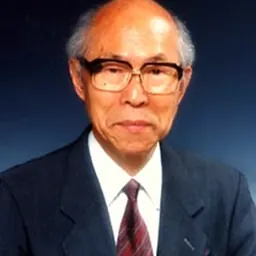
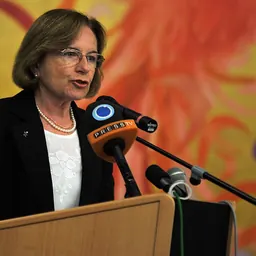
Contemporaries
People whose lives overlapped Abdul Qadeer Khan's





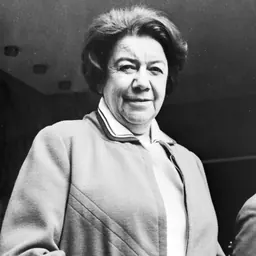
Frequently asked questions
Who was Abdul Qadeer Khan?
Pakistani nuclear engineer (1936–2021)
When was Abdul Qadeer Khan born?
Abdul Qadeer Khan was born on 1 April 1936 in Bhopal.
When did Abdul Qadeer Khan die?
Abdul Qadeer Khan died on 10 October 2021 in Islamabad.
What was Abdul Qadeer Khan's occupation?
Abdul Qadeer Khan was a physicist, engineer, academic, metallurgist, theoretical physicist and nuclear physicist.
What was Abdul Qadeer Khan known for?
Abdul Qadeer Khan was known for Gaseous diffusion, Graphene morphology, Martensite and Pakistan and weapons of mass destruction.
What nationality was Abdul Qadeer Khan?
Abdul Qadeer Khan was Indian.
Sources & further reading
· Wikipedia: Abdul Qadeer Khan
Cite this page
APA: Biography.guide. (2026). Abdul Qadeer Khan. https://biography.guide/abdul-qadeer-khan/
MLA: "Abdul Qadeer Khan." Biography.guide, https://biography.guide/abdul-qadeer-khan/.
Chicago: "Abdul Qadeer Khan." Biography.guide. https://biography.guide/abdul-qadeer-khan/.
Data last updated: 2026-09-20 · Spot an error? Report a correction.
Page generated 2026-09-27 05:21 UTC