
Abdul Malik Karim Amrullah
Indonesian Minangkabau journalist and activist
About Abdul Malik Karim Amrullah
Lived 1908 – 1981 (aged 73). Abdul Malik Karim Amrullah was an Indonesian journalist, philosopher, writer, ulema and politician.
Abdul Malik Karim Amrullah, better known by his pen name Hamka (17 February 1908 – 24 July 1981), was an Indonesian ʿālim, philosopher, writer, novelist, lecturer, politician and journalist.
First affiliated with the Masyumi Party, until it was disbanded due to connection to the PRRI rebellion, Hamka was jailed because he was close to other PRRI members. He also served as the inaugural chief cleric of the Indonesian Ulema Council, and was active in Muhammadiyah until he died. Al-Azhar University and Malaysian National University both granted him honorary doctorates, while Moestopo University of Jakarta appointed him a Distinguished Professor.
Hamka is further honoured by being the namesake of Hamka Muhammadiyah University in Jakarta, and is named an Indonesian National Hero.
Early life Hamka's and his grandmother's residence during his childhood in Maninjau, it was renovated in 2001 and named the Buya Hamka Birthplace Museum. The museum now holds most of his books, publications, and related goods.
Hamka was born on 17 February 1908 in Agam, West Sumatra, the eldest of four siblings. Raised in a family of devout Muslims, his father was Abdul Karim Amrullah, a clerical reformer of Islam in Minangkabau, also known as "Haji Rasul". His mother, Sitti Shafiyah, came from a lineage of Minangkabau artists. His paternal grandfather, Muhammad Amrullah, was a member of the Naqshbandiyah. Hamka had a younger brother, Abdul Wadud Karim Amrullah, whose child is the American drag performer and winner of the third season of RuPaul's Drag Race, Raja Gemini.
Prior to his formal education, Hamka lived with his grandmother in a house south of Maninjau.
Education
In 1918, Hamka left the Village School after three years, because he wanted to emphasize religious education, and his father registered him in a Thawalib. The school required its students to memorize classical books, rules regarding nahwu, and neuroscience. After studying at Diniyah School every morning, Malik attended Thawalib classes in the afternoon and returned to the surau in the evening. Most of the Thawalib's students were teenagers who were older than Hamka because of the heavy material that was needed to be memorized. From the lessons he attended, he was only interested in the arudh lessons which discussed poetry in Arabic. Although his activities from morning to evening were filled with learning, he was known to be a troublemaker, annoying his friends and cutting class to watch movies at a theater. Subsequently, in 1932, he was sent by the Muhammadiyah to Makassar to prepare for the 21st Muhammadiyah Congress. While in Makassar, he had published Al-Mahdi, a monthly Islamic science magazine. In 1934, a year after attending a congress of Muhammadiyah in Semarang, he was made a permanent member of the Muhammadiyah Council for the region of Central Sumatra.
Hamka had an increasingly uphill career when he moved to Medan. In 1942, along with the fall of the Dutch East Indies to the Japanese Empire, Hamka was elected as leader of East Sumatra's Muhammadiyah branch to replace H. Mohammad Said. But in December 1945, he decided to return to the Minangkabau and to resign from the position. The following year, he was elected Chairman of the Assembly of West Sumatra Muhammadiyah leaders replacing S.Y. Sutan Mangkuto, holding this position until 1949.
In 1953, he was elected as the leader of the central Muhammadyiah Council at the 32nd Muhammadiyah Congress at Purwokerto, holding the position until 1971, although he was still appointed as an adviser to the central leadership of Muhammadiyah until the end of his life .
Hamka was imprisoned by Sukarno, because he refused to condemn his party members joining in the PRRI rebellion against the state. In 1962, as senior member of the Masyumi Party which was disbanded due to connection to PRRI rebellion, Hamka was jailed two years because he refused to condemn his party members' involvement in the rebellion against the state that was supported by a number of Masyumi leaders.
In 1973, he testified in support of Vivian Rubiyanti Iskandar's petition before the West Jakarta District Court for legal recognition of her gender, saying that "[her desire to transition] does not run contrary to Allah's law, but in keeping with the teachings of Islam, which holds good will to all in high esteem".
Death Hamka's health started to decline after his resignation as chairman of MUI. Following the advice of Hamka's family doctor, doctor Karnen Bratawijaya, Hamka was hospitalized at Pertamina Central Hospital on 18 July 1981. On the sixth day of treatment, Hamka had time to perform the Duha prayer with the help of his daughter, Azizah, for tayammum. That afternoon, several doctors came to check his condition, stating that he was in a coma. The team of doctors stated that his kidneys, lungs, and central nervous system were no longer functioning, and his condition could only be maintained with a pacemaker. At ten o'clock the next morning, the children agreed to remove the pacemaker, and not long after that Hamka died.
Hamka died on Friday, 24 July 1981 at 10:37 WIB at the age of 73. His body was buried at his home on Jalan Raden Fatah III. Among the people who attended to pay their last respects were President Suharto and Vice President Adam Malik, State Minister for the Environment Emil Salim, and Minister of Transportation Azwar Anas who served as imam for the funeral prayer. Hamka's body was taken to the Al-Azhar Grand Mosque and prayed for again, before being buried in the Tanah Kusir Public Cemetery, South Jakarta, led by the Minister of Religion Alamsyah Ratu Perwiranegara.
Khatibul Ummah - written in Arabic. Pembela Islam ("Defender of Islam") - 1929 Ringkasan Tarikh Ummat Islam (" (1929). Kepentingan Melakukan Tabligh ("The Importance of the Tabligh") - 1929 Tasawuf Modern ("The Modern Tasawuf") - 1939 Hikmat Isra' dan Mikraj Di Bawah Lindungan Ka'bah ("Beneath the Aegis of the Ka'bah") - 1938 Tenggelamnya Kapal van der Wijck ("The Sinking of the van der Wijck") - 1938 Tuan Direktur ("Mister Director") - 1939 Merantau ke Deli ("Bound for Deli") - 1940 Revolusi Agama ("The Revolution of Religion") - 1946 Mandi Cahaya di Tanah Suci ("Bathing in the Light of the Holy Land") - 1950 Mengembara di Lembah Nil ("Sojourning in the Nile Valley") - 1950 Ditepi Sungai Dajlah ("On the Banks of the River Tigris) - 1950 Kenangan-Kenangan Hidup ("Memoirs") - 1950 Sejarah Ummat Islam ("The History of the Muslims") 1001 Soal Hidup ("1001 Questions About Life") - 1950 Pelajaran Agama Islam ("Lessons in Islam") - 1956 Sayid Jamaluddin Al-Afghani - 1965 Ekspansi Ideologi ("The Expansion of Ideology") - 1963 Hak Asasi Manusia Dipandang dari Segi Islam ("Human Rights from a Muslim Perspective") - 1968 Falsafah Ideologi Islam ("Tenets of Islamic Ideology") - 1950 Keadilan Sosial Dalam Islam ("Social Justice in Islam") - 1950 Studi Islam ("Islamic Studies") - 1973 Himpunan Khutbah-Khutbah. Muhammadiyah di Minangkabau ("Muhammadiyah in Minangkabau") (1975). Pandangan Hidup Muslim (1960). Kedudukan Perempuan dalam Islam ("The Status of Women in Islam") - 1973 Tafsir Al-Azhar Falsafah hidup Falsafah ketuhanan
Don’t just read it —
keep it.
Full-length biographies made to live with: read them, listen on the way to work, watch them tonight.
- E-book
- Audio
- Video
Instant download · yours to keep · every purchase keeps this site free
Important facts
People in Abdul Malik Karim Amrullah's life
Named in this biography and alive at the same time

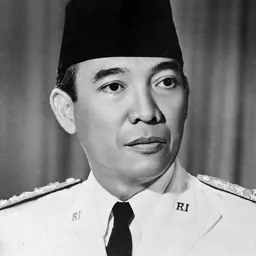
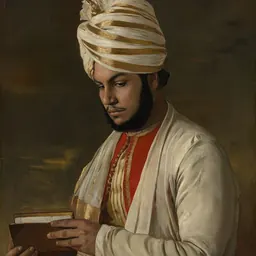

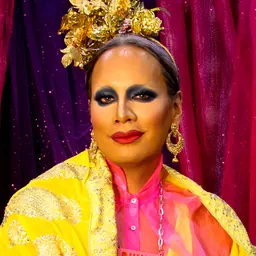

Related people
Same field, nearest in time



Contemporaries
People whose lives overlapped Abdul Malik Karim Amrullah's


Frequently asked questions
Who was Abdul Malik Karim Amrullah?
Indonesian Minangkabau journalist and activist (1908–1981)
When was Abdul Malik Karim Amrullah born?
Abdul Malik Karim Amrullah was born on 17 February 1908 in Agam.
When did Abdul Malik Karim Amrullah die?
Abdul Malik Karim Amrullah died on 24 July 1981 in Jakarta.
What was Abdul Malik Karim Amrullah's occupation?
Abdul Malik Karim Amrullah was a journalist, philosopher, writer, ulema and politician.
What nationality was Abdul Malik Karim Amrullah?
Abdul Malik Karim Amrullah was Indonesian.
Sources & further reading
· Wikipedia: Abdul Malik Karim Amrullah
Cite this page
APA: Biography.guide. (2026). Abdul Malik Karim Amrullah. https://biography.guide/abdul-malik-karim-amrullah/
MLA: "Abdul Malik Karim Amrullah." Biography.guide, https://biography.guide/abdul-malik-karim-amrullah/.
Chicago: "Abdul Malik Karim Amrullah." Biography.guide. https://biography.guide/abdul-malik-karim-amrullah/.
Data last updated: 2026-09-20 · Spot an error? Report a correction.
Page generated 2026-09-27 05:32 UTC