
Abdul Hamid Madarshahi
Bengali Islamic scholar and educationist
About Abdul Hamid Madarshahi
Lived 1869 – 1920 (aged 50–51).
Early life and education Abdul Hamid was born in 1869 to the Bengali Muslim aristocratic Sheikh family of the village of North Madarsha in Hathazari, Chittagong District, Bengal Presidency, they are a landed clan. His parents were Sheikh Rustam Ali Munshi and Begum Suajan. He traces his lineage to Sheikh Muhammad bin Hafeez, an Arab Muslim missionary who had arrived at the Port of Chittagong centuries prior, initially settling in the Jahanabad mahalla of Sitakunda where he established himself as a local zamindar (landowner). As the result of a local epidemic, Hafeez's descendant Sheikh Murad migrated to the village of Baroauliya, and Murad's descendant Sheikh Shamsher Ali Taluqdar settled in his maternal home in Madarsha, Hathazari.
Madarshahi's early education began at his home and later at the local maktab, where he gained religious education and learnt the Qur'an. He then joined the local primary school until class five, later enrolling at the Mohsinia Madrasa in Chittagong city. It is said that he topped the class exams every year at the Mohsinia Madrasa. and ranks among the top ten madrasas of the subcontinent. During his time at the Mohsinia Madrasa, Madarshahi was familiarised with Abdul Wahid Bengali and became greatly influenced by him, eventually co-operating in his reformation movement. He participated in various religious seminars and debate conferences, and started to become known as a debater. Thereafter, he was bestowed the title of Fakhr al-Islām (Glory of Islam) and Munāẓir-e-Islām (Debater of Islam). From very early on, he founded a small maktab in Khandaqia where he provided religious education to children, as well as the elderly. Madarshahi also played an important role in establishing maktabs in other areas.
In 1896, he co-founded Al-Jamiatul Ahlia Darul Ulum Moinul Islam along with Abdul Wahid Bengali, Sufi Azizur Rahman and Habibullah Qurayshi, after realising the importance of having a madrasa in colonial Bengal. The madrasa was founded along with the assistance of locals too. Madarshahi also established another large madrasa in nearby Fatehpur, known as al-Jāmiʿah al-Ḥamīdiyyah Nāṣir al-Islām.
Works Hamid has written several works pertaining to Islam. These include: He had two sons; Sheikh Muhammad Ismail and Sheikh Muhammad Yusuf.
See more List of Deobandis
Don’t just read it —
keep it.
Full-length biographies made to live with: read them, listen on the way to work, watch them tonight.
- E-book
- Audio
- Video
Instant download · yours to keep · every purchase keeps this site free
Important facts
People in Abdul Hamid Madarshahi's life
Named in this biography and alive at the same time
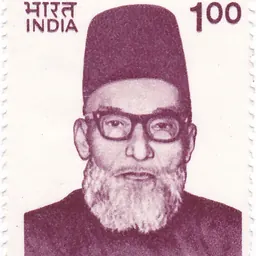



Contemporaries
People whose lives overlapped Abdul Hamid Madarshahi's
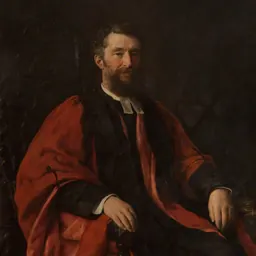
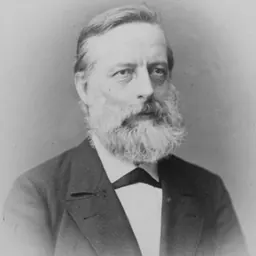
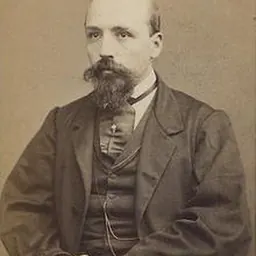

Frequently asked questions
Who was Abdul Hamid Madarshahi?
Bengali Islamic scholar and educationist
When was Abdul Hamid Madarshahi born?
Abdul Hamid Madarshahi was born in 1869.
When did Abdul Hamid Madarshahi die?
Abdul Hamid Madarshahi died on 31 March 1920.
Sources & further reading
· Wikipedia: Abdul Hamid Madarshahi
· DBpedia: Abdul Hamid (scholar)
Cite this page
APA: Biography.guide. (2026). Abdul Hamid Madarshahi. https://biography.guide/abdul-hamid-madarshahi/
MLA: "Abdul Hamid Madarshahi." Biography.guide, https://biography.guide/abdul-hamid-madarshahi/.
Chicago: "Abdul Hamid Madarshahi." Biography.guide. https://biography.guide/abdul-hamid-madarshahi/.
Data last updated: 2026-09-20 · Spot an error? Report a correction.
Page generated 2026-09-27 05:30 UTC