
About ‘Abdu’l-Hamíd Ishráq-Khávari
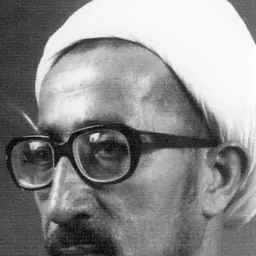
Lived 1902 – 1972 (aged 69). ‘Abdu’l-Hamíd Ishráq-Khávari was a religious writer, poet and missionary.
ʻAbdu'l-Hamíd Ishráq-Khávari (1902–1972) was a prominent Iranian Baháʼí scholar.Ishraq Khavari was born into a Muslim family.His father decided on his name by opening the Quran. The first verse on the visible page was the Arabic phrase: "Inna’hu Hamidun Majid," which means, "Indeed, He is praised and glorified." Based on this verse, he named his son Abdul-Hamid, meaning "The Servant of the Praised One." The name of his great-great-grandfather, Sheikh Muhammad, is recorded among the biographies of Shiite scholars, though details about his life are scarce. Sheikh Muhammad's son, Sheikh Abdul-Rahim (Khavari's great-grandfather), was a student of the well-known religious leader Sheikh Morteza Ansari. Sheikh Abdul-Rahim also held the position of Custodian of Astan Quds Razavi (the custodian for the Shrine of Imam Reza), a role he was appointed to by Naser al-Din Shah of the Qajar dynasty. He became a Baháʼí in 1927. He was a teacher in one of the Baháʼí schools in Iran, until the schools were closed in 1934. He prepared many compilations of Bahá'í writings, commentaries, apologetic works, and historic studies.
Works Some of his more important works are as follows: Abvábu'l-Malakút, a vocalized collection of Arabic Baháʼí prayers. Aqdáḥu'l-Faláḥ (volumes 1 and 2), comments on various subjects pertaining to the Abrahamic religions. Áthár-i-Qalam-i-Aʻlá, volumes 3 and 4; collections of the writings of Baháʼu'lláh. Dáʼiratu'l-Maʻárifu'l-Amrí, a Baháʼí Encyclopedia in 16 volumes. Ganjíniy-i-Ḥudúd va Aḥkám, a collection of writings on Baháʼí laws and ordinances. Ganj-i-Sháygán, a chronological survey of Baháʼuʼlláh's writings. Jannát-i-Naʻím (volumes 1 and 2), collections of the poems of Naʻím-i-Sidihí, a celebrated Baháʼí poet. Máʼidiy-i-Ásmání volumes 1, 4, 7, 8 are collections of Bahá'u'lláh's Tablets volumes 2, 5, 9 are collections of 'Abdu'l-Bahá's Tablets volumes 3 and 6 are a collection of Shoghi Effendi's letters Muḥáḍirát (volumes 1, 2, and 3), transcribed oral conversations with Ishráq-Khávarí on various subjects. Núrayn-i-Nayyirayn, a biography of the Núrayn-i-Nayyirayn, two early Baháʼí martyrs. Payám-i-Malakút, a thematically-arranged compilation of Baháʼí writings. Qámús-i-Kitáb-i-Íqán, a commentary on the Kitáb-i-Íqán (Book of Certitude), four volumes. Qámús-i-Tawqíʻ-i-Maníʻ-i-Naw-Rúz-i-108 Badíʻ, a concordance to Shoghi Effendi's Naw-Rúz 108 BE message (in Persian). Raḥíq-i-Makhtúm (volumes 1 and 2), a selection of different subjects in alphabetical order in two volumes. Commentary on Shoghi Effendi's centennial letter Lawḥ-i-Qarn. Risáliy-i-Ayyám-i-Tisʻih, a collection of Baháʼí writings on the nine Baháʼí Holy Days. Risáliy-i-Nuṣús-i-Alváḥ dar báriy-i-Baqáy-i-Arváḥ, a collection of Baháʼí writings on the immortality of the human soul. Risáliy-i-Tasbíḥ va Tahlíl, a vocalized collection of Arabic prayers by Baháʼuʼlláh. Sharḥ-i-Ḥayát-i-Ḥaḍrat-i-Valíyy-i-Amru'lláh, a brief biography of Shoghi Effendi. Taqrírát dar báriy-i-Kitáb-i-Mustaṭáb-i-Aqdas, a transcribed verse-by-verse analysis of the Kitáb-i-Aqdas in Persian. Táríkh-i-Amríy-i-Hamadán, a history of the Baháʼí Faith in the city of Hamadán. Yádigár, transcribed oral remarks from Ishráq-Khávarí on various subjects.
Don’t just read it —
keep it.
Full-length biographies made to live with: read them, listen on the way to work, watch them tonight.
- E-book
- Audio
- Video
Instant download · yours to keep · every purchase keeps this site free
Important facts
People in ‘Abdu’l-Hamíd Ishráq-Khávari's life
Named in this biography and alive at the same time

Related people
Same field, nearest in time





Contemporaries
People whose lives overlapped ‘Abdu’l-Hamíd Ishráq-Khávari's




Frequently asked questions
Who was ‘Abdu’l-Hamíd Ishráq-Khávari?
Iranian Bahá'í scholar
When was ‘Abdu’l-Hamíd Ishráq-Khávari born?
‘Abdu’l-Hamíd Ishráq-Khávari was born on 11 October 1902 in Mashhad.
When did ‘Abdu’l-Hamíd Ishráq-Khávari die?
‘Abdu’l-Hamíd Ishráq-Khávari died on 6 August 1972 in Tehran.
What was ‘Abdu’l-Hamíd Ishráq-Khávari's occupation?
‘Abdu’l-Hamíd Ishráq-Khávari was a religious writer, poet and missionary.
What nationality was ‘Abdu’l-Hamíd Ishráq-Khávari?
‘Abdu’l-Hamíd Ishráq-Khávari's recorded nationality: Qajar Iran, Pahlavi Iran.
Sources & further reading
· Wikipedia: ‘Abdu’l-Hamíd Ishráq-Khávari
· DBpedia: ʻAbdu'l-Hamíd Ishráq-Khávari
Cite this page
APA: Biography.guide. (2026). ‘Abdu’l-Hamíd Ishráq-Khávari. https://biography.guide/abdul-hamid-ishraq-khavari/
MLA: "‘Abdu’l-Hamíd Ishráq-Khávari." Biography.guide, https://biography.guide/abdul-hamid-ishraq-khavari/.
Chicago: "‘Abdu’l-Hamíd Ishráq-Khávari." Biography.guide. https://biography.guide/abdul-hamid-ishraq-khavari/.
Data last updated: 2026-09-20 · Spot an error? Report a correction.
Page generated 2026-09-27 05:26 UTC