
About Abdellah Taïa
Born 1973. Abdellah Taïa is a Moroccan novelist, journalist, film director, screenwriter, writer and filmmaker.
Abdellah Taïa (; born 1973) is a Moroccan writer and filmmaker who writes in the French language and has been based in Paris since 1999. He has published nine novels, many of them heavily autobiographical. His books have been translated into Arabic and many European languages.
Described by Interview Magazine as a "literary transgressor and cultural paragon," Taïa claimed to be the first openly gay Arab writer in 2006, and, as of 2014, he claims to be the only openly homosexual Moroccan writer or filmmaker. His first movie, Salvation Army, is widely considered to have given Arab cinema "its first gay protagonist." Since his coming-out, according to one source, Taïa "has become an iconic figure in his homeland of Morocco and throughout the Arab world, and a beacon of hope in a country where homosexuality is illegal." According to The New York Times, Taïa "was born inside the public library of Rabat [...] where his dad worked as a janitor and where his family lived until he was 2." He grew up in Hay Salam, a neighborhood of Salé, a city near Rabat. His family was poor. He had nine siblings. He first came into contact with literature through his father's job at the library.
Taïa was an effeminate boy who "always knew he was gay".
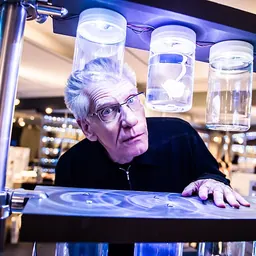
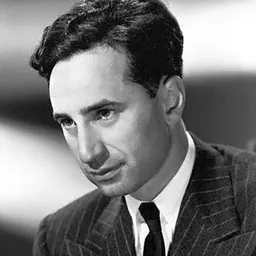
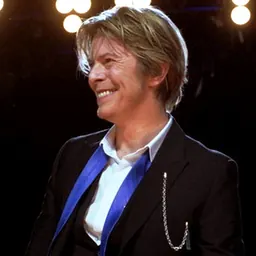
Taïa's older brother, Abdelk'bir, was a cultural influence on Taïa, introducing him to the music of David Bowie, James Brown, and Queen, the films of David Cronenberg, Elia Kazan, and Ang Lee, and the books of Robert Louis Stevenson, Dostoevsky, and Tawfik al-Hakim.
When he began college, he
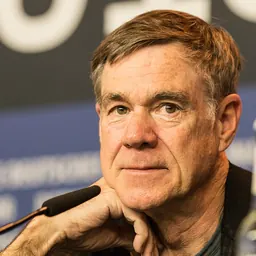
realized that my French was really poor. To master it, I decided to write my diary in French. For me that was the best way to be confronted with the language, to have a relationship with it without any mediation or intercession. My literary writing emerged from this relationship and that diary, which I kept for many years in Morocco. That's how I became a writer. Five of Taïa's novels have been published by Editions du Seuil in France. Taïa wanted to name the book after Gus Van Sant's My Own Private Idaho, a film that "became mythical" for him when he saw it in Morocco. Lacking a French equivalent, he used My Morocco instead.
Interview Magazine described Salvation Army as
a valuable contribution not only to queer fiction but to North African diaspora literature as well. A resident of Paris over the last decade, Taïa has joined the column of Moroccan expatriates–Tahar Ben Jelloun and Abdelkebir Khatibi, among others–who cast a telescopic eye over the thorny and often violent ideological interchange between postmodern Europe and postcolonial Africa. But Taïa's words are not scrawled with the bellicose politics of a partisan; rather, they are auguries of a familial world imbued with both magic and poverty; lilting and resolute; a prose of stark divinity and apostasy."
The book was shortlisted for the prestigious Prix Goncourt in 2022.
Essays and articles In 2009, when Morocco's interior ministry began to crack down on writing that challenged the country's "moral and religious values", Taïa published an open letter, "Homosexuality Explained to My Mother", in Tel Quel.
Film Taïa directed a film adaptation of his book Salvation Army. It "gave the Arab world its first on-screen gay protagonist", according to The New York Times. A reviewer for the Atlantic wrote that at a Venice Film Festival "notable for the prevalence of works grappling with global and societal woes, perhaps no film has blended the personal and the political as strikingly as Abdellah Taïa's L'Armée du salut (Salvation Army)."
Taïa has noted that he is coauthoring a play to be performed in Paris.
Other professional activities In 2001, he appeared in a French gay film The Road to Love.
He participated in October 2013 in the International Festival of Authors.
He spoke at the Oslo Freedom Forum in May 2014.
Views
Homosexuality "The problem with homosexuals", Taïa has said,
is that they are not accepted from the beginning. Where I come from, homosexuals allegedly do not exist, which is a horrible thing to live with and to accept. I had no other choice but to accept this non-existence. We could call this exile, meaning that your people, the ones who say they love you, that want to protect you, that want the best for you, and give you food—milk, honey, and so many other things—they deny you the most important thing, which is recognizing you as a human being. which created controversy in Morocco.
Bibliography (selection) Mon Maroc. Séguier, 2000. English translation by Rachael Small: Another Morocco: Selected Stories, Semiotext(e), 2017. Le rouge du tarbouche. Séguier, 2004. English translation by Rachael Small: Another Morocco: Selected Stories, Semiotext(e), 2017. L'Armée du salut. Seuil, 2006. English translation by Frank Stock: Salvation Army, Semiotext(e), 2009. Maroc 1900–1960, un certain regard. Actes Sud, 2007 (with Frédéric Mitterrand). Une mélancolie arabe. Seuil, 2008. English translation by Frank Stock: An Arab Melancholia, Semiotext(e), 2012. Le jour du roi. Seuil, 2010. Infidèles. Seuil, 2012. English translation by Alison Strayer: Infidels, Seven Stories Press, 2016. Un pays pour mourir. Seuil, 2015. English translation by Emma Ramadan: A Country for Dying, Seven Stories Press, 2020 - won the 2021 PEN Translation Prize. Celui qui est digne d'être aimé. Seuil, 2017. La Vie lente, roman, Seuil, 2019. Vivre à ta lumière, roman, Seuil, 2022. Le Bastion des larmes, roman, Julliard, 2024.
Don’t just read it —
keep it.
Full-length biographies made to live with: read them, listen on the way to work, watch them tonight.
- E-book
- Audio
- Video
Instant download · yours to keep · every purchase keeps this site free
Important facts
People in Abdellah Taïa's life
Named in this biography and alive at the same time



Related people
Same field, nearest in time



Contemporaries
People whose lives overlapped Abdellah Taïa's

Frequently asked questions
Who is Abdellah Taïa?
Moroccan writer and journalist
When was Abdellah Taïa born?
Abdellah Taïa was born on 8 August 1973 in Rabat.
What is Abdellah Taïa's occupation?
Abdellah Taïa is a novelist, journalist, film director, screenwriter, writer and filmmaker.
What nationality is Abdellah Taïa?
Abdellah Taïa is Moroccan.
Sources & further reading
Cite this page
APA: Biography.guide. (2026). Abdellah Taïa. https://biography.guide/abdellah-taia/
MLA: "Abdellah Taïa." Biography.guide, https://biography.guide/abdellah-taia/.
Chicago: "Abdellah Taïa." Biography.guide. https://biography.guide/abdellah-taia/.
Data last updated: 2026-09-20 · Spot an error? Report a correction.
Page generated 2026-09-27 05:33 UTC