
About Abass Alavi
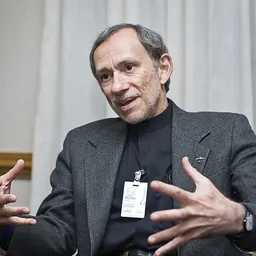
Born 1938. Abass Alavi is an Iranian academic and physician.
Abass Alavi is an Iranian-American physician-scientist specializing in the field of molecular imaging, most notably in the imaging modality of positron emission tomography (PET). In August 1976, he was part of the team that performed the first human PET studies of the brain and whole body using the radiotracer [18F]Fluorodeoxyglucose (FDG). Alavi holds the position of Professor of Radiology and Neurology, as well as Director of Research Education in the Department of Radiology at the University of Pennsylvania. Over a career spanning five decades, he has amassed over 2,300 publications and 60,000 citations, earning an h-index of 125 and placing his publication record in the top percentile of scientists.
Early life and education Abass Alavi was born in Tabriz, the largest city in northwestern Iran. After graduating from high school in Tabriz, Alavi moved to Tehran and received his medical degree from the Tehran University of Medical Sciences in 1964. He began his training in internal medicine at the Albert Einstein Medical Center and the Philadelphia VA Hospital in 1966. Following subspecialization in hematology/oncology at the University of Pennsylvania, Alavi started his education in medical imaging by enrolling in the radiology department at the Harvard-affiliated Beth Israel Deaconess Medical Center. He joined the University of Pennsylvania School of Medicine in 1971 as a research fellow in nuclear medicine, and was soon appointed to the faculty. He currently holds appointments as Professor and Director of Research Education in the Department of Radiology.
1964: Medical doctorate(MD), University of Tehran, School of Medicine 1966: Intern, Rotating Internal Medicine, A. Einstein Medical Center, Philadelphia 1968: Resident, Internal Medicine, VA Medical Center 1969: Fellow, Hematology- Oncology, Hospital of the University of Pennsylvania 1970: Resident, Radiology, Beth Israel Deaconess Medical Center, Boston
Later life and career
Alavi began his work in tomographic imaging under the guidance of Dr. David Kuhl. He and his colleagues at the University of Pennsylvania were pioneers in performing modern tomographic imaging by utilizing single gamma emitting radionuclides (Single Photon Emission Computer Tomography/SPECT). In 1973, he—along with his colleagues Dr. Kuhl and Dr. Martin Reivich—were the first scientists to conceive the idea of labeling deoxyglucose with positron-emitting fluoride (F-18), leading to the development of FDG. In August 1976, Alavi became the first to administer FDG to a human being and acquire tomographic images of the brain and whole body. He was also among the first to utilize Iodine-123 in the diagnosis of thyroid cancer, MIBG in the assessment of pheochromocytoma, radiolabeled WBCs in the evaluation of infection, and 99mTc in the detection of gastrointestinal bleeds, among a host of other discoveries. among which are the highest distinctions in nuclear medicine: the Georg Charles de Hevesy Nuclear Pioneer Award given by the Society of Nuclear Medicine, the Cassen Prize of the Society of Nuclear Medicine, and honorary degrees from the University of Bologna, the University of the Sciences in Philadelphia and Shiraz University in Iran. The de Hevesy Award from the Society of Nuclear Medicine was given to Alavi for his pioneering work in the development of positron emission tomography.
He is an expert in modern imaging techniques and in the clinical applications of PET imaging for the detection of cancer as well as neurological, cardiovascular, and infectious disorders.
1971-73: Postdoctoral NIH Fellowship in Nuclear Medicine 1982: Member, Steering and Executive Committees, Prospective Investigation of Pulmonary Embolism Diagnosis, Chairman, Nuclear Medicine Working Group 1984: Who's Who, Frontiers of Science and Technology 1984-88: Trustee, Society of Nuclear Medicine 1985: Fellow of the Center for the Study of Aging, University of Pennsylvania 1985: Fellow, American College of Nuclear Physicians 1992: Fred Joliot visiting professor at Orsay, France 1992: Evan-Jone Memorial Lecture, U of MDS, London 1994: IVRA - Keynote speaker 1994: Taylor Lectureship award - Dept. of Psychiatry, University of Maryland 1995: Benedict Cassen Memorial Symposium, CA 1996: 6th Asia & Oceania Congress - award for Outstanding Contributions 1997: Sarabhai Memorial Oration award - Society of Nuclear Medicine of India 1999: The 11th Annual Berson-Yalow Award - Greater NY Chapter Society of Nuclear Medicine 1999: Best Doctors in America 2001: One of two Finalists, "Most influential Radiology Researchers, AuntMinnie.com's Annual Event to recognize Excellence in Radiology 2001: Distinguished Service Award, Indo-American Society of Nuclear Medicine , IASNM, for outstanding contribution to nuclear medicine and promotion of IASNM 2001: member, American Board of Nuclear Medicine 2001: Taplin Pioneer Award in Nuclear Medicine 2004: Georg Charles de Hevesy Nuclear Pioneer Award, 51st Annual Meeting of the Society of Nuclear Medicine 2005: Member, (Ad Hoc Chairman), NIH/CSR/ZRG1 SBIB-Q50 2005: Chairman, NIH/CSR/ZRG1 SBIB-Q13 2006: Mentor of the Year Award, American College of Nuclear Medicine Physicians 2006: Fellow, World Innovation Foundation 2007: Honorary Doctoral Degree (Laurea ad honorem, Medicina e Chirurgia), University of Bolognia, Italy 2007: Honorary PhD Degree in Molecular Biology, University of Shiraz 2007: Member, Honorary Editorial Board, Drug Design, Development and Therapy 2008: Member, Honorary Editorial Board, Journal of Receptor, Ligand and Channel Research, Dove Medical Press 2008: Life Member, American Board of Nuclear Medicine 2008: Honorary Doctoral Degree (DSc), University of the Sciences in Philadelphia 2008: The most published and most cited faculty at PENN 2010: Member, College of CSR Reviewers, National Institute of Health 2011: Editor-in-Chief, Current Molecular Imaging 2012: Organizing Committee Member, International Conference & Exhibition on Personalized Medicine and Molecular Diagnostics 2012: Benedict Cassen Prize for Research in Nuclear Medicine, Annual Meeting of the SNM 2015: Recipient of Gold Medal of City of Tabriz, Tabriz, Iran 2015: Recipient of gold medal of National Institute for Medical Research Development, Tehran, Iran 2016: Recipient, honorary Doctor of Medicine degree from the Medical University of Gdansk, Gdansk, Poland 2016: Recipient, honorary doctorate degree from the University of Southern Denmark 2017: Gold Medal Recipient, American College of Nuclear Medicine 2021: RG score 57 2022: Recipient of Lifetime Achievement Award, Annual Conference of the Society of Nuclear Medicine India, New Delhi 2026: Top D-Index (Discipline Score) of 138, Research.com 2026: Top PENN i10-Index (Impact Score) of 966, 2026: Ranked #1 at University of Pennsylvania, AD Scientific Index 2026 2026: Ranked #1 Highly Ranked Scholars, Specialty of “Positron Emission Tomography”, ScholarGPS 2026: h-Index of 145 and more than 89,500 citations, Google Scholar
Other appearances Alavi has been a long-time supporter of educational and research opportunities for students in nuclear medicine. While his name is associated with the Alavi-Mandell Awards, which recognize trainees and young scientists who publish articles as senior authors in the Journal of Nuclear Medicine, he also supports the Pilot Research Grants and the Bradley-Alavi Student Fellowship Awards. Bradley-Alavi Fellows are named in honor of the late Stanley E. Bradley, a professor of medicine at Columbia University College of Physicians and Surgeons and a prominent researcher in the fields of renal physiology and liver disease, and Abass Alavi, M.D., professor of radiology and chief of the division of nuclear medicine at the University of Pennsylvania Medical Center. funded by the Education and Research Foundation of the Society of Nuclear Medicine. In 2021 Alavi co-founded Bashir-Alavi Award with Humayun Bashir for the best cancer related research publication from Pakistan. This award is announced annually at the Shaukat Khanum Cancer Symposium.
Don’t just read it —
keep it.
Full-length biographies made to live with: read them, listen on the way to work, watch them tonight.
- E-book
- Audio
- Video
Instant download · yours to keep · every purchase keeps this site free
Important facts
People in Abass Alavi's life
Named in this biography and alive at the same time

Related people
Same field, nearest in time




Contemporaries
People whose lives overlapped Abass Alavi's



Frequently asked questions
Who is Abass Alavi?
Iranian-American professor
When was Abass Alavi born?
Abass Alavi was born in 1938 in Tabriz.
What is Abass Alavi's occupation?
Abass Alavi is an academic and physician.
What nationality is Abass Alavi?
Abass Alavi is Iranian.
Sources & further reading
Cite this page
APA: Biography.guide. (2026). Abass Alavi. https://biography.guide/abass-alavi/
MLA: "Abass Alavi." Biography.guide, https://biography.guide/abass-alavi/.
Chicago: "Abass Alavi." Biography.guide. https://biography.guide/abass-alavi/.
Data last updated: 2026-09-20 · Spot an error? Report a correction.
Page generated 2026-09-27 05:18 UTC