
About Aaron Samuel Tamares
Lived 1869 – 1931 (aged 61–62). Aaron Samuel Tamares was a Russian and Polish rabbi, writer and philosopher.
Aaron Samuel Tamares (, Aharon Shmuel Tamares, sometimes Tamaret; 1869–1931) was an Ashkenazi Orthodox Rabbi, author, and philosopher, most notable for voicing a pacifist opposition to the mainstream Zionist movement. He often wrote under the pen name Aḥad ha-Rabanim ha-Margishim ("one of the feeling rabbis").
Biography Early life Tamares was born in 1869 in a shtetl called Malech, in Grodno, within the Pale of Settlement. His father, Moshe Ya'akov Tamares, owned a tavern and was the grandson of a well-known tzadik known as Maltsher Preacher, Reb Arehle. He began studying in the cheder from a young age, and soon became regarded as a prodigy. At the age of 19, he left to study in Kovno at the famed Kollel Perushim, followed by two years at the Volozhin Yeshiva.
Marriage and children He was originally set to marry the eldest daughter of the Chief Rabbi of Milejczyce, but she unexpectedly died before the marriage went through. He instead married her younger sister, Rachel, at the age of 17, with whom he would go on to have six children. Three of his children would ultimately immigrate to Mandatory Palestine, while the other three were killed in Treblinka after his death. His children, including daughters, were highly educated in the Bible, Mishnah, and even Talmud.
Career In 1893, he replaced his father in law as the Chief Rabbi of Milejczyce, which is a position he would retain throughout his life. Tamares was an early defender of Zionism, standing against the prevailing Haredi opposition. In 1900, he was an elected delegate at the fourth Zionist Congress in London. There, he seemingly became disillusioned with the movement. In 1905, Hayim Nahman Bialik and S. Boriskhin published his Sefer ha-yahadut veha-ḥerut, which argued for a justice-centered Judaism and against what he viewed as a non-Jewish nationalism that was dominant in the movement. He continued to write for the next decades, both in his own books as well as in journals and newspapers like HaMelitz and Ha-Tsfira. In 1912, he was invited by Chaim Tchernowitz to take over the latter's yeshiva in Odesa, although he declined the offer because of his aversion to urban living.
Death Tamares died on 10 August 1931 at the age of 62, and was eulogized by the Jewish Telegraphic Agency as a "champion of Zionism and of world peace." A Los Angeles-based Jewish newspaper, the B'nai Brith Messenger, adapted the JTA wire story at his death and claimed that he was "the first Zionist rabbi," "a well known Hebraic authority," and a "writer of considerable note" who "ardently advocated the cause of international peace." It also erroneously referred to him an "active leader of Reform in Poland."
Philosophical and political views Tamares was most well known for his criticisms of mainstream Zionism along several different fronts:
Pacifism From a young age, Tamares was sharply critical of the glamorization of violence and militarism. As a child, he railed against portraits of soldiers being on display in the home. In kollel, he was noted for his anti-war preaching, arguing that war consisted of "taking people from their homes, against their will, and setting them in front of the firing cannons [...] This is the pinnacle of dread against which a special struggle must be initiated." This belief in particular became essential to his system in the years following World War I and the destruction that that wrought on Europe and on European Jewry in particular.
Published works
Ha-yahadut veha-ḥerut (Odesa,1905) [lit. "Judaism and Freedom"] Musar ha-Torah veha-yahadut (Vilnius, 1912) [lit. "Torah Musar and Judaism"] Ha-emunah ha-tehorah veha-dat ha-hamonit (Odesa, 1912; Jerusalem, 2025) [lit. "The Pure Faith and the Mass Religion"] Keneset Yisra’el u-milḥamot ha-goyim (Warsaw,1920; Jerusalem, 2021) [lit. "The Congregation of Israel and the Wars of the Gentiles"] Yad Aharon (Piotrków Trybunalski,1923) [lit. "The Hand of Aaron"] Sheloshah zivugim bilti hagunim (Piotrków Trybunalski, 1930) [lit. "Three Indecent Pairings"] Patsifism l'or ha-tora (Jerusalem, 1992) [lit. "Pacifism in Light of the Torah"] Tohu va-bohu (edited by Isaac Slater, Jerusalem, 2022) A Passionate Pacifist: Essential Writings of Aaron Samuel Tamares (edited/translated by Everett Gendler, Teaneck, 2023)
Don’t just read it —
keep it.
Full-length biographies made to live with: read them, listen on the way to work, watch them tonight.
- E-book
- Audio
- Video
Instant download · yours to keep · every purchase keeps this site free
Important facts
more
AARON SAMUEL B. MOSES JACOB, ʾAḥad ha-rabonim ha-margišim, Aharon Shemu’elPeople in Aaron Samuel Tamares's life
Named in this biography and alive at the same time


Related people
Same field, nearest in time

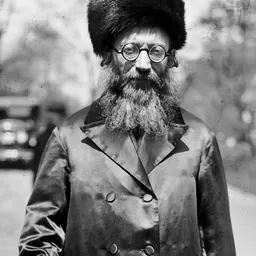

Contemporaries
People whose lives overlapped Aaron Samuel Tamares's



Frequently asked questions
Who was Aaron Samuel Tamares?
european Rabbi (1869-1931)
When was Aaron Samuel Tamares born?
Aaron Samuel Tamares was born in 1869 in Malieč.
When did Aaron Samuel Tamares die?
Aaron Samuel Tamares died on 10 August 1931 in Milejczyce.
What was Aaron Samuel Tamares's occupation?
Aaron Samuel Tamares was a rabbi, writer and philosopher.
What nationality was Aaron Samuel Tamares?
Aaron Samuel Tamares was Russian and Polish.
Sources & further reading
· Wikipedia: Aaron Samuel Tamares
· DBpedia: Aaron Samuel Tamares
Cite this page
APA: Biography.guide. (2026). Aaron Samuel Tamares. https://biography.guide/aaron-samuel-tamares/
MLA: "Aaron Samuel Tamares." Biography.guide, https://biography.guide/aaron-samuel-tamares/.
Chicago: "Aaron Samuel Tamares." Biography.guide. https://biography.guide/aaron-samuel-tamares/.
Data last updated: 2026-09-20 · Spot an error? Report a correction.
Page generated 2026-09-27 05:20 UTC